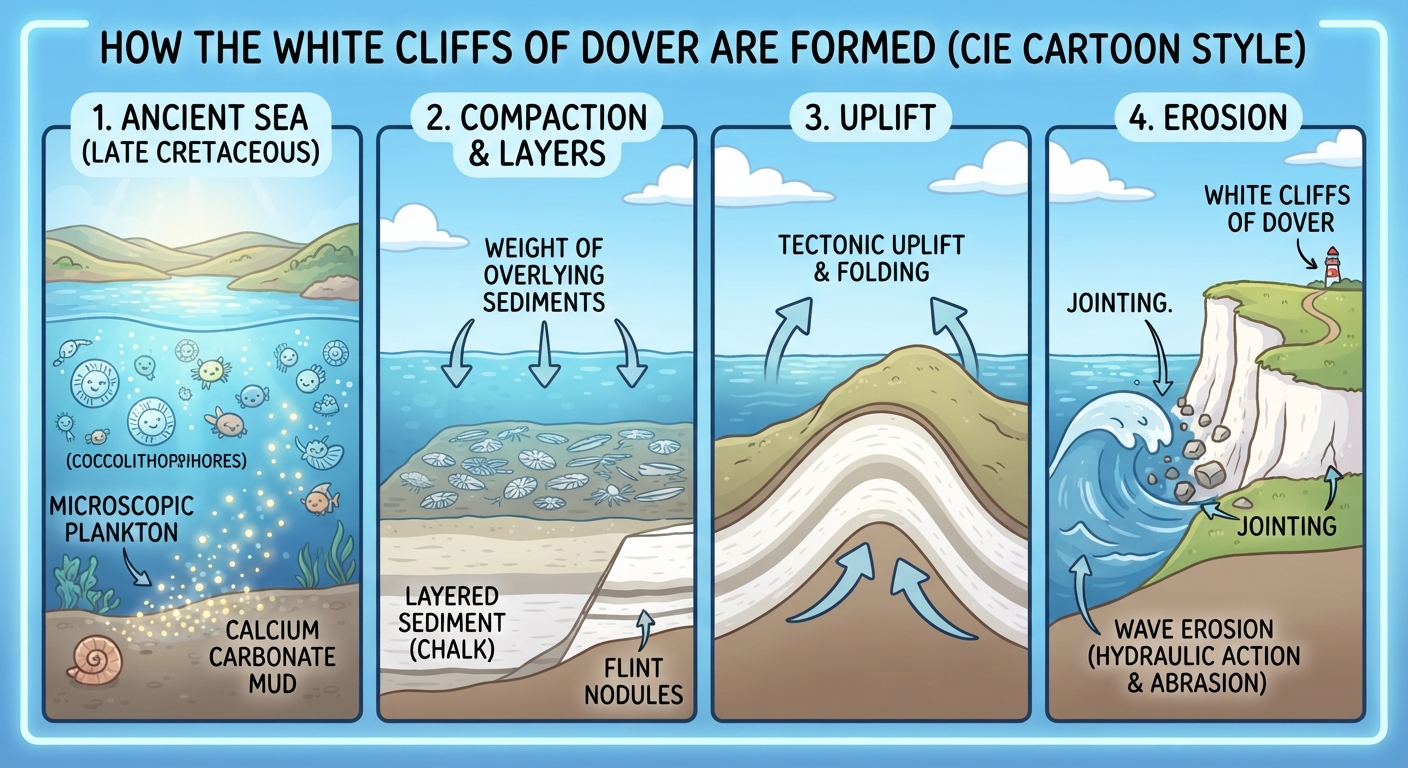
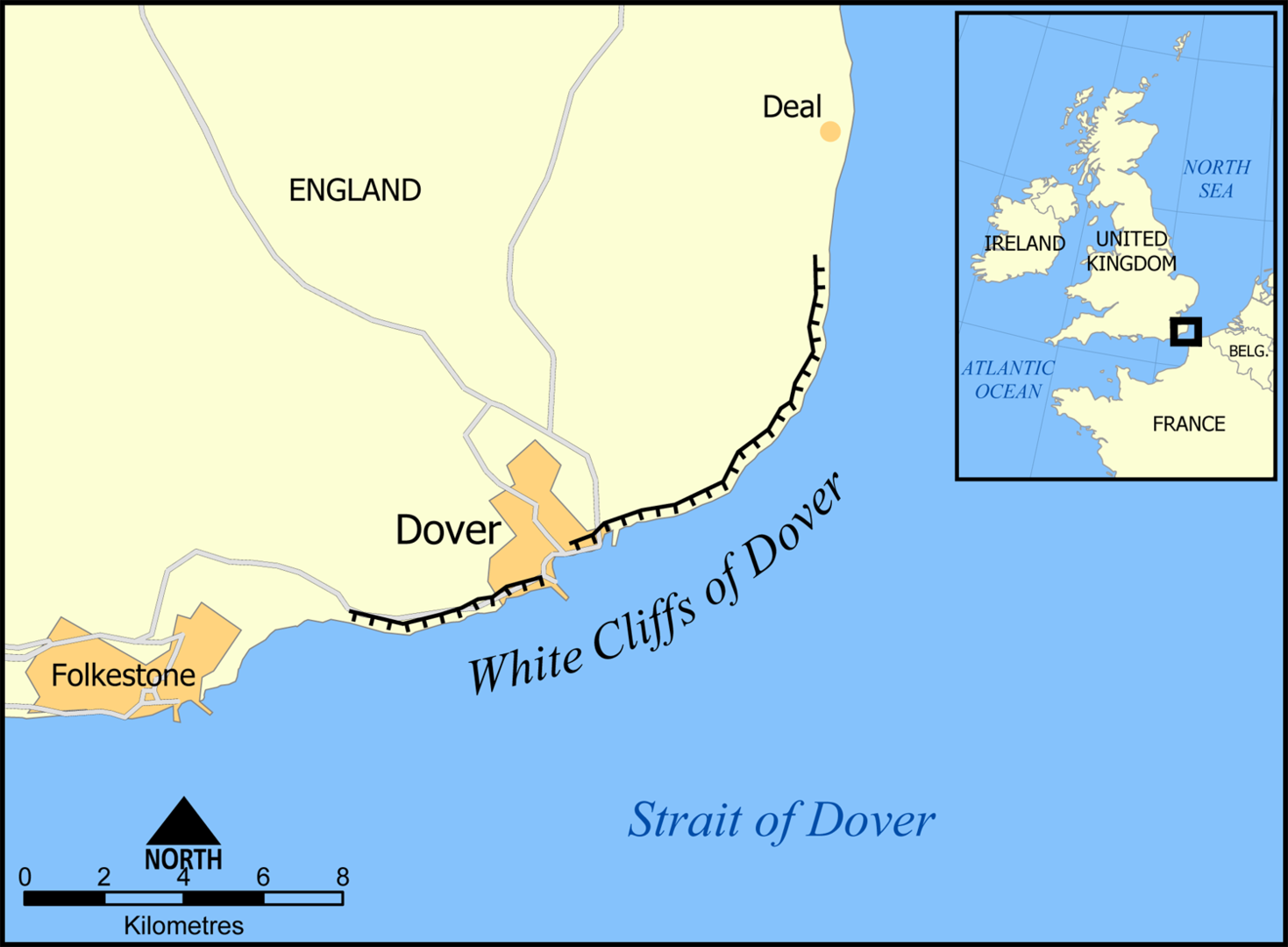
The White Cliffs of Dover are far more than just a famous coastal landmark; they are a massive, ancient record of history. Formed over millions of years by the compressed skeletons of microscopic marine algae, these striking chalk cliffs have served as England’s “front door” for millennia. They acted as a vital natural fortress against invaders, housed the historic Dover Castle, and became an enduring symbol of resilience during World War II. Today, these cliffs remain a dynamic, protected habitat where unique wildflowers and rare butterflies thrive, offering a powerful look at the intersection of geology, ecology, and human history.
By No machine-readable author provided. NormanEinstein assumed (based on copyright claims). – No machine-readable source provided. Own work assumed (based on copyright claims)., CC BY-SA 3.0, Link
Location
Kent, England
Fun Facts
The cliffs are made of chalk, which is actually made from billions of microscopic, shell-building algae skeletons that slowly drifted to the bottom of an ancient sea over 66 million years ago!
The grassy tops of the cliffs are called “chalk grassland,” and they are home to rare plants like the early spider orchid, which tricks insects by looking and smelling just like a real spider.
Dover Castle sits right on top of the cliffs and is the largest castle in England. Its deep tunnels were even used as secret underground barracks during World War II!
On a clear day, you can stand on the cliffs and see all the way across the English Channel to France, which is only about 20 miles away.
Past Lessons
16
March 14, 2022
(North America)
209
August 17, 2026
(North America)
No Past Lessons
Upcoming Lessons
No Upcoming Lessons
We use cookies to ensure that we give you the best experience on our website. If you continue to use this site we will assume that you are happy with it.Ok