

Key Information
TRAPPIST-1
| Type | Star |
| Diameter | 103,000 miles |
| Mass | 0.08 solar masses |
| Rotation | 7 hours 45 minutes |
| Temperature | 4,100 °F |
| Distance from Earth | 40.7 light years |
| Star Type(s) | M8V |
| Date of Discovery | 2000 |
Learning Point
- Discovered in 2000, TRAPPIST-1 is a M class red dwarf star that is cooler than normal, but the home to at least 7 planets, some of which are warm enough to have liquid water on them.
- Red dwarf stars are cooler than ours, and though they live a lot longer than brighter stars, are not well suited to supporting life.
Project
- Decide what your Breakout Room would call each of the planets of TRAPPIST-1.
- Overview
- Comparison
- TRAPPIST-1 System
- Orbit Comparison


Location
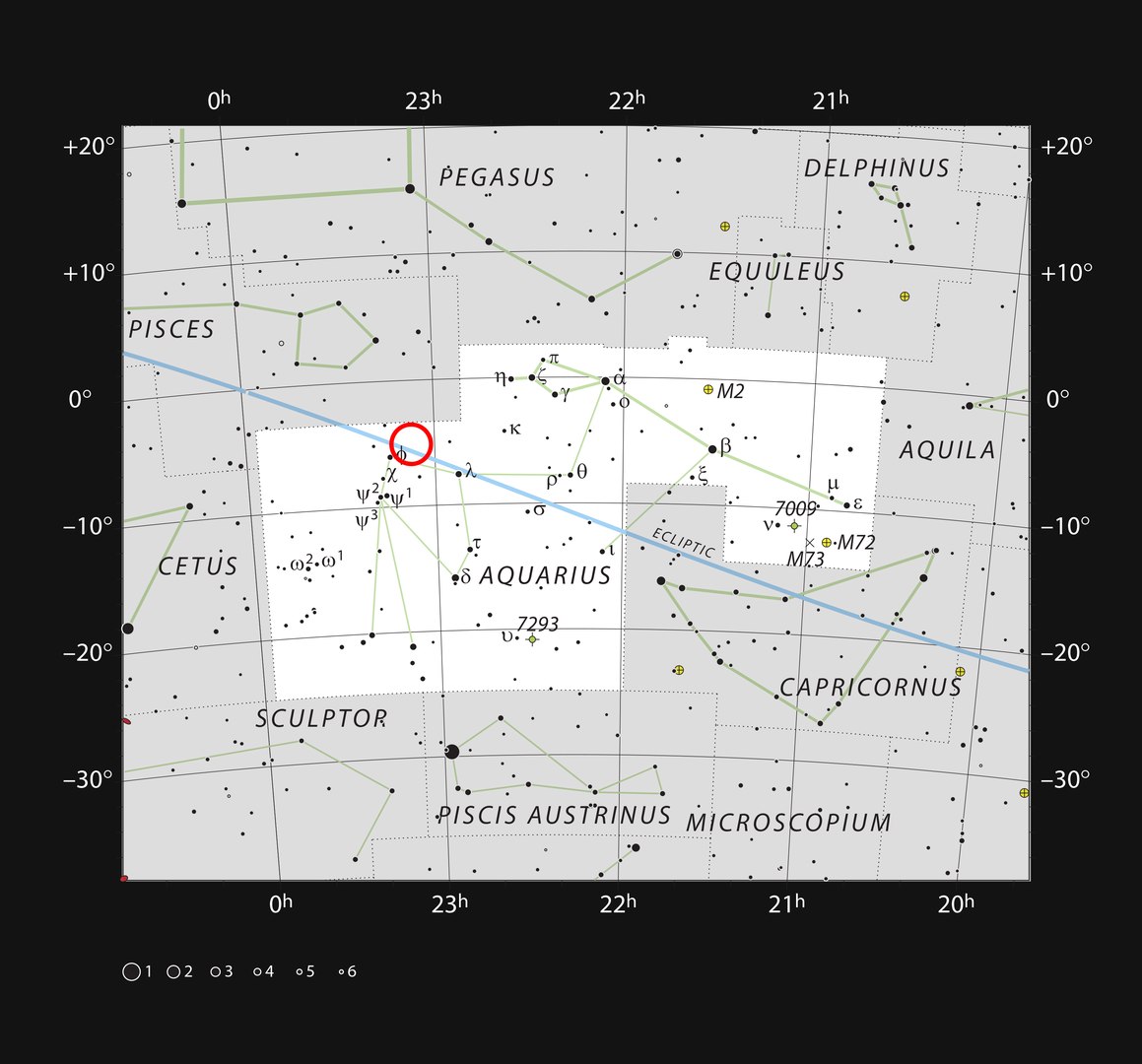
| Located in | Aquarius constellation |
| Locations | North and South America, parts of Africa |
Fun Facts
- TRAPPIST-1 is thought to be as old as 7 and a half billion years old.
- The whole star system and planets would sit inside the orbit of Mercury.
- The light on these planets would seem like a constant sunset, and would not be very bright.
- All the known planets orbit in less than 20 days, and none of them seem to have moons around them.
Past Lessons
| 61 | September 3, 2023 | (North America) |
| 142 | August 19, 2025 | (North America) |