

Key Information
Red Pandas
| Species | 1 species |
| Diet | Omnivore |
| Length | 31 to 44 inches |
| Weight | 7.1 to 33.1 lb |
| Lifespan | Up to 14 years |
| Conservation Status | Endangered |
| Classification | Mammalia > Carnivora > Ailuridae > Ailurini |
| Habitat | Mountainous Forests and Bamboo Forests |
Learning Point
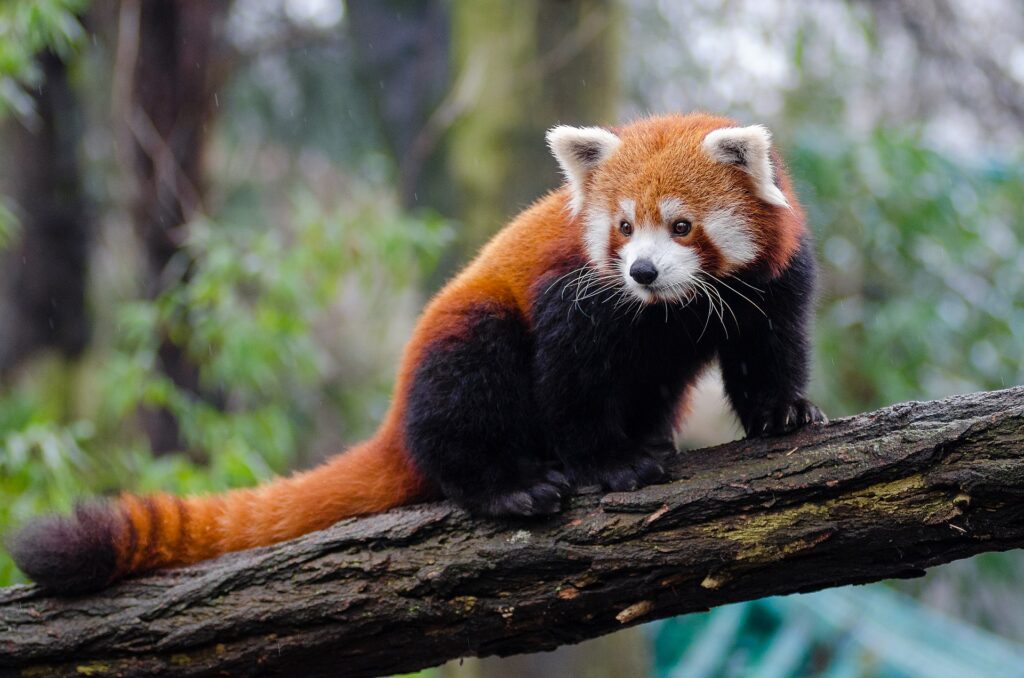
- Native to the Himalayan forests, red pandas are unique “living fossils” that were named nearly 50 years before giant pandas. Though they look like a mix of a fox and a raccoon, they belong to their own distinct family and are specially adapted for life in the trees with a “false thumb” for gripping bamboo and a thick, ringed tail used as a blanket. Currently endangered with fewer than 10,000 remaining in the wild, these solitary “firefoxes” are a high-priority species for conservationists working to protect the world’s mountain ecosystems.
Project
- Draw a picture of a pair of red pandas.
- Overview
Location

| Locations | China, India, Nepal, Bhutan, Myanmar |
Fun Facts
- The word “panda” comes from a Nepali word meaning “bamboo eater.”
- Red pandas live in chilly mountain forests. When it gets cold, they curl up into a ball and wrap their big, bushy tails around themselves like a cozy, fuzzy blanket to stay warm.
- Unlike most animals, red pandas have thick fur covering the soles of their feet. This acts like built-in snow boots, helping them keep their toes warm and giving them extra grip on slippery, icy branches.
- In China, red pandas are often called “firefoxes” because of their bright reddish-orange fur.
- When a red panda is walking along a thin tree branch high in the air, it uses its long, ringed tail like a tightrope walker’s balancing pole to make sure it doesn’t fall off.
Past Lessons
| 197 | January 14, 2026 | (North America) |