

Key Information
Quadrantids
| Type | Meteor Shower |
| Radiant (Point of Origin) | Bootës Constellation |
| Occurs During | December 28 to January 12 |
| Peak | January 3 |
| Hourly Rate | About 120 |
| Parent Body | 2003 EH₁ |
Learning Point
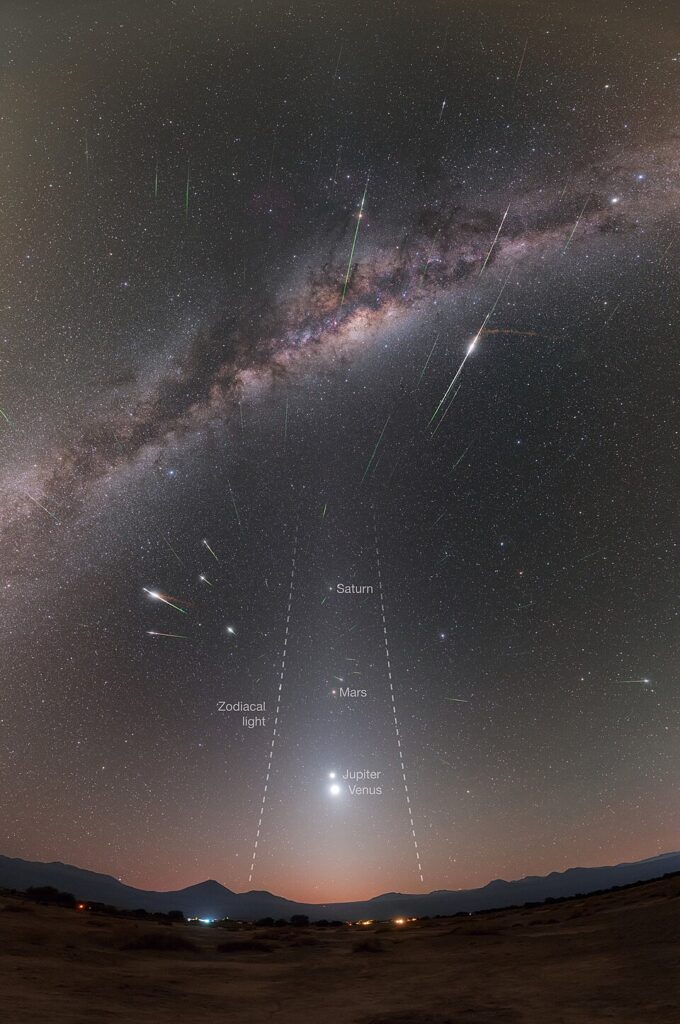
- The Quadrantids are a short but intense meteor shower that peaks in early January, often matching the display of the Perseids with up to 200 bright, fast meteors per hour. Unusually, this shower does not come from a comet but is instead caused by the dust trail of an asteroid named 2003 EH₁, making it a unique and powerful celestial event for astronomers and stargazers.
Project
- Draw a diagram of where the Quadrantids come from in the night sky and what a shooting star is.
- Overview
Location

| Location | Bootës Constellation, within the Earth’s Atmosphere |
Fun Facts
- The Quadrantids are the very first big meteor shower of the year, happening every January!
- They get their name from a constellation (Quadrans Muralis) that used to be on old star maps but doesn’t officially exist anymore!
- They are famous for having a very short peak, lasting only a few hours. If you miss that window, you miss the show!
- The Quadrantids often produce fireballs, which are especially bright and colorful meteors that last longer than a normal shooting star streak.
Past Lessons
| 157 | December 16, 2025 | (North America) |