

Key Information
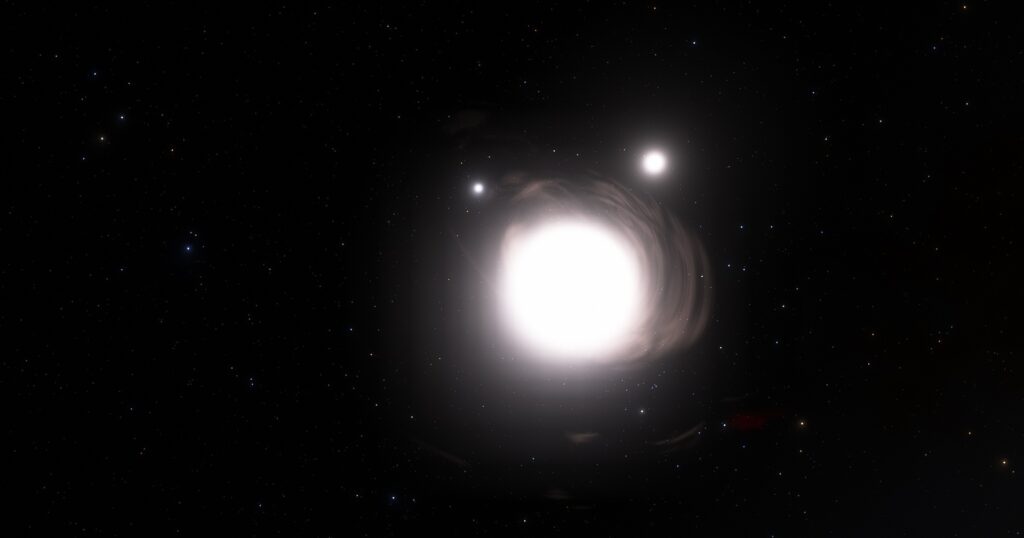
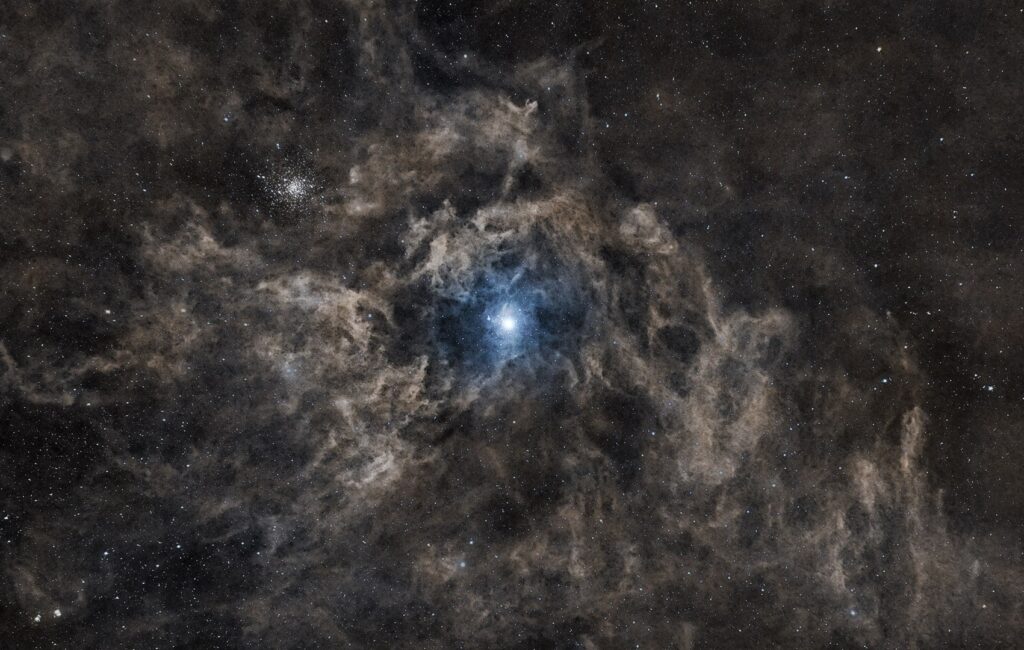
Polaris
| Type | Star System (Trinary) |
| Star Types | F7lb – Yellow supergiant (Aa), F6V – Yellow-White main sequence (Ab), F3V – Yellow-White main sequence (B) |
| Diameter | 40,003,92 miles (Aa), 899,159 miles (Ab), 1,193,114 miles (B) |
| Mass | 5.13 M☉ (Aa), 1.316 M☉ (Ab), 1.39 M☉ (B) |
| Temperature | 10,367 °F (Aa), 10,988 °F (Ab), 11,960 °F (B) |
| Distance | 446.5 light years |
| Discovery | Unknown |
| Other Names | North Star, Cynosura, Alpha Ursa Minor |
Learning Point
- Polaris, or the North Star, isn’t the brightest star, but it holds a unique position almost directly above Earth’s North Pole, making it appear stationary in the night sky while all other stars seem to revolve around it. This special placement has made Polaris an invaluable navigational tool for centuries, allowing travelers in the Northern Hemisphere to reliably determine the direction of true north. By locating the Big Dipper constellation and following its pointer stars, one can easily find Polaris, which serves as a constant beacon in the northern sky, historically guiding sailors and still acting as a useful backup for modern navigation systems.
Project
- Draw the Ursa Minor constellation and mark each star with its name or designation.
- Overview
- Star and Nebula
Location
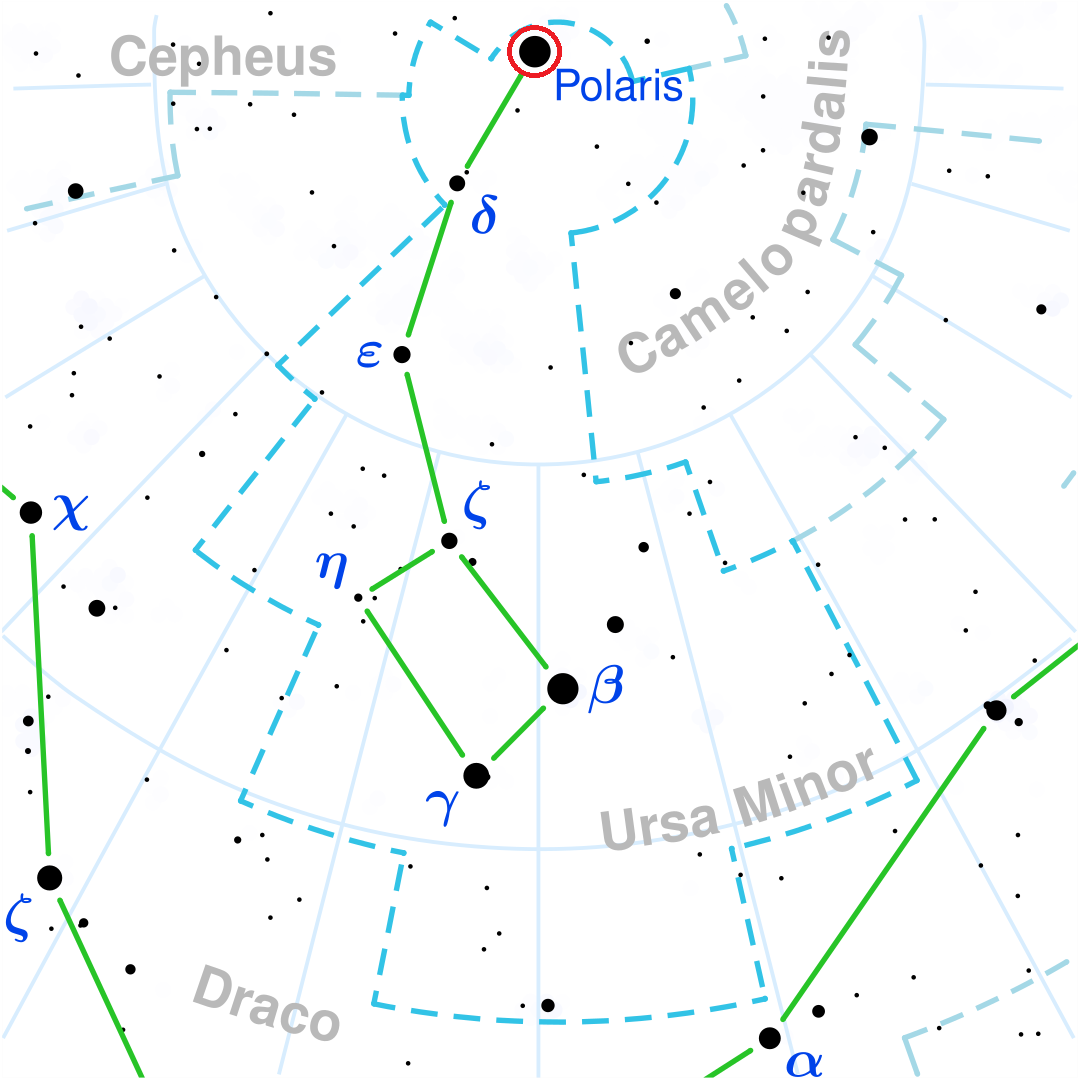

| Located in | Ursa Minor constellation, within the Milky Way |
Fun Facts
- Polaris is like a cosmic compass because it always points almost exactly to the North!
- You can easily find Polaris by first spotting the Big Dipper and following the two stars at the end of its “bowl.”
- While all the other stars seem to move across the sky, Polaris looks like it stays in the same place.
- Polaris is the last star in the handle of a smaller group of stars called the Little Dipper (or Ursa Minor, which means “Little Bear“).
Past Lessons
| 137 | May 12, 2025 | (North America) |