

Key Information
Juno
| Type | Large Asteroid |
| Diameter | 179 x 155 x 140 miles |
| Distance from the Sun | 184,547,244 to 311,306,967 miles |
| Orbit Time | 4.361 years |
| Length of Day | 7.21 hours |
| Temperature | -166 to 82 °F |
| Atmosphere | None |
| Date of Discovery | September 1, 1804 |
Learning Point
- 3 Juno is one of the largest and oldest S-type (stony/rocky) asteroids found in the Main Asteroid Belt, located between Mars and Jupiter. Discovered in 1804, it was initially mistaken for a planet due to its brightness and size, measuring about 153 miles across. Juno is known for its unusually reflective surface and its highly irregular, lumpy shape, which features a massive impact crater roughly 62 miles wide. Juno orbits the Sun every 4.35 years and is scientifically important because it is believed to be the primary source of certain common types of stony meteorites that land on Earth.
Project
- Create a chart listing other objects in the asteroid belt and how they compare to Juno.
- Overview
- Comparison


Location
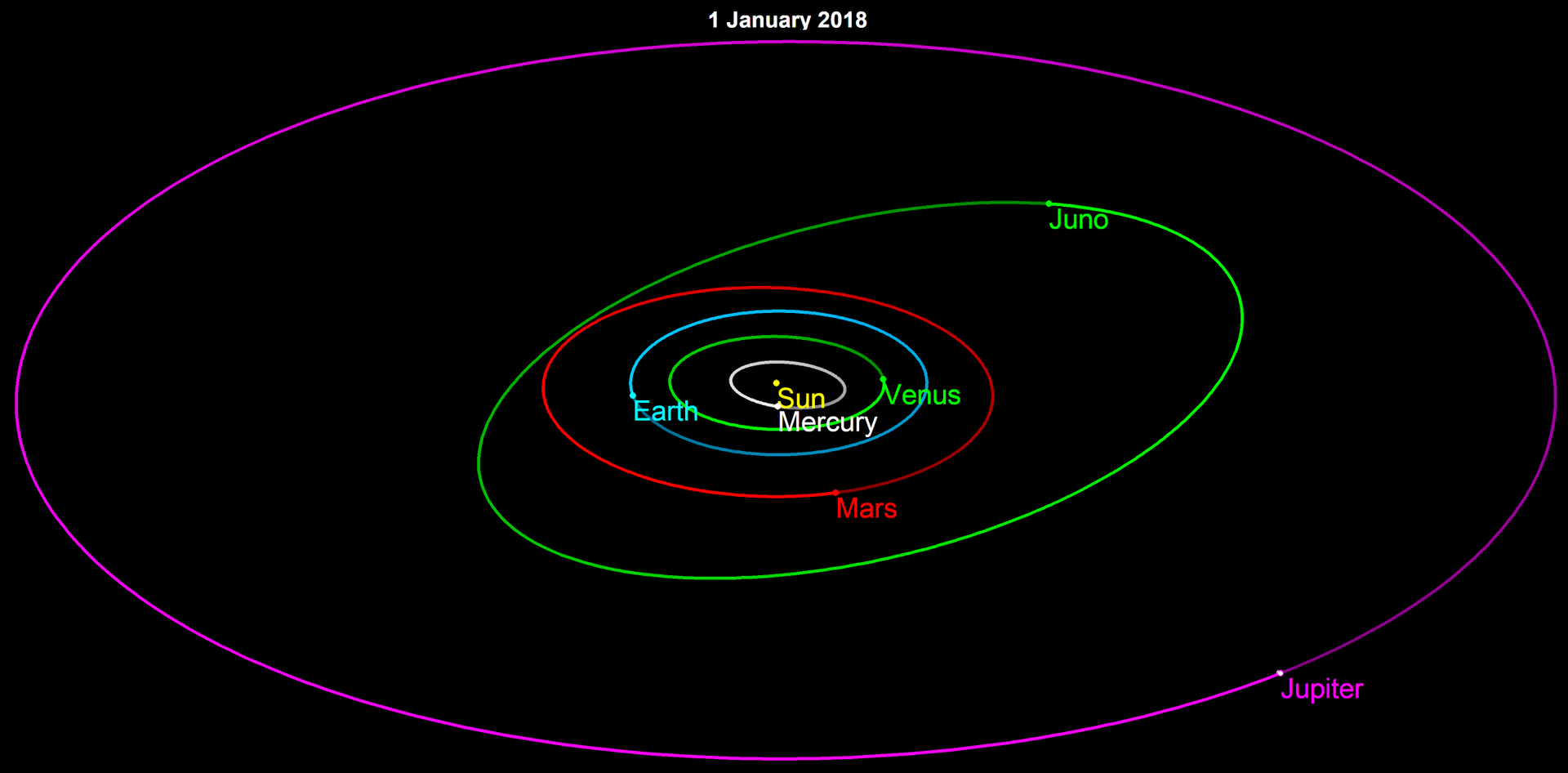
| Located in | Solar System, orbiting the Sun |
Fun Facts
- It was one of the first space rocks ever found! When it was discovered in 1804, it was only the third asteroid astronomers had ever identified.
- Juno is one of the brightest asteroids we can see from Earth! Its surface is unusually reflective, or shiny, which is why it was spotted and discovered so early, even before some other asteroids that are actually bigger than it.
- Juno is a large object, but it is not perfectly round like a planet. Instead, it has a lumpy, irregular shape, a bit like a giant, oddly-shaped potato floating in space!
- Juno is named after the most powerful female figure in Roman mythology: Juno, the queen of the gods and the wife of Jupiter!
Past Lessons
| 154 | November 18, 2025 | (North America) |