

Key Information
Great Comet of 1744
| Type | Comet |
| Diameter | About 12 miles |
| Distance from the Sun | 20,636,189 miles to unknown distance |
| Orbit Time | Either unreturning, or 350 to 400 years |
| Length of Day | Possibly about 4 hours |
| Date of Discovery | November 29, 1743 (Dirk Klinkenberg, Jean-Philippe de Chésaux) |
| Last Perihelion (Visit) | March 1, 1744 |
| Next Perihelion | Possible 2097 CE if still orbiting the Sun |
Learning Point
- The Great Comet of 1744 was an incredibly bright comet famous for its spectacular appearance in the spring sky. After passing close to the Sun, it displayed a unique feature: a massive, fan-shaped tail that fragmented into as many as six separate rays, a sight considered one of the most stunning cometary displays in history.
Project
- Research the suggested dates of when this comet may have visited Earth before if it is on a returning orbit.
- Overview
- Painting


Location
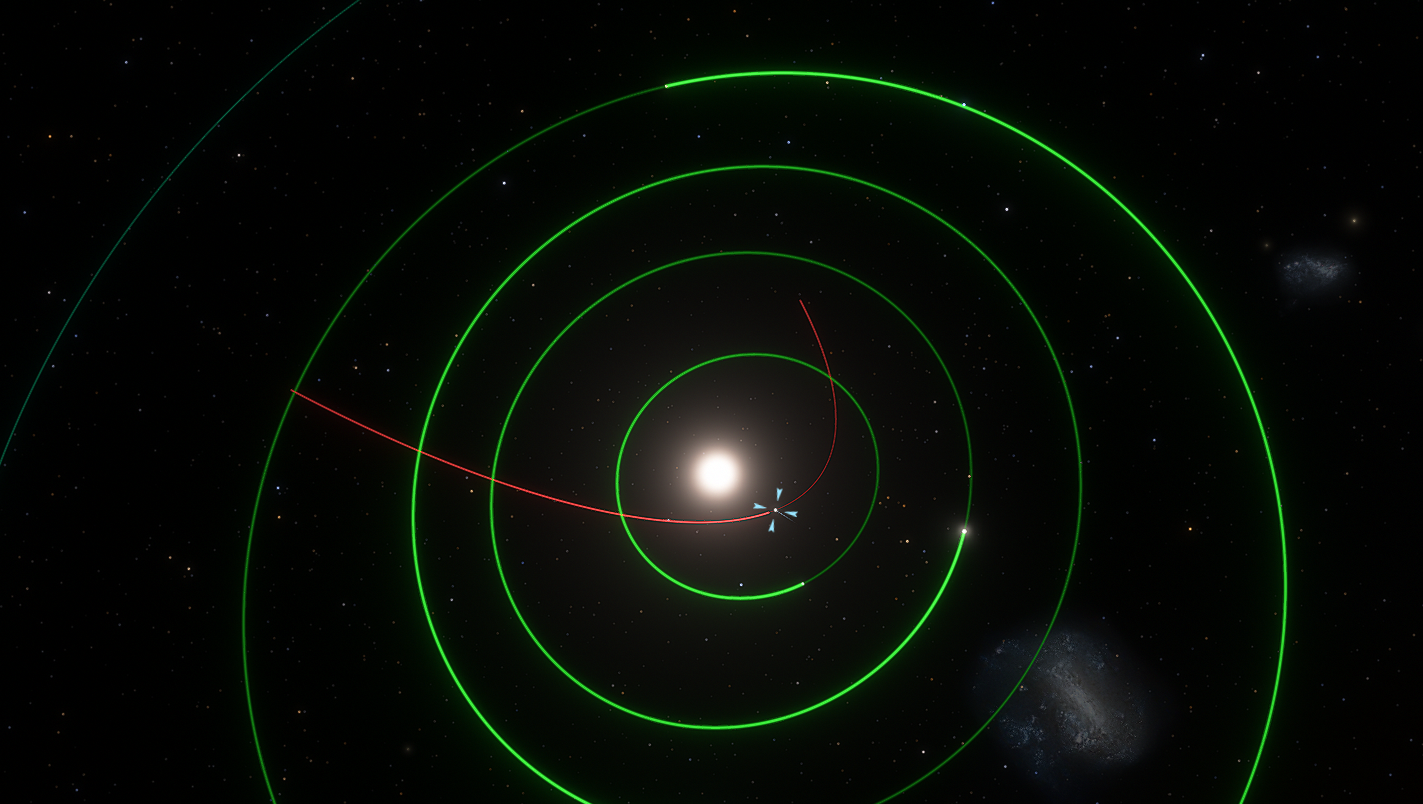
| Located in | Solar System, orbiting the Sun |
Fun Facts
- This comet was so huge and shone so brightly in the sky that people could easily see it without a telescope for many weeks!
- The most amazing thing about this comet was that it didn’t just have one tail—it had six separate, fan-shaped tails that spread out like a peacock’s feathers.
- The six tails were best seen just before the Sun rose, poking up above the horizon even while the comet itself was hidden by the Sun’s brightness!
- This may have been a non-periodic comet, meaning it won’t come back to our part of the solar system. If so, it’s now traveling far out into space, forever lost to the night sky. Not all astronomers agree with this theory.
Past Lessons
| 153 | November 11, 2025 | (North America) |