

Key Information
Fossilization
| Type | Process of preserving remains, impressions, or traces of once-living things |
Learning Point
- Fossilization is a rare, high-stakes game of preservation where an organism must be rapidly buried by sediment—like mud or volcanic ash—to escape scavengers and decay. Over eons, minerals from groundwater seep into the remains, literally replacing bone or shell with stone through a process called permineralization. This transforms biological remains into rock-hard records of the past. While most fossils are found in sedimentary rock, others are perfectly “mummified” in amber, ice, or tar. These fossils are the only reason we know about the 99% of species that have already gone extinct.
Project
- Design your own fossil, by drawing or creating it in plasticine or clay.
- Overview


Science Week – 2026

.JPG)
Fun Facts
- To become a fossil, a plant or animal has to be buried just right. If it’s left out, it gets eaten or rots. It needs to be buried quickly by mud, sand, or volcanic ash to stay safe!
- Most fossils aren’t actually bones anymore! Over millions of years, water seeps into the bone and replaces it with minerals. It’s like the bone is slowly being “swapped” for a rock.
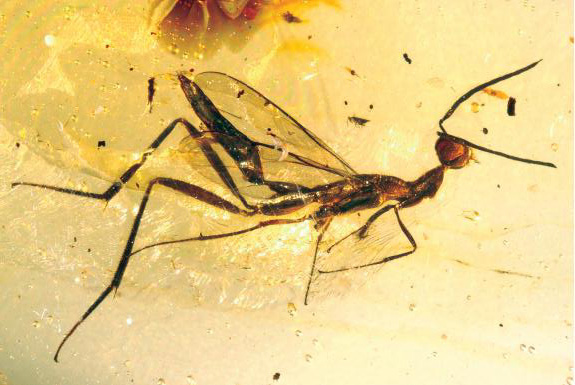
- Not all fossils are in rocks. Some ancient bugs got stuck in sticky tree sap that hardened into a beautiful orange “stone” called amber. It’s like a prehistoric time capsule!
- Fossils aren’t always body parts. Sometimes we find “trace fossils,” which are things like footprints, nests, or even dinosaur poop (called coprolites)! These tell us how the animals moved and what they ate.
- You can sometimes find fossils of sea shells on the tops of tall mountains. This is because those mountains were once at the bottom of the ocean millions of years ago!
- To be called a “fossil,” a find usually has to be at least 10,000 years old. Anything younger than that is just a very old bone!
Past Lessons
| 223 | February 16, 2026 | (North America) |