

Key Information
Cat’s Eye Nebula
| Type | Planetary Nebula |
| Diameter | 0.4 light years |
| Distance | About 3,300 light years |
| Date of Discovery | February 15, 1786 (William Herschel) |
| Other Names | NGC 6543, Snail Nebula, Sunflower Nebula, Caldwell 6 |
Learning Point
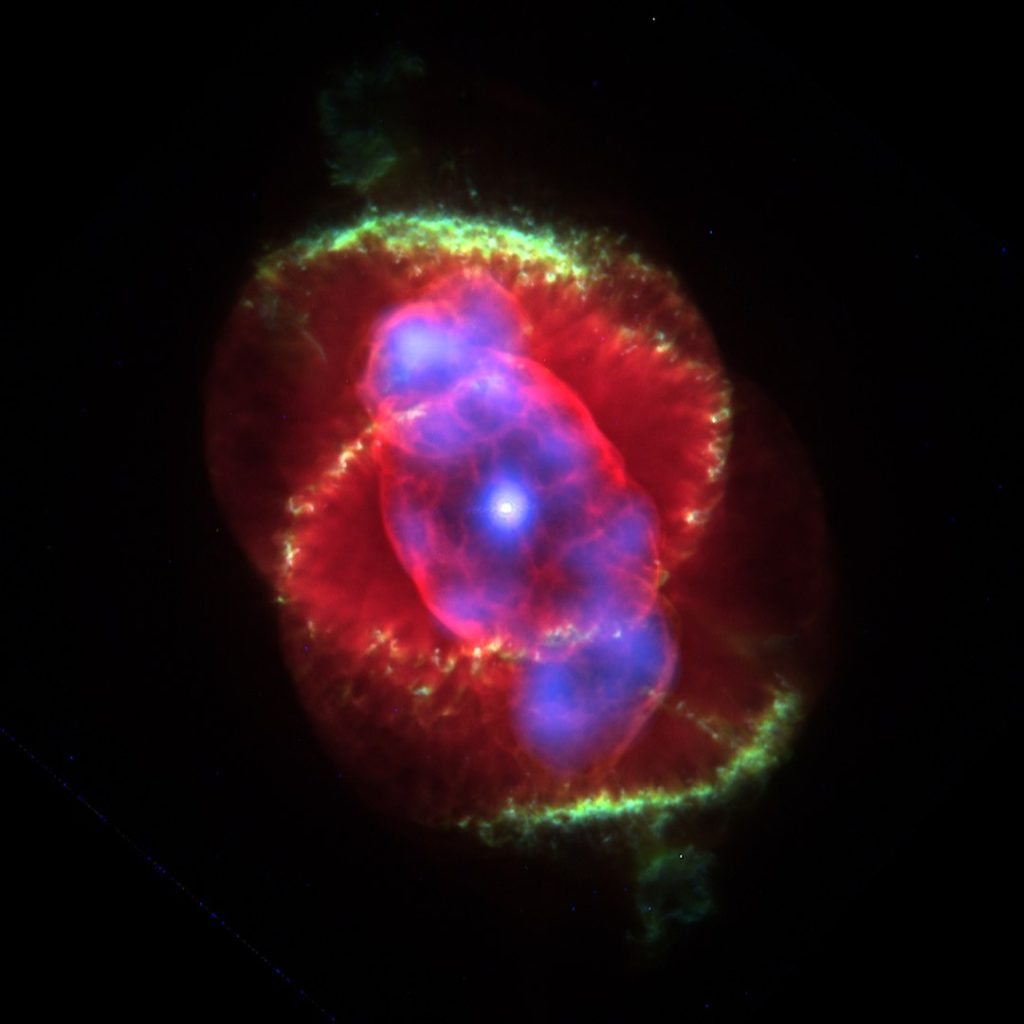
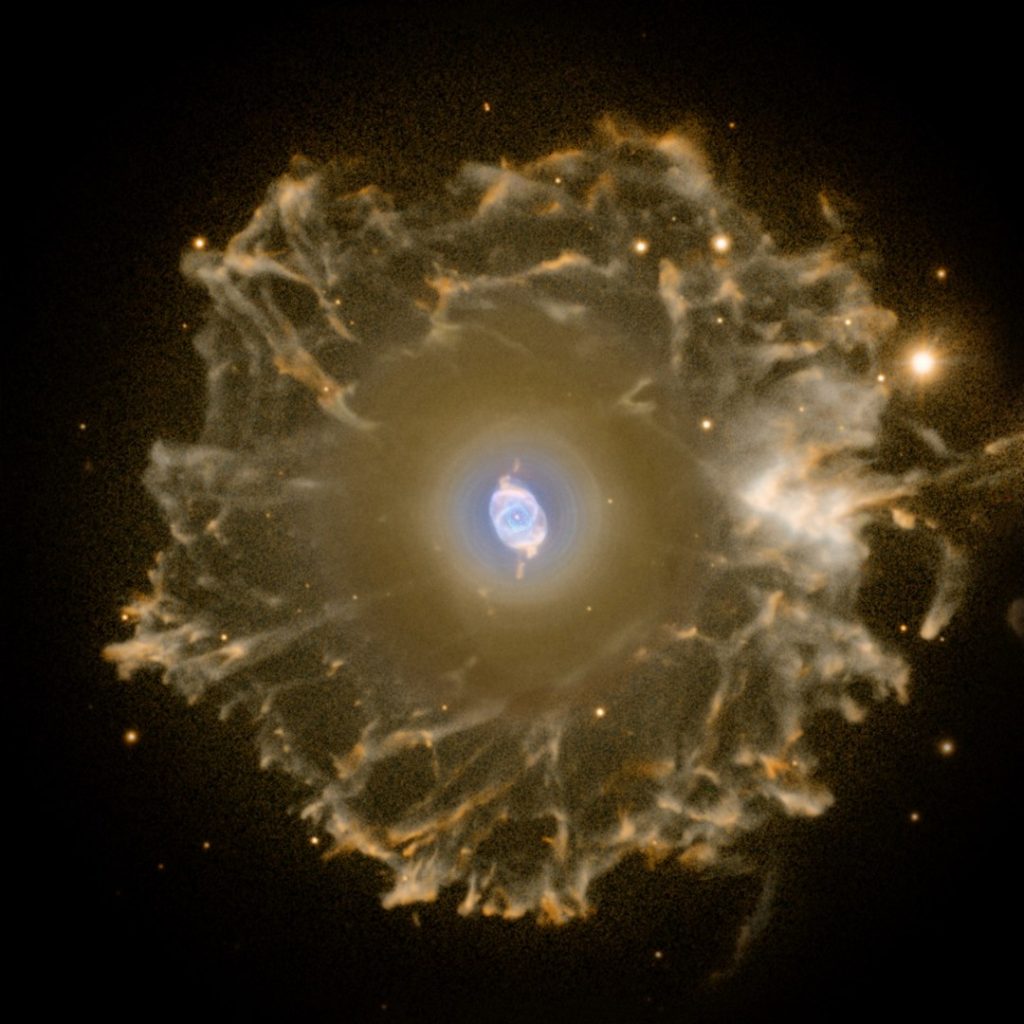
- The Cat’s Eye Nebula is a planetary nebula, with a beautiful shape that resembles a cat’s eye. It has been carefully examined by astronomers in many different wavelengths of light.
Project
- Find out who discovered the nebula, when, and how this helped our understanding of planetary nebulae.
- Overview
- Halo


Location
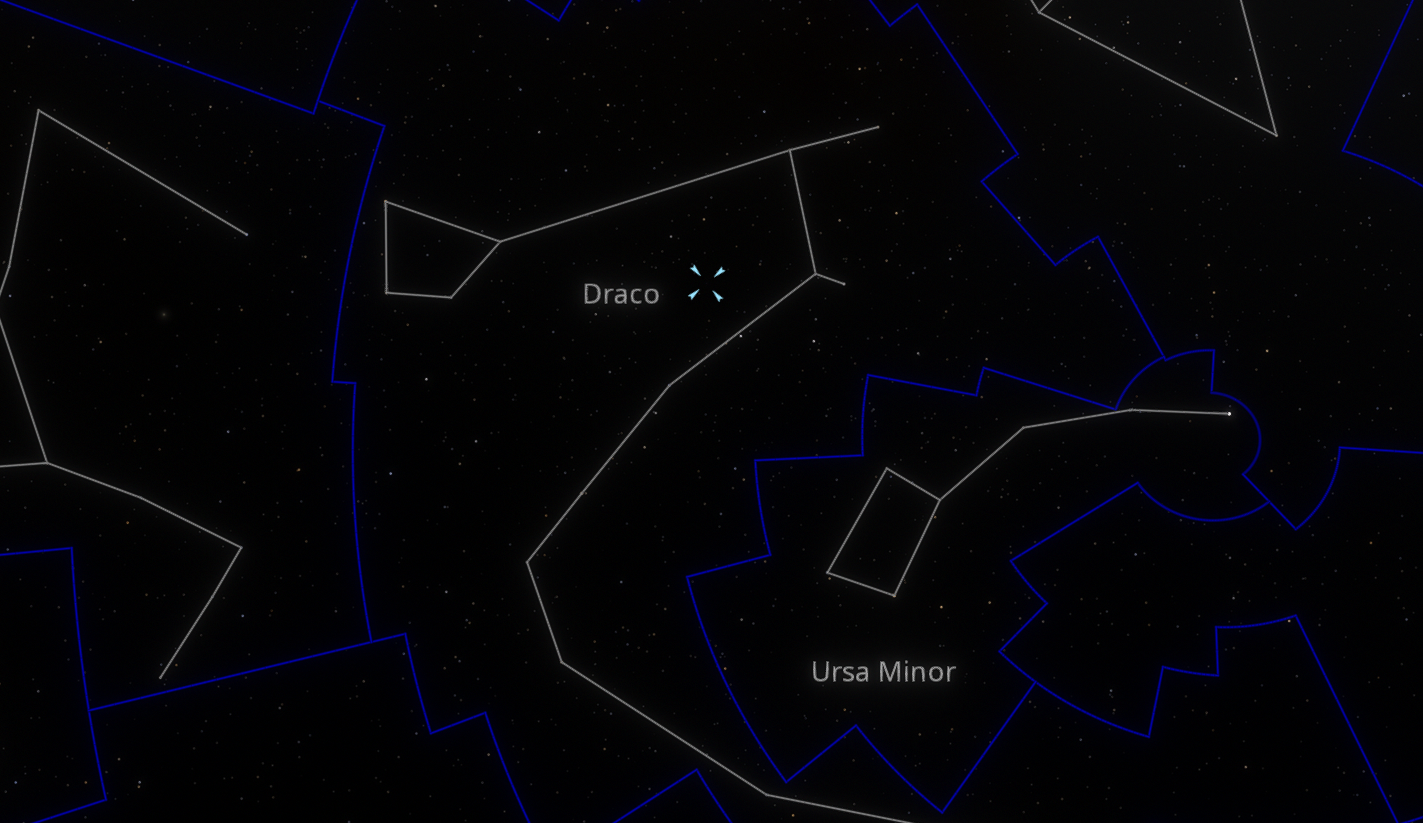
| Located in | Draco |
Fun Facts
- The Cat’s Eye Nebula was discovered by William Herschel on February 15, 1786.
- The centre of the nebula contains a bright star, possibly a binary system, and one of them might be a Wolf-Rayet star.
- The surface temperatures of known Wolf–Rayet stars range from 35,000 °F to around 377,000 °F, hotter than almost all other kinds of stars.
- Planetary nebulas are a type of nebula consisting of an expanding, glowing shell of ionized gas ejected from red giant stars late in their lives.
Past Lessons
| 81 | March 4, 2024 | (North America) |