

Key Information
Butterfly Nebula
| Type | Bipolar Planetary Nebula |
| Diameter | 3 light years |
| Distance | About 3,400 light years |
| Date of Discovery | Before 1888 |
| Other Names | Bipolar Nebula, Bug Nebula, Caldwell 69, NGC 6302 |
Learning Point
- A bipolar planetary nebula, the Butterfly Nebula is one of the most beautiful nebulas we can see through a telescope. It is a complex structure, the result of a massive star ejecting the outer layers of itself into space just before it collapsed into a white dwarf star.
Project
- Find out what type of nebula the Butterfly Nebula is. How is it formed?
- Overview
- Simulation
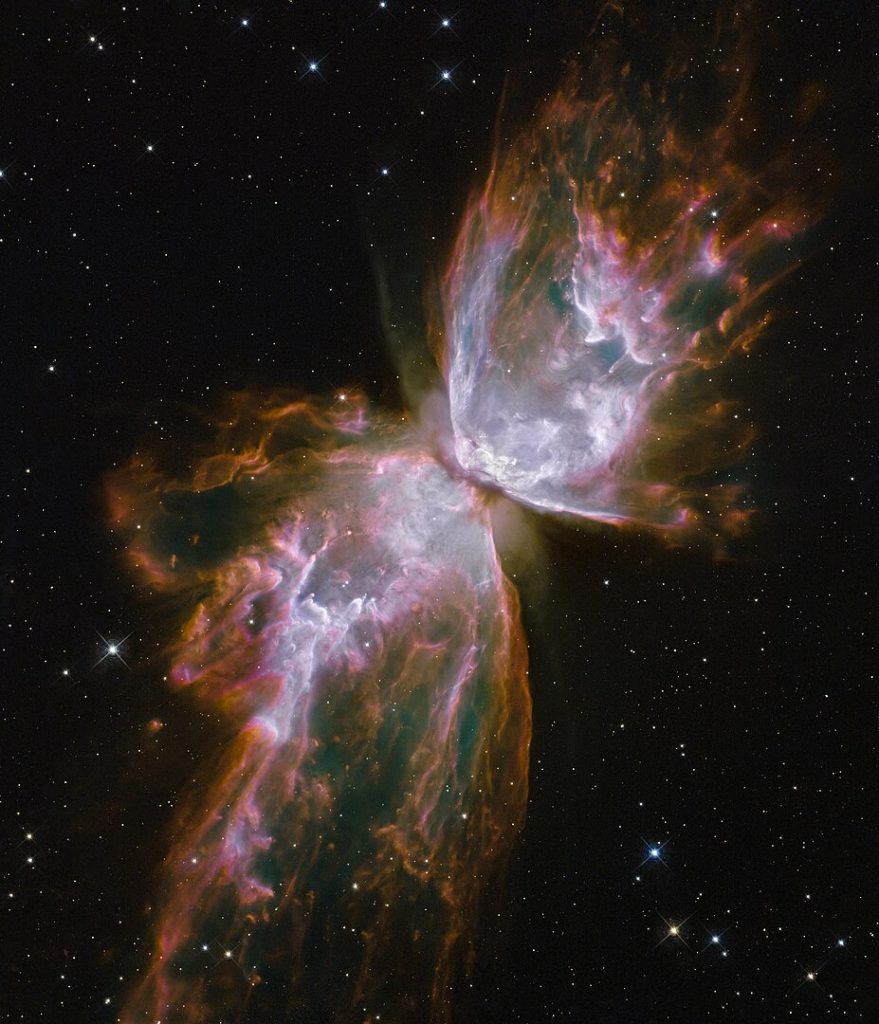
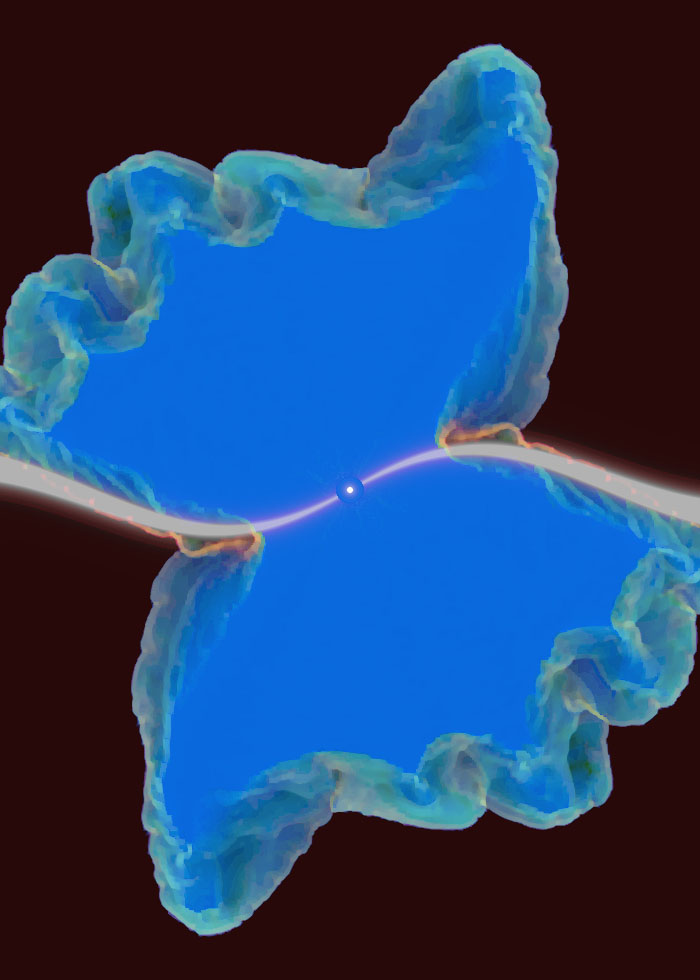
Location
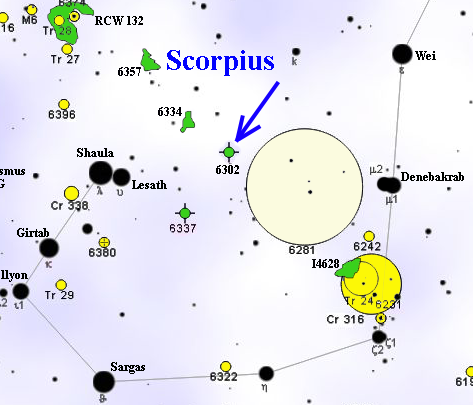

| Located in | Scorpius, in the Milky Way |
Fun Facts
- The nebula has been known since at least 1888, though it was first studied by Edward Barnard in 1907.
- The central star is among the hottest known stars, and was hard to find because it emits its light in the ultra-violet spectrum, the surrounding dust, as well as the bright background.
- The temperature of the star is calculated at over 450,000 °F.
Past Lessons
| 63 | September 25, 2023 | (North America) |