

Key Information
Betelgeuse
| Type | Star |
| Star Type | M1–M2 Ia–ab – Red Supergiant |
| Diameter | 606,932,352 to 760,826,880 miles |
| Temperature | 6,000 °F |
| Distance | 548 light years |
| Date of Discovery | Unknown |
Learning Point
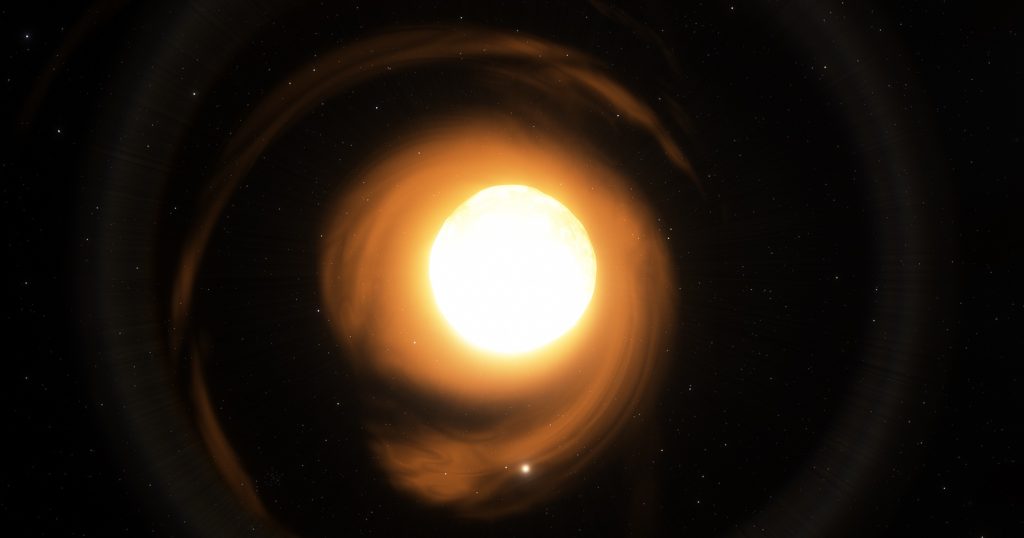
- Betelgeuse is the largest star we can see with our own eyes, and is a red supergiant, very likely to be near the end of its life. In recent years there were concerns that it might be about to go supernova, but so far that hasn’t happened.
Project
- Create a diagram of the Orion constellation and name the main stars on it, including Betelgeuse.
- Overview
- Comparison
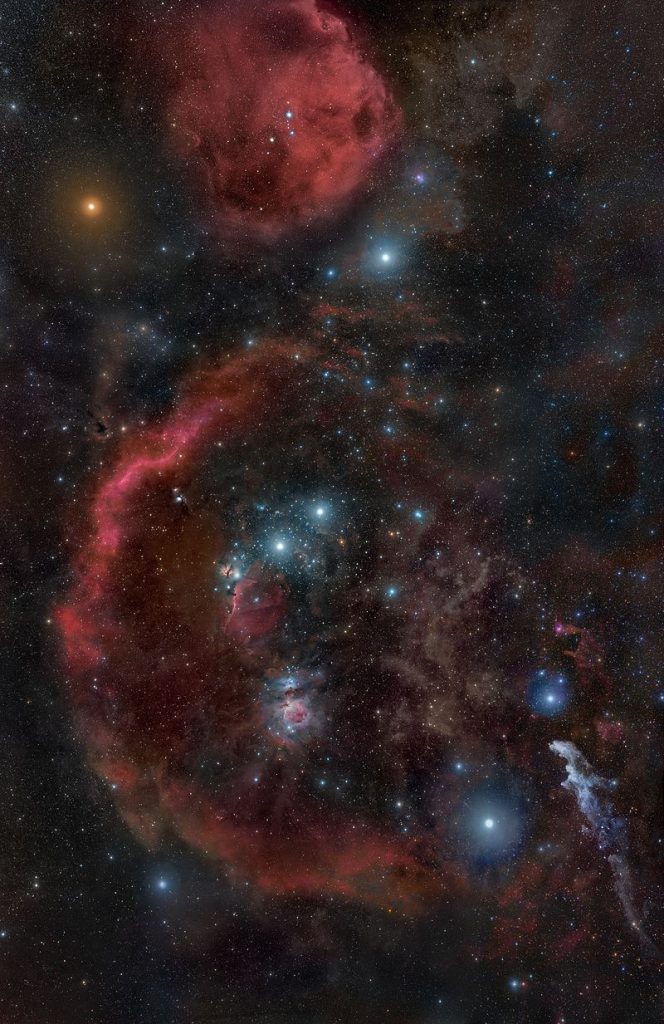
- Nebula around Betelgeuse

Location
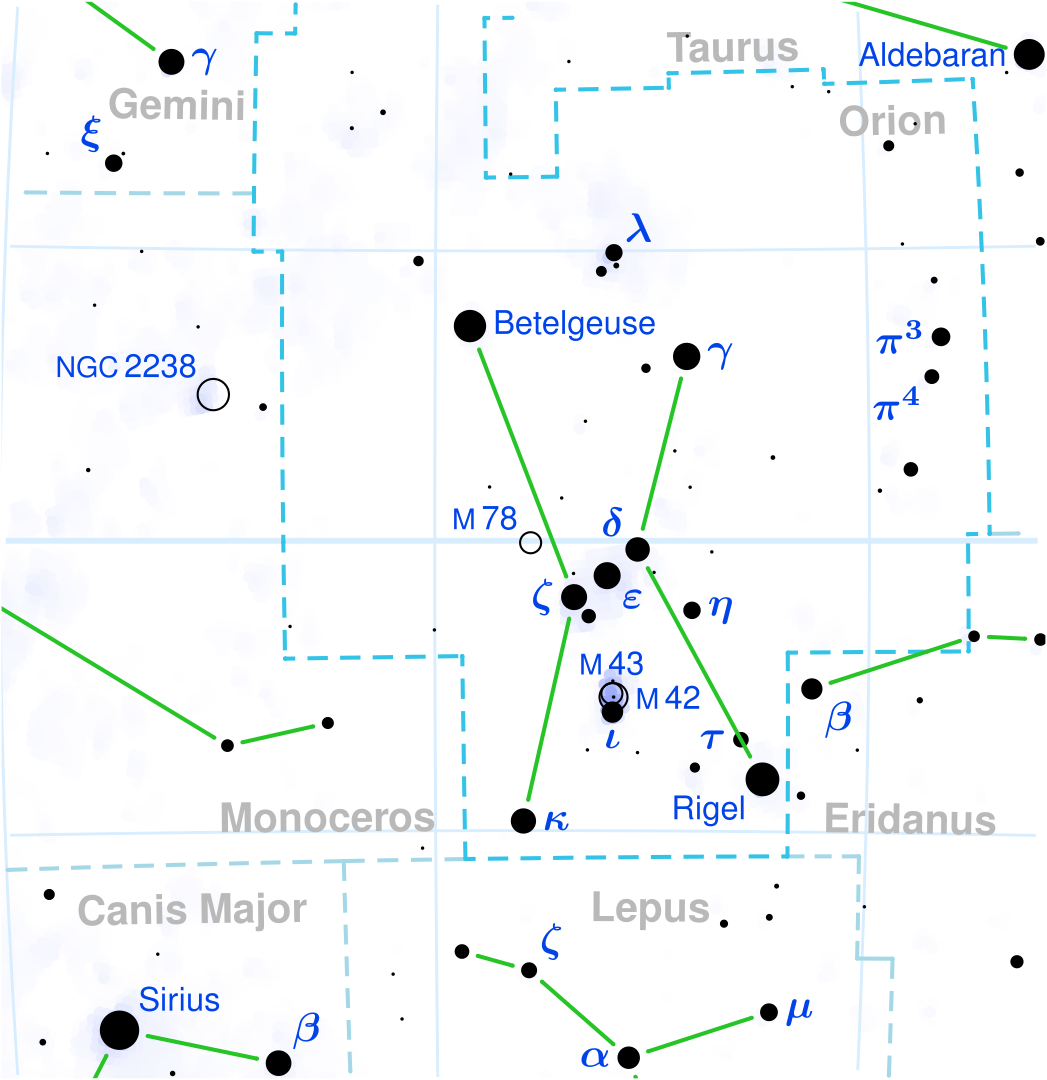

| Located in | Orion constellation, within the Milky Way |
Fun Facts
- Betelgeuse is difficult to measure because as a red supergiant star, it doesn’t have a stable shape. This makes it harder to be sure of its real size and distance from us.
- In 2020 it dimmed considerably, but this was probably due to dust and gas blocking some of the light to us.
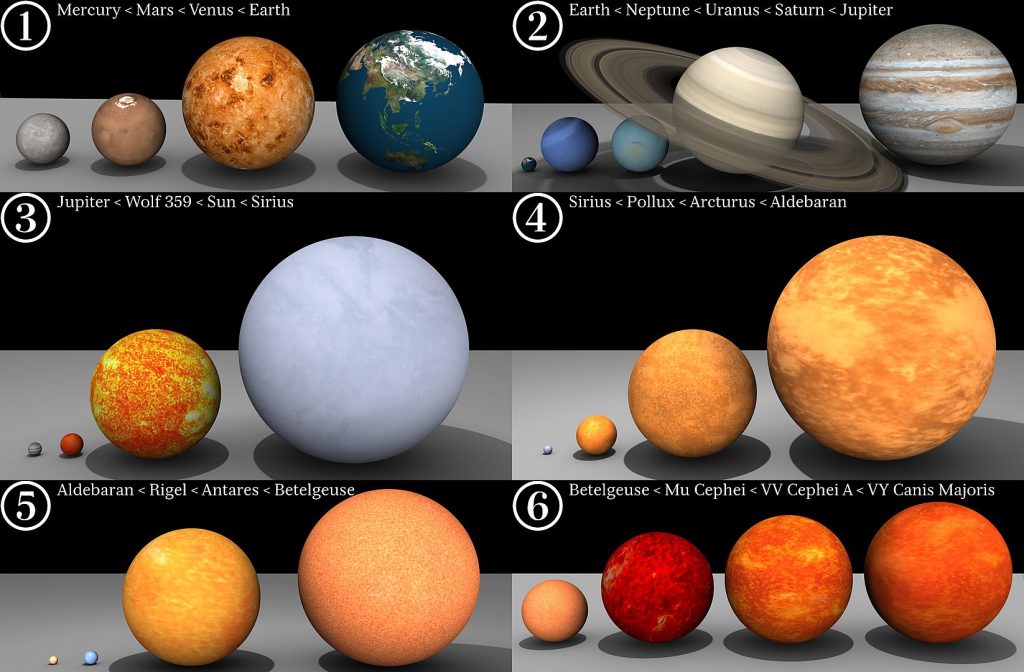
- It is likely to be so big that it would pass the orbit of Jupiter if we placed it where the sun is.
- The star is at the end of the main part of its life, and being as big as it is, will likely go supernova, leaving either a neutron star or black hole behind.
Past Lessons
| 16 | September 19, 2022 | (North America) |