

Key Information
174567 Varda
| Type | Trans-Neptunian Object & Possible Dwarf Planet |
| Diameter | 459 miles |
| Distance from the Sun | 3,672,683,945 to 4,899,793,557 miles |
| Orbit Time | 313.12 years |
| Length of Day | 5.61 or 5.91 hours |
| Temperature | Unknown, likely around -380 °F |
| Atmosphere | Unknown |
| Date of Discovery | 21 June 2003 (J A Larsen) |
| Moons | 1 (Ilmarë) |
Learning Point
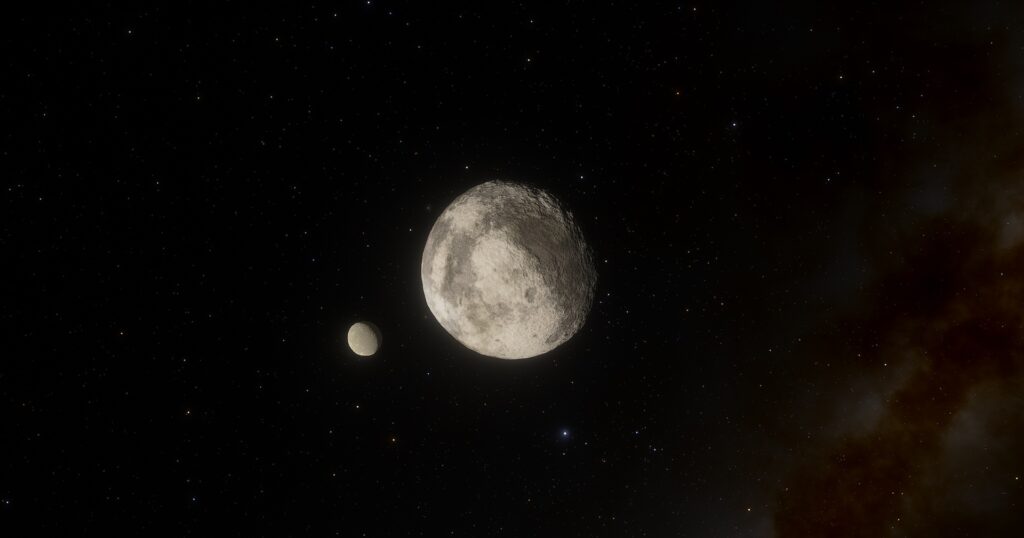
- 174567 Varda is a large, icy world located in the Kuiper Belt, far beyond the orbit of Neptune. Discovered in 2003, it is roughly 450 miles wide—nearly the size of the dwarf planet Ceres—and is currently considered a “dwarf planet candidate.” Varda is a binary system, meaning it is accompanied by a moon named Ilmarë, which is about half its size. Interestingly, both are named after characters from J.R.R. Tolkien’s The Silmarillion: Varda is the Queen of the Stars, and Ilmarë is her handmaiden. It takes Varda over 310 years to complete just one orbit around the Sun!
Project
- Draw Varda and Ilmarë and color them as you imagine they look.
- Overview
Location
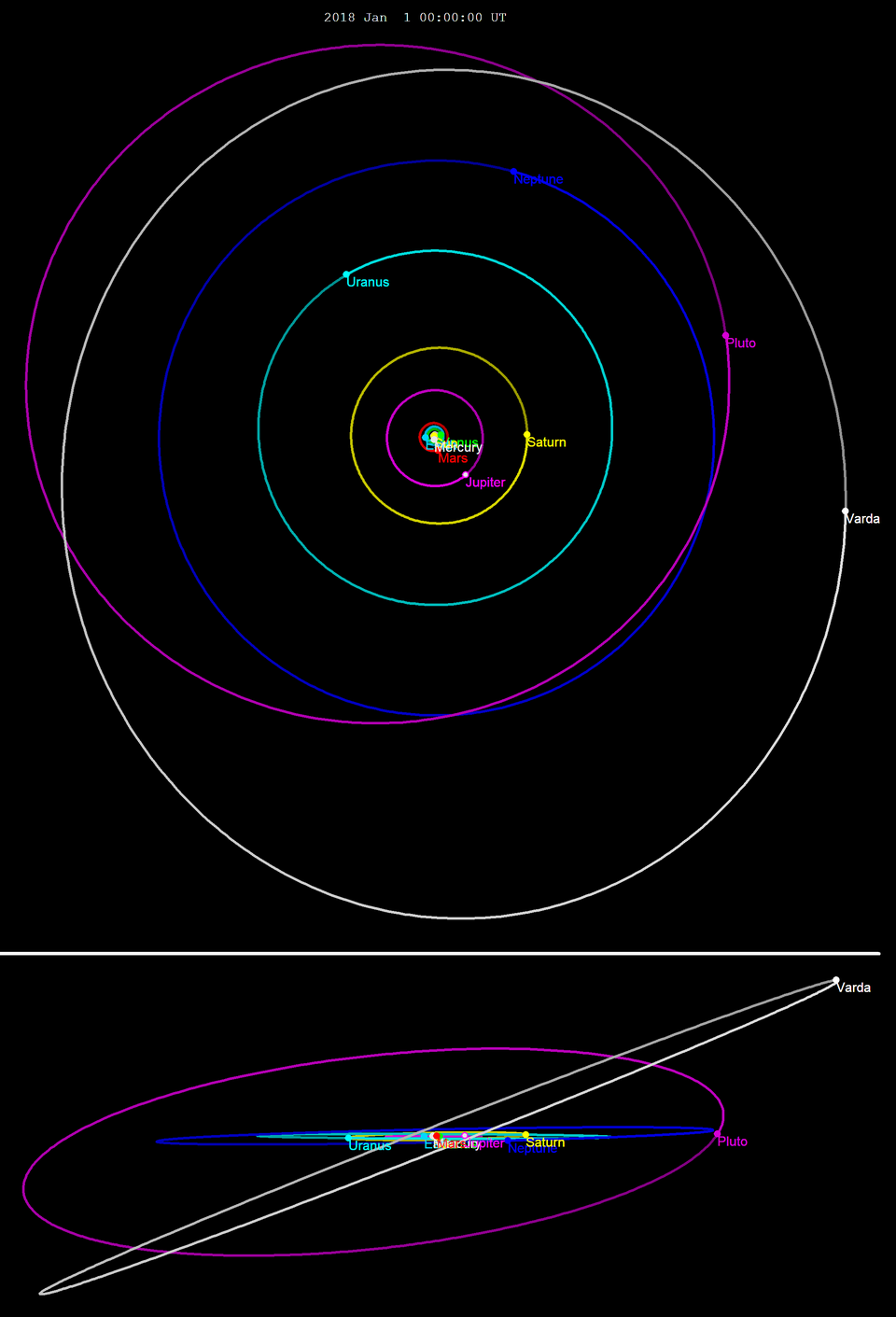
| Located in | Solar System, orbiting the Sun |
Fun Facts
- Varda lives in the Kuiper Belt, a giant donut-shaped ring of ice and rock past Neptune. This is the same neighborhood where Pluto and the “space snowman” Arrokoth hang out.
- Because it’s so far away from the Sun, it takes Varda about 311 Earth years to complete just one orbit. That means the last time Varda was in its current spot, George Washington hadn’t even been born yet!
- As Varda and its moon are so close in size, they act like a binary system. They dance around each other as they both travel around the Sun together.
- Even though its name means “Kindler of Stars,” the real Varda is actually quite dark. It is covered in dark ice and reflects only about 10% of the sunlight that hits it—making it about as dark as a fresh piece of charcoal.
Past Lessons
| 248 | January 19, 2026 | (North America) |