

Key Information
Baryonyx
| Species | Baryonyx walkeri |
| Diet | Carnivore |
| Length | 25 to 33 ft |
| Height | 8 to 9 ft |
| Weight | 1.2 to 1.7 tonnes |
| Timescale | Early Cretaceous |
| Classification | Theropoda > Spinosauridae |
Learning Point
- Baryonyx was found by amateur fossil collector William Walker in January 1983, when he discovered the large claw, that the dinosaur is named after, inside a rock.
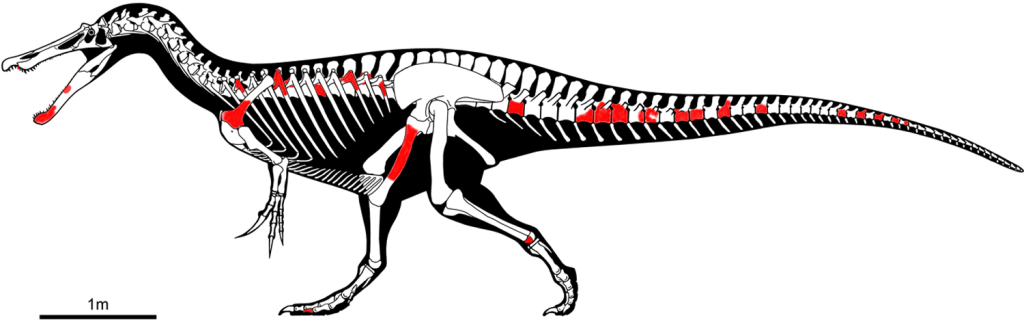
- The holotype specimen (the fossil that is used to compare other fossils to) remains the most completely known spinosaurid skeleton.
Project
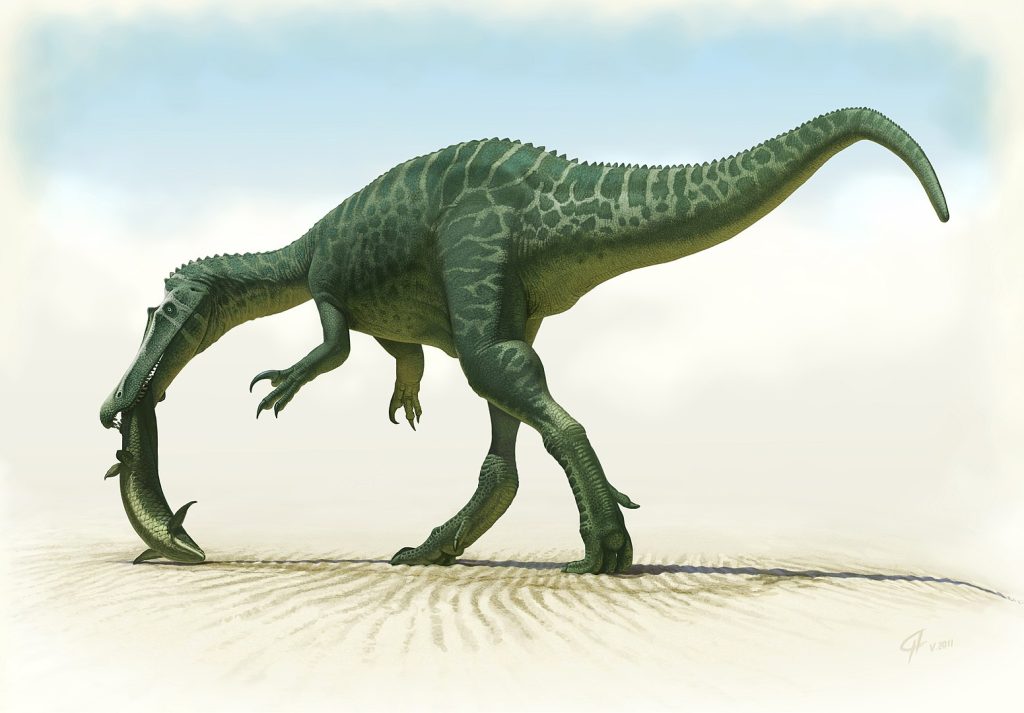
- Draw a Baryonyx fishing for some food.
- Overview
- X-Ray


Location
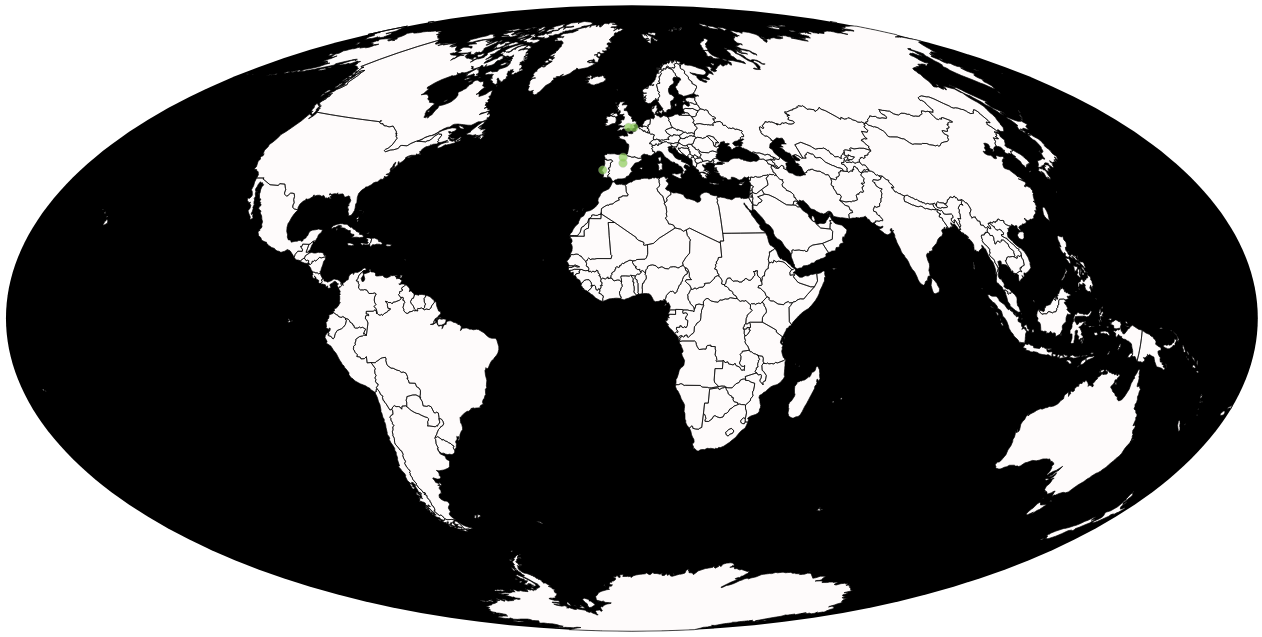
| Confirmed | Europe |
Fun Facts
- The name Baryonyx means “strong claw” or “heavy claw“, referring to its long and heavy claw on its arms.
- There are some clues in the most complete fossil that suggest that it might have been fully grown, although other things suggest that it was. It may be that Baryonyx was much larger than we know at the moment.
- The design of the skull and teeth of Baryonyx seem created to allow it to catch and eat fish. Fossilized fish scales have been found in the remains of one Baryonyx.
- Recent studies suggest theat spinosaurids, like Baryonyx, most problably lived around water, such as rivers, lakes and along the sea shore. Some, such as Baryonyx, may have been able to swim and dive in water.
Past Lessons
| 11 | May 20, 2022 | (North America) |
| 75 | July 10, 2023 | (North America) |
| 100 | August 24, 2023 | (International) |
| 169 | October 14, 2024 | (North America) |