

Key Information
Titan
| Type | Moon (of Saturn) |
| Diameter | 3,200 miles |
| Distance from Saturn | 759,235 miles |
| Orbit Time | 15.945 days |
| Length of Day | 15.945 days |
| Time around Sun | 29.4571 years |
| Atmosphere | 98.4% nitrogen, 1.4% methane, 0.2% hydrogen |
| Temperature | -291 °F |
| Date of Discovery | March 25, 1655 (Christiaan Huygens) |
Learning Point
- Discovered after the moons of Jupiter, Titan was the first of the moons of Saturn that was found, and is an intriguing place within our solar system, partly because of its large size, its very cold environment and also its dense atmosphere.
Project
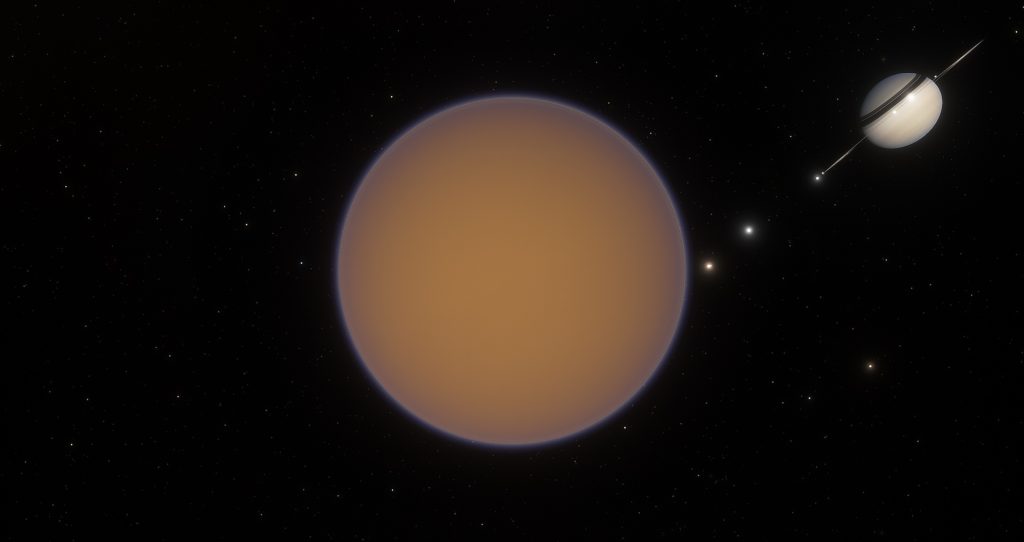
- Draw Titan with Saturn on the horizon.
- Overview
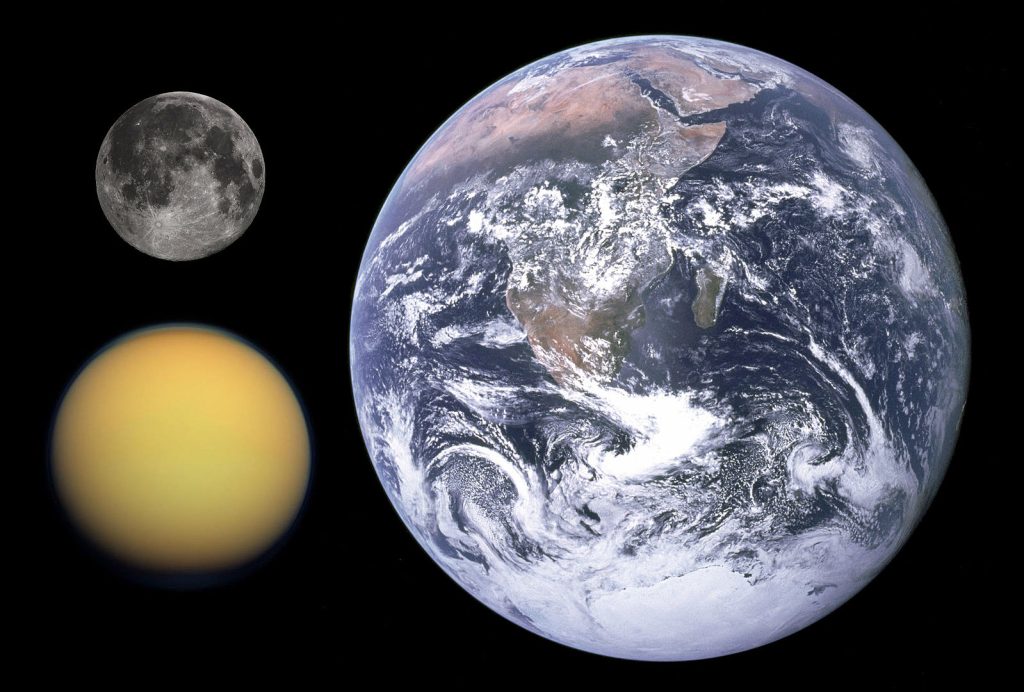
- Comparison
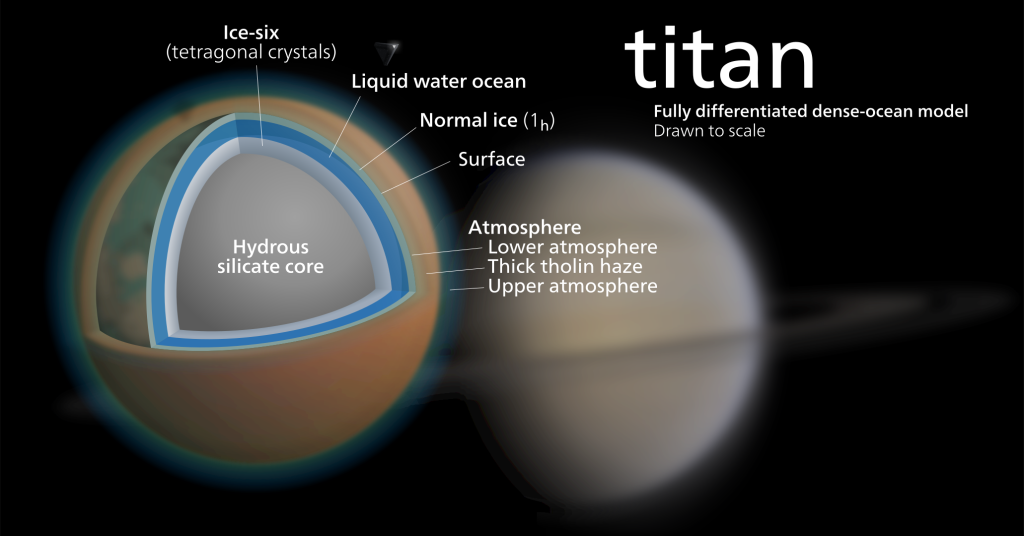
- Structure


Fun Facts
- Titan is Saturn’s largest moon and the second largest in the solar system (after Ganymede of Jupiter).
- It is the only moon in the solar system with clouds and a dense, planet-like atmosphere.
- The very cold surface temperature makes water as hard as rocks and allows methane to be found in its liquid form.
- The moon was discovered by Dutch astronomer Christiaan Huygens in 1655. The Huygens lander probe sent to the moon aboard NASA’s Cassini spacecraft by the European Space Agency is named in his honor.
- Titan is larger than the planet Mercury but is half the mass of the planet.
Past Lessons
| 22 | March 1, 2022 | (North America) |
| 81 | December 15, 2022 | (International) |
| 221 | April 15, 2025 | (North America) |