

Key Information
Land Snails
| Species | 35,000 to 40,000 species |
| Diet | Usually herbivore, some omnivore or carnivore |
| Lifespan | 1 to 10 years (in the wild) |
| Classification | Mollusca > Gastropoda |
| Conservation Status | Varies |
| Habitat | Usually wet or damp locations |
Learning Point
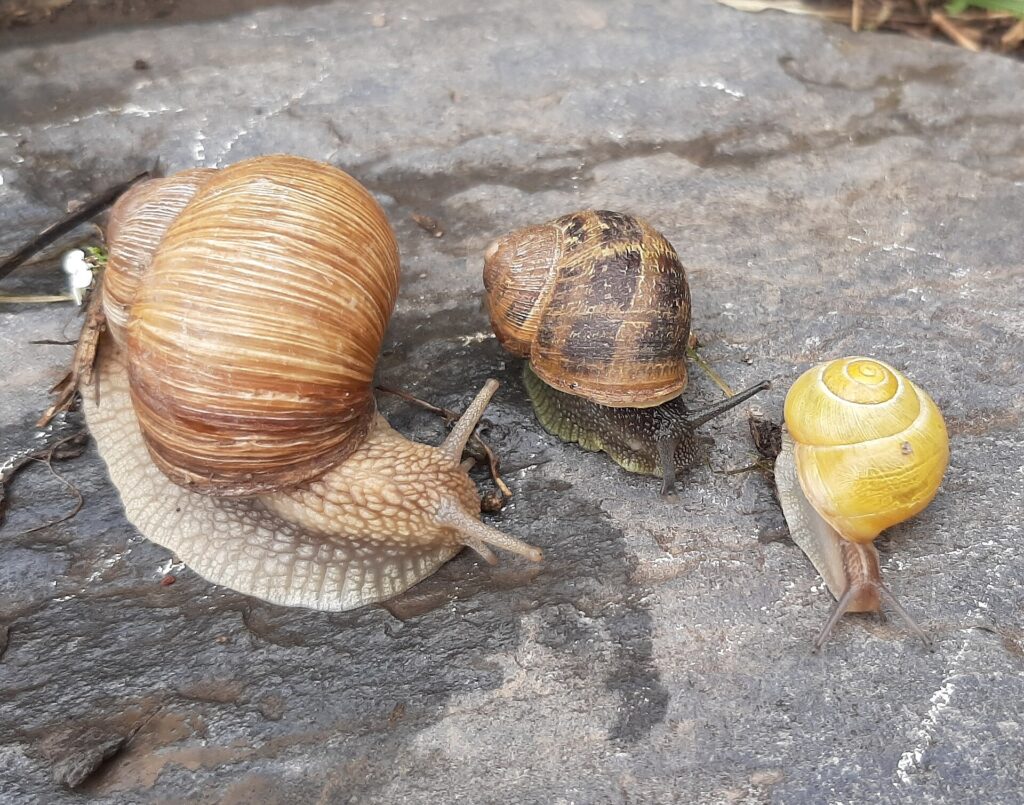
- Land snails are resilient gastropods that live land. Moving on a muscular foot lubricated by protective mucus, they navigate the world using two sets of retractable tentacles for sight and smell. These mollusks are biological outliers: they eat with a tooth-covered tongue called a radula, and most grow spiral calcium shells throughout their lives. While they seem simple, snails can actually learn and remember. From microscopic species to the 12-inch Giant African Snail, they play a vital role in nature by recycling nutrients and feeding diverse predators.
Project
- Draw a picture of your favourite snail or an interesting snail.
- Overview
Location

| Places | Worldwide, except the Polar regions |
Fun Facts
- Snails can crawl over the edge of a sharp razor blade without getting a single cut! Their thick, gooey slime acts like a protective cushion between their soft bodies and the ground.
- Even though they don’t have a jaw like ours, snails have a tongue called a radula that is covered in up to 20,000 microscopic teeth. They use it like sandpaper to scrape up their food!
- A snail’s eyes are on the ends of its long, upper tentacles. If a snail gets scared, it can shrink its eyes and pull them all the way back into its head to keep them safe.
- A snail is born with its shell. As the snail gets bigger, it adds new layers of “stone” (calcium) to the edge of the shell. It never has to move to a new house—its home grows with it!
- When it’s too hot and dry in the summer or too cold in the winter, snails seal themselves inside their shells with a “slime door” and can sleep for months until the weather is just right.
Past Lessons
| 198 | January 21, 2026 | (North America) |