Star Types
- Type
- The star types we have found
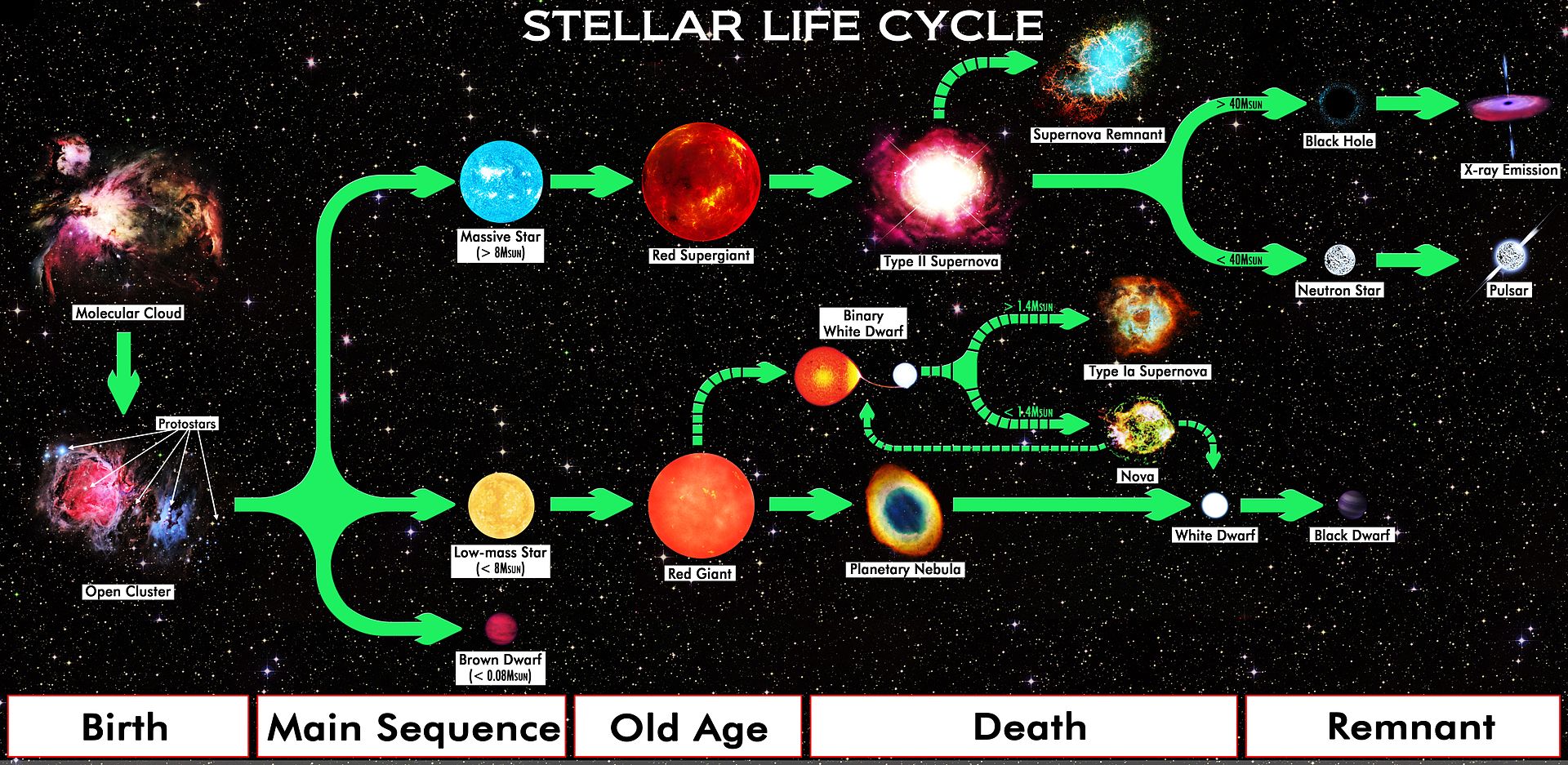
- Stars change through the course of their "life" cycle, and the mass (how heavy it is) can affect what color, heat and outcome a star has through its progression.
- Draw the different stages of a star.
- Located in
- Universe
- Stars form from clouds of dust and gas, condensing into various sizes, as well as forming the planets, comets and asteroids we find in a star system.
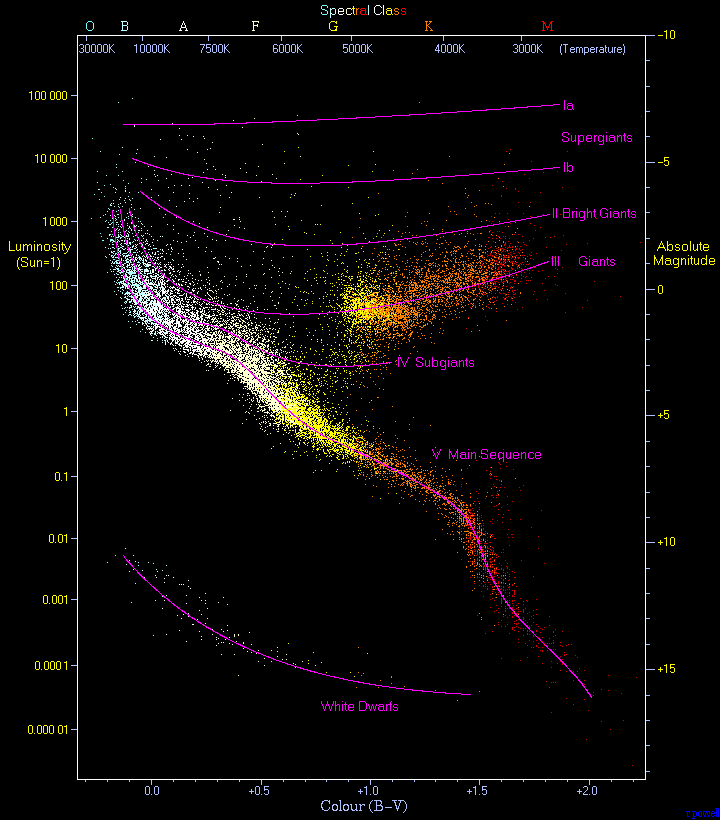
- The color of a star depends on how hot it is on the surface, with red being the cooler stars, and blue the hottest stars.
- The lower mass (weight) stars progress along a slower path, that can end up in a red dwarf star, or a normal (main sequence) star progressing to a red giant and then a white dwarf.
- The high mass stars progress along quicker and normally result in a supernova explosion, creating either a black hole or a neutron star.