Iapetus
- Type
- Moon (of Saturn)
- Diameter
- 912.7 miles
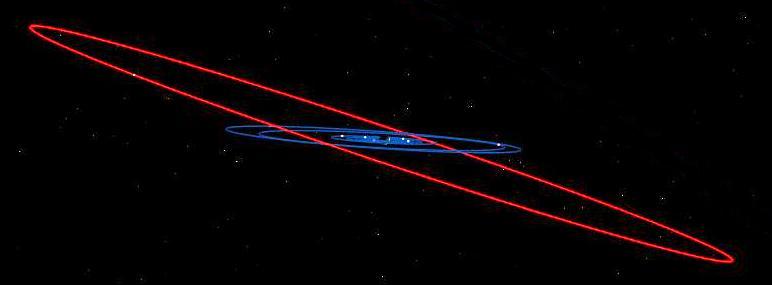
- Distance from Saturn
- 2,212,590 miles
- Orbit Time
- 79.3 days
- Length of Day
- 79.3 days
- Time around Sun
- 29.4571 Earth years
- Atmosphere
- None
- Temperature
- -297 to -225 °F
- Date of Discovery
- October 25, 1671, G. D. Cassini
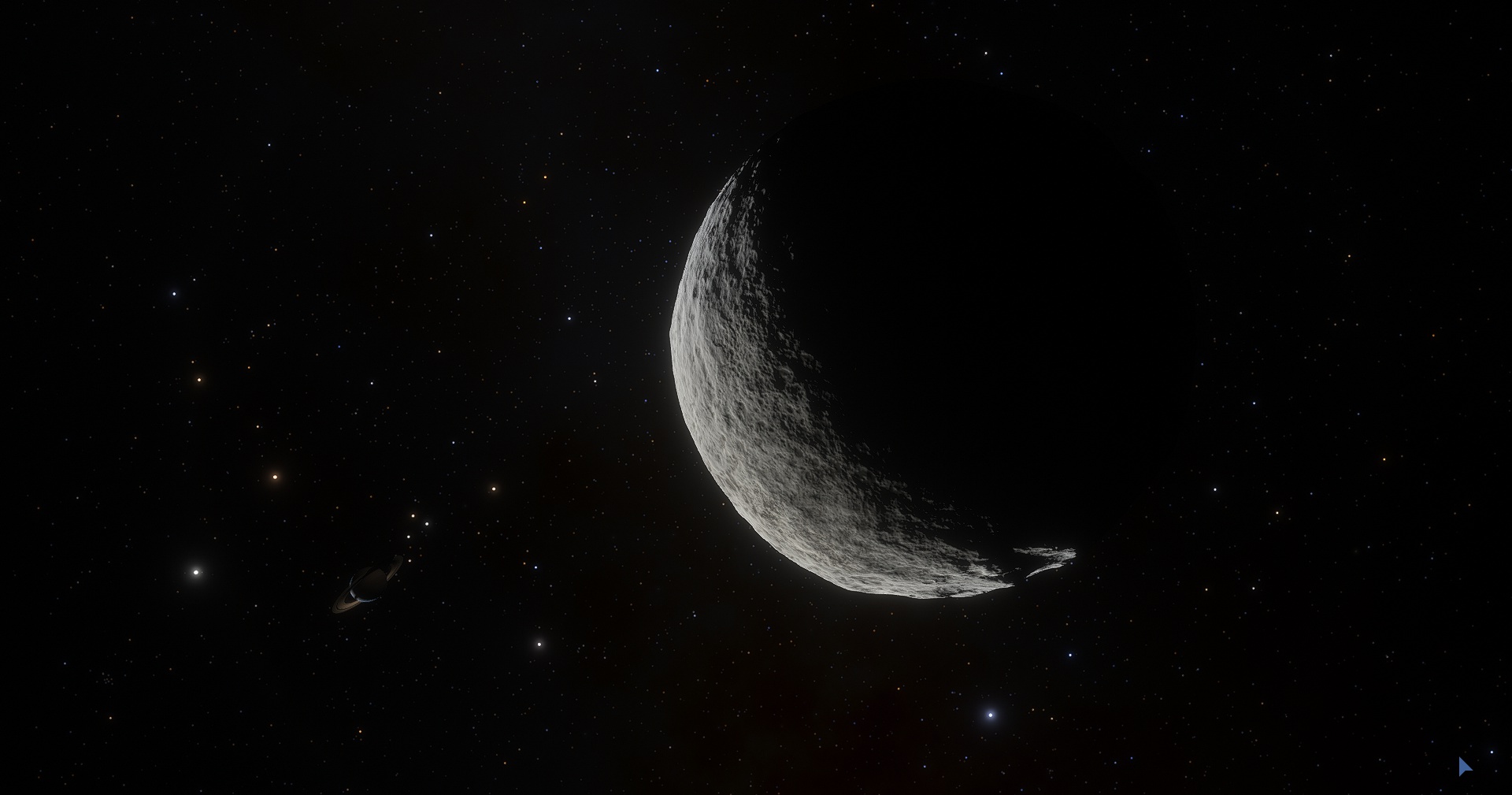
- Discovered by Giovanni Cassini in 1671, Iapetus has been a fascinating moon of Saturn from very early on. Cassini realised the moon had two colours as it was difficult to find it on one side of Saturn, which is the result of Iapetus' rotation being locked to the its orbit around Saturn.
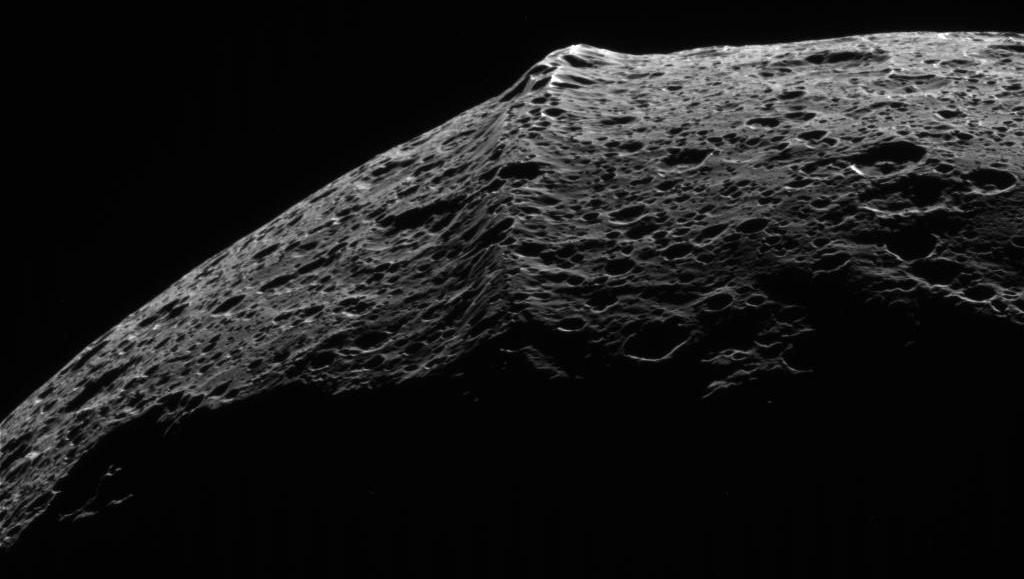
- Draw Iapetus around Saturn with its two colours and the ridge on the side of the moon.
- Located in
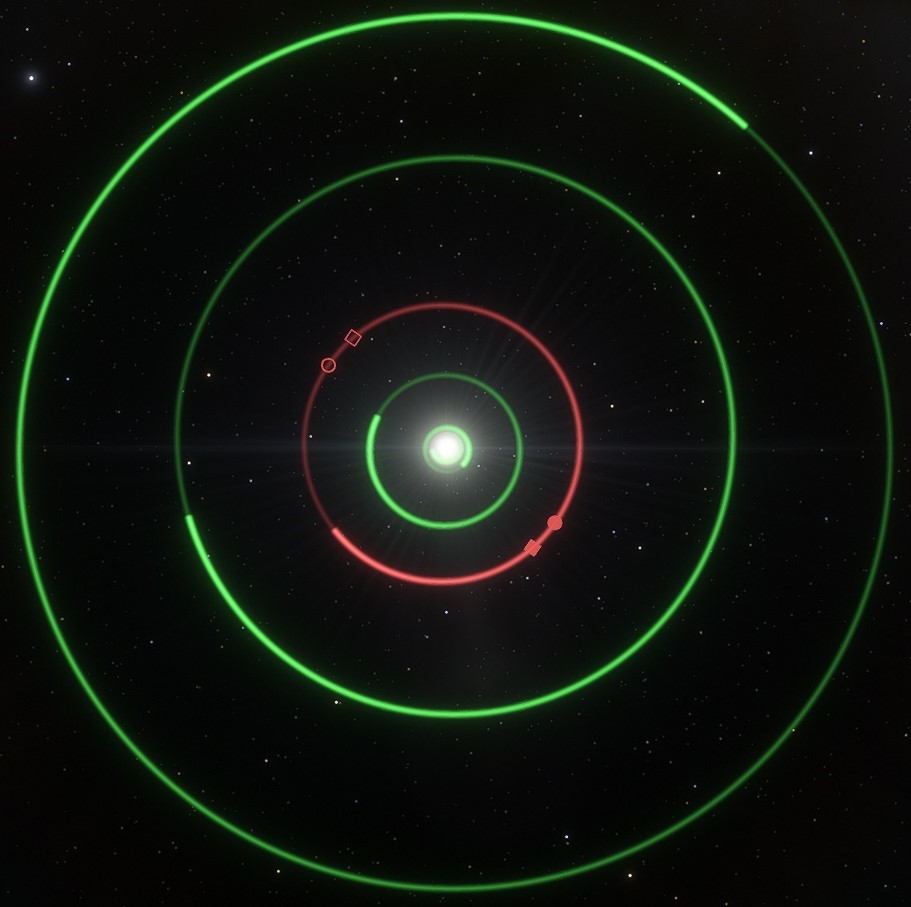
- Solar System, orbiting Saturn
- Iapetus is the 3rd largest of Saturn's moons and the 11th largest in the Solar System.
- It is thought that Iapetus may have been a very early moon of Saturn, and not formed through collisions as has been suggested for other moons of Saturn.
- Iapetus is sometimes described as walnut-shaped because it has squashed poles and a bulging equator due to the large ridge that runs around part of the moon.
- The largest crater on Iapetus, Turgis, is 360 miles wide and the edges are 9.3 miles high.