Cygnus X-1
- Type
- Black hole
- Companion
- HDE 226868 - blue supergiant
- Diameter
- 50 to 60 miles
- Mass
- 16-21 solar masses
- Orbit Time
- 5.6 days
- Temperature
- 31,000 K (55,000 °F)
- Distance from Earth
- 6,100 light years
- Discovery Date
- 1964
- Cygnus X-1 is the first object identified as likely to be a black hole, having been detected as a strong X-Ray source in 1964.
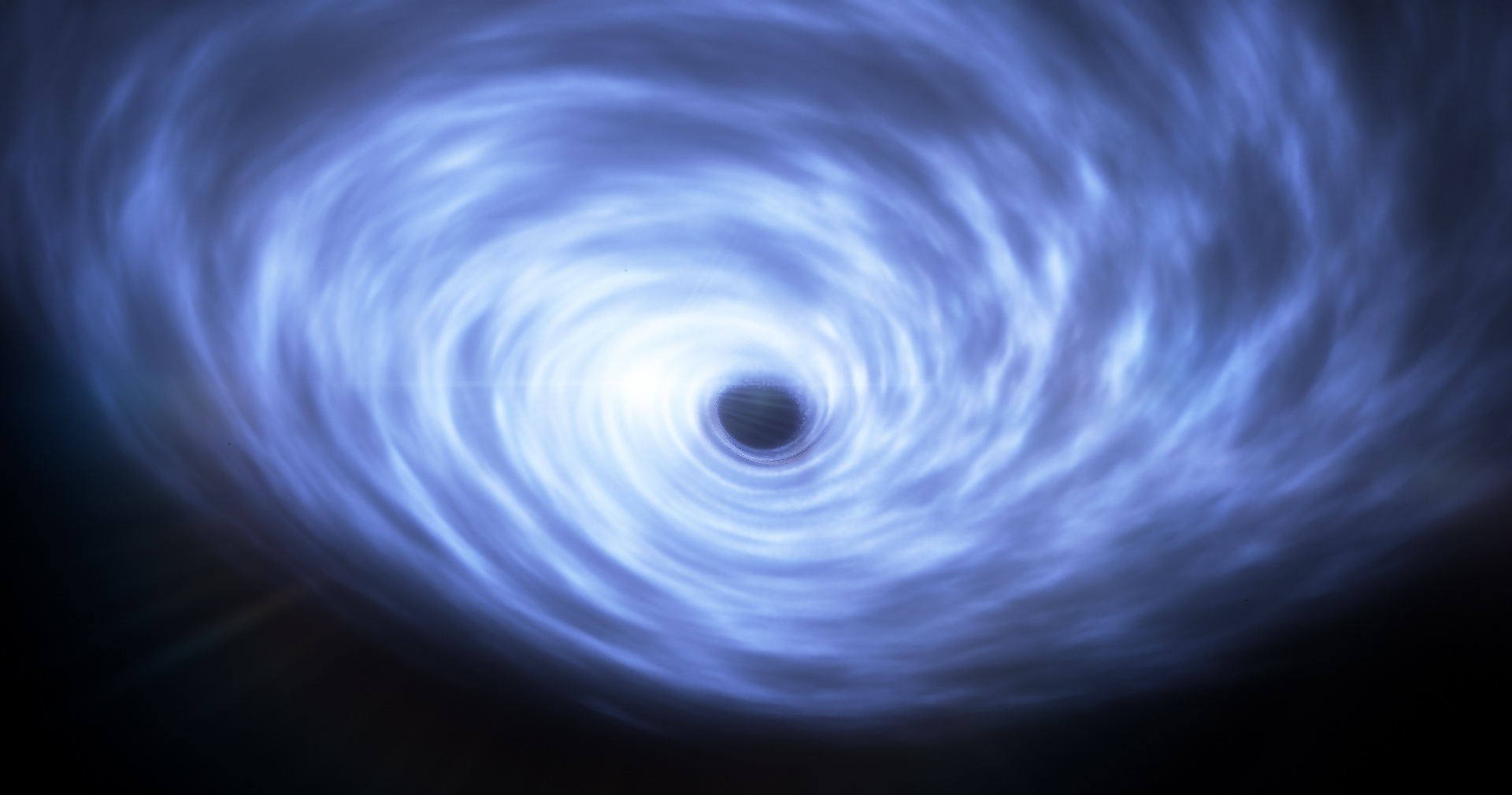
- Black holes are giant or supergiant stars that have "died" through a supernova explosion that leaves behind a very powerful, very heavy remanant of the star. The gravity is so strong even light can't escape.
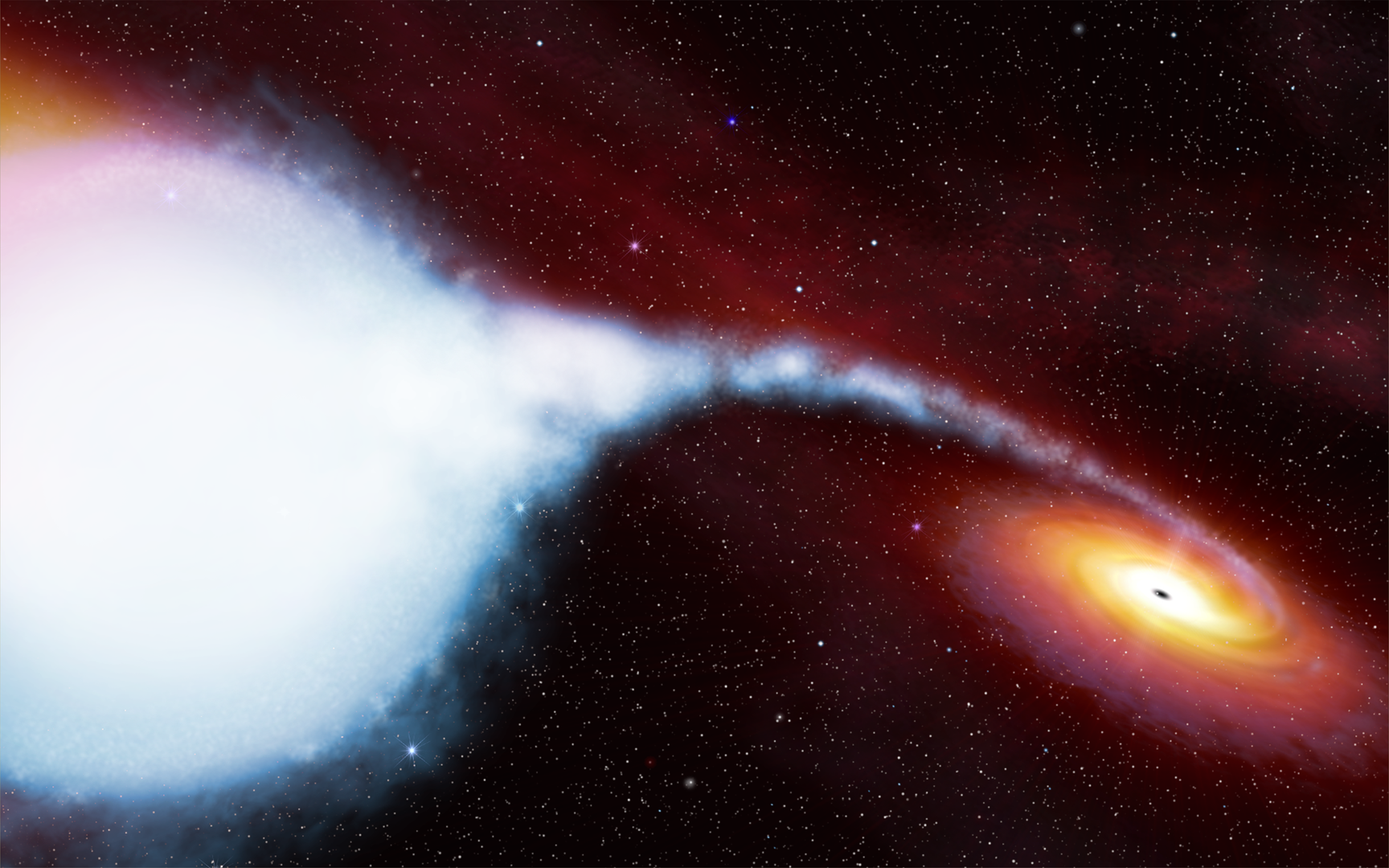
- Draw a picture of the blackhole and the bluegiant star.
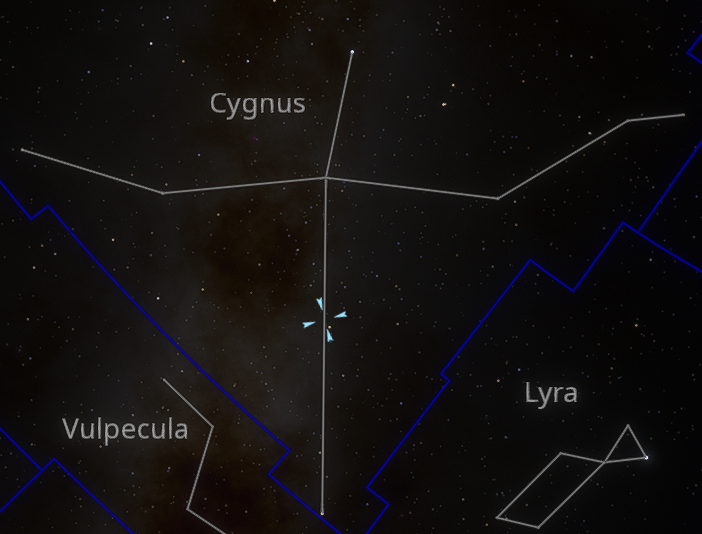
- Located in
- Cygnus constellation
- Cygnus X-1 is pulling gas from the nearby blue supergiant star, making the star look more like an egg in shape that a ball.
- The gas and debris from this star very likely creates a disk, which looks like a giant ring, that rotates around the black hole. This disc is called an accretion disk.
- The black hole is about 50-60 miles across and weighs as much as 16 to 21 of our suns.
- Because we cannot see a black hole directly, many black holes are not 100% certain to be one.
- There is a point around every black hole where light can no longer escape the pull of the star's gravity, this is called the event horizon, but it's not the surface of the star.