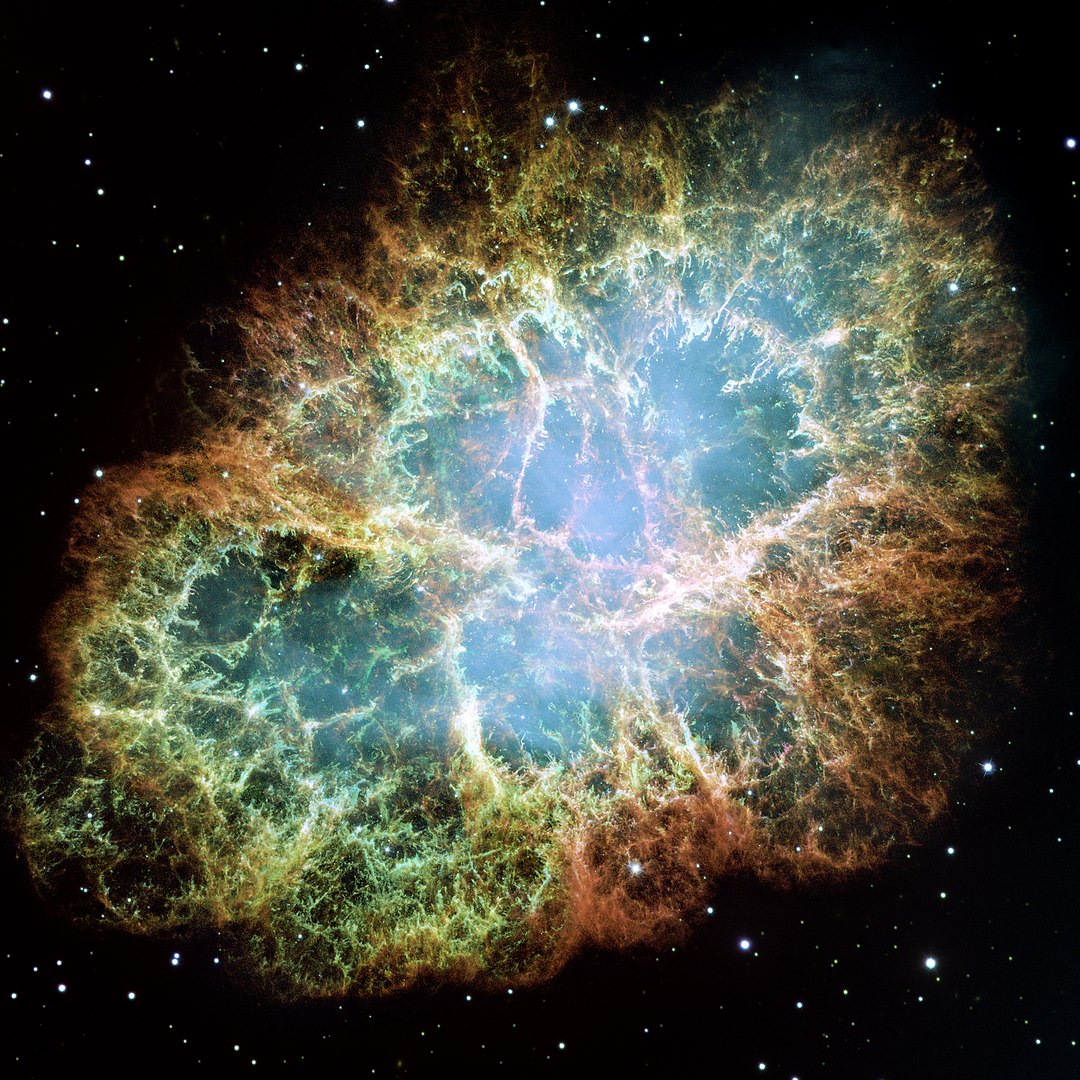
Crab Nebula and Pulsar
- Type
- Supernovae Remnant Nebula and Pulsar
- Diameter
- 11 to 13 light years
- Distance
- About 6,500 light years
- Date of Discovery
- 1731 (John Bevis)
- Other Names
- NGC 1952, Taurus A, M1
- Temperature (of star)
- 28,800,000 °F
- Rotation (of star)
- 33 milliseconds
- The Crab Nebula is a nebula formed from the explosion of a supernova that was observed by Chinese astronomers around a thousand years ago. The nebula reveals a lot about how supernovae happen, as well as being the home of a new pulsar star, a form of neutron star..
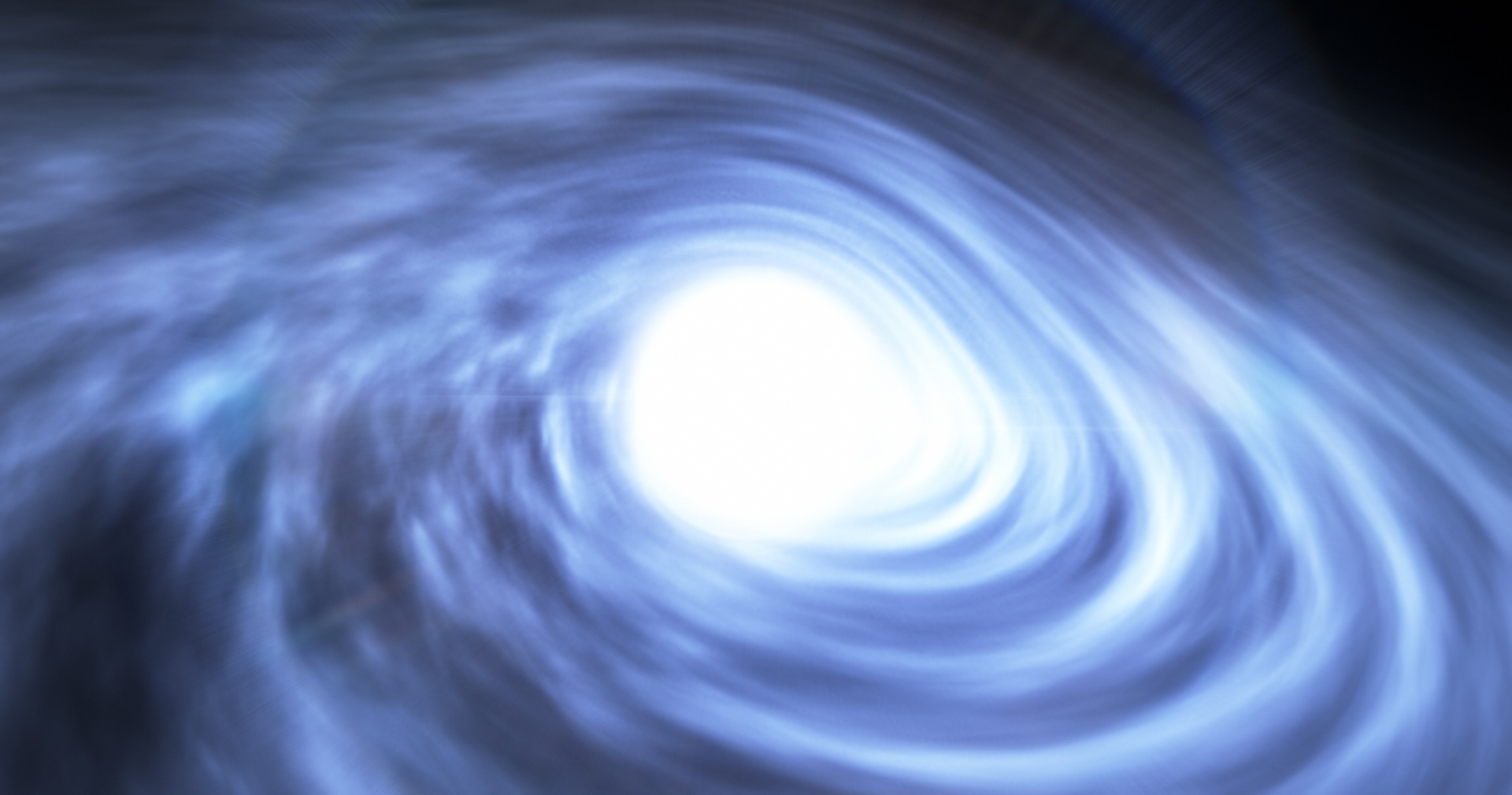
- Draw your own nebula and a bright neutron star in the middle
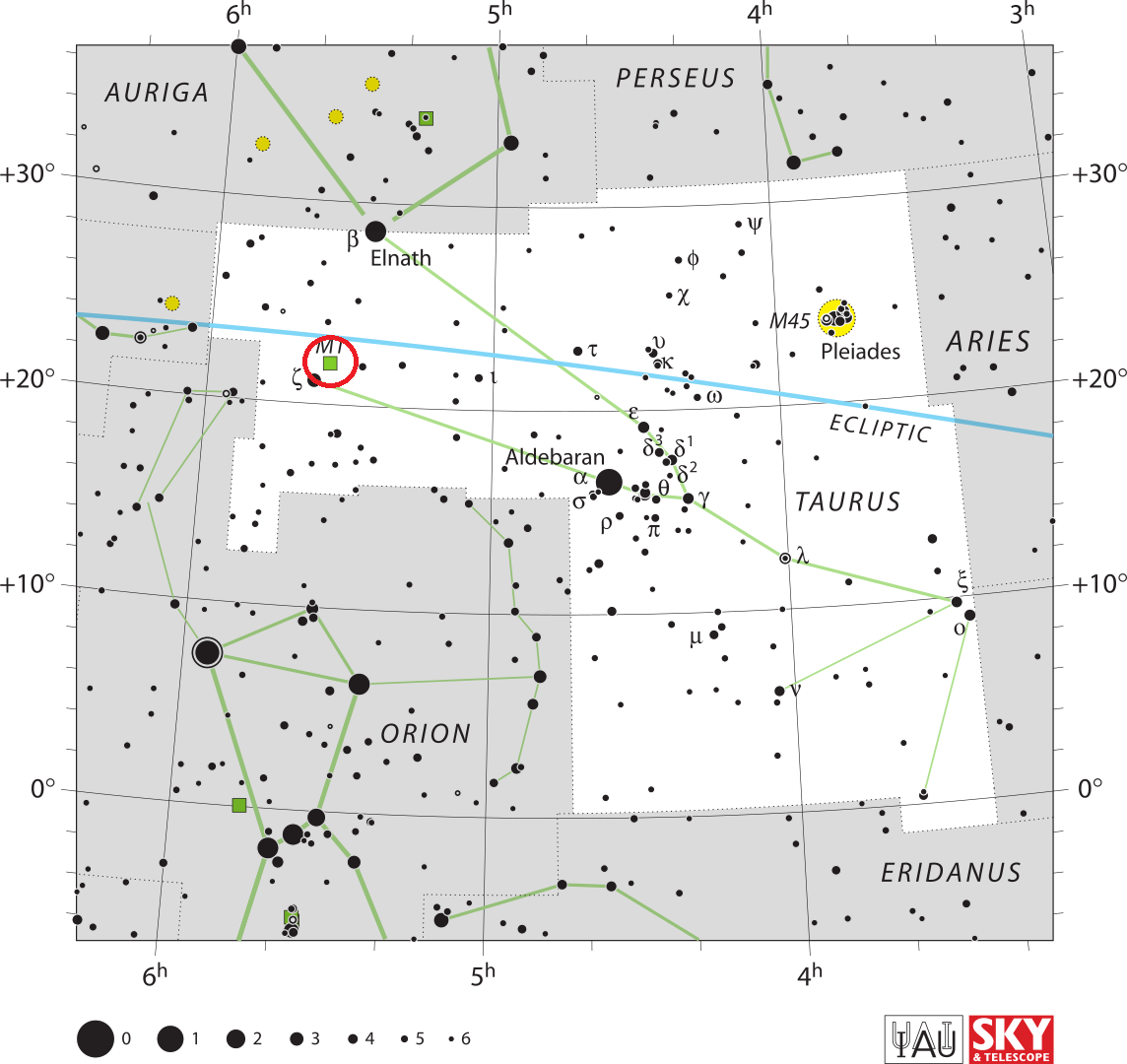
- Located in
- Taurus
- The Crab Nebula was identified as the remnant of SN 1054 by 1939.
- The Crab Pulsar itself was discovered in 1968 by Dr Susan Jocelyn Bell.
- Neutron stars can undergo a starquake, which makes the star spin up in speed slightly.
- A teaspoon of a neutron star material would way 4 billion tons on Earth.