

Key Information
Sturgeons
| Species | 27 species |
| Diet | Carnivore |
| Length | Up to 24 ft |
| Weight | Up to 4,570 lb |
| Classification | Chordata > Actinopterygii > Acipenseriformes |
| Conservation Status | Vulnerable to Critically Endangered |
| Habitat | Deep ocean, lakes, rivers |
Learning Point
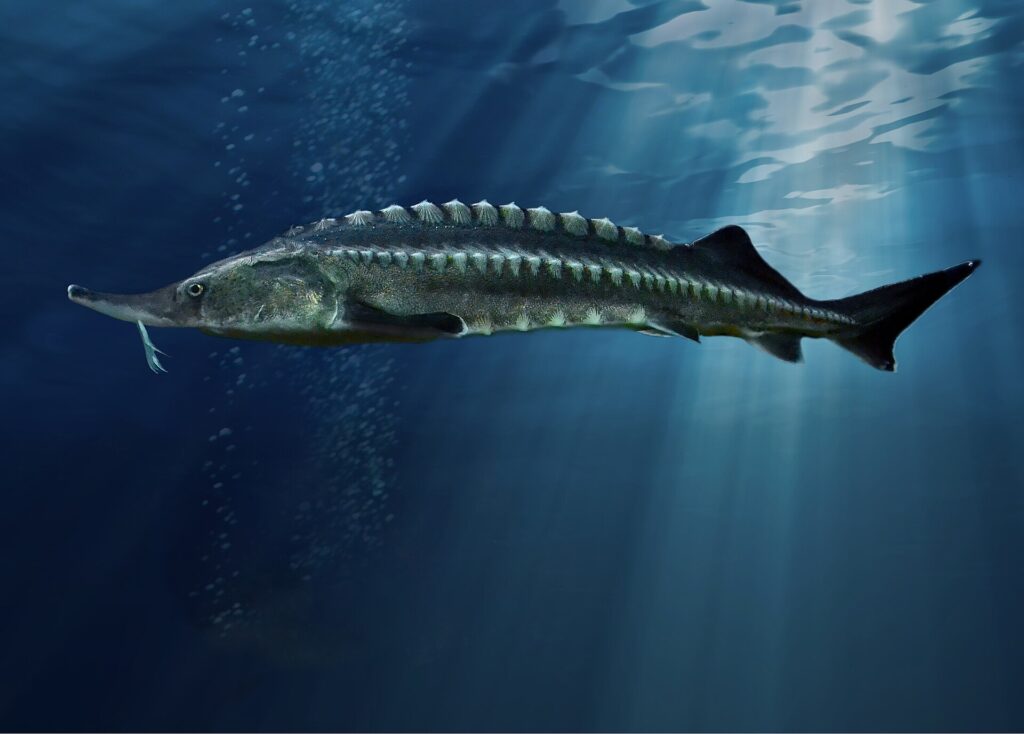
- Often called “living fossils,” sturgeons have remained virtually unchanged for over 200 million years. These massive fish are unique because they lack traditional scales, instead sporting five rows of bony, armor-like plates called scutes. With skeletons made of flexible cartilage rather than bone, they use sensitive whiskers (barbels) to scavenge the murky floors of rivers and oceans. Some species can live over a century and grow as heavy as a small car. However, due to slow reproduction, habitat loss, and the high demand for their eggs (caviar), they are now among the most endangered animals on Earth.
Project
- Draw a sturgeon and its eggs.
- Overview
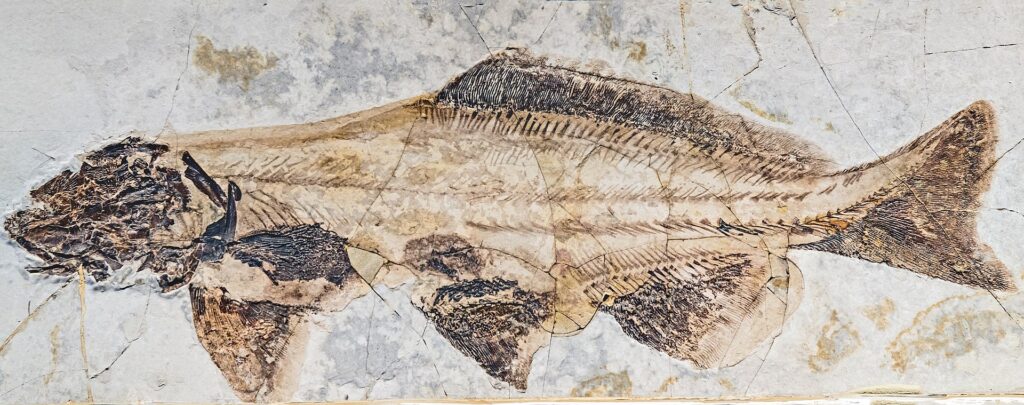
- X-Ray (Fossil)
Location

| Locations | Seas and Rivers of Northern Hemisphere |
Fun Facts
- Sturgeons have been swimming in Earth’s waters since the time of the dinosaurs! They are called “living fossils” because they haven’t changed much in over 200 million years.
- Instead of slippery scales like a goldfish, sturgeons have five rows of bony plates called scutes. It’s like they are wearing a suit of knight’s armor!
- Sturgeons have a “heterocercal” tail, which means the top half is much longer than the bottom half. This makes them look a lot like prehistoric sharks.
- Adult sturgeons don’t have teeth! They use their vacuum-like mouths to suck up food from the bottom of the river, using their four “whiskers” (barbels) to feel for snacks in the dark.
- The biggest sturgeons, called Belugas, can grow to be over 20 feet long. That’s longer than a large SUV and heavier than a small car!
- Some sturgeons are world travelers. They spend most of their time in the salty ocean but swim hundreds of miles into freshwater rivers just to lay their eggs.
Past Lessons
| 207 | April 8, 2026 | (North America) |