

Key Information
Rho Cassiopeiae
| Type | Star |
| Diameter | 274,935,168 to 424,074,528 miles |
| Distance | 3,400 light years |
| Temperature | 7,768 to 10,419 °F |
| Star Type | G2Iae – Yellow Hypergiant |
| Date of Discovery | 1603 (cataloged by Johann Bayer) |
| Other Names | 7 Cassiopeiae, HR 9045, HD 224014 |
Learning Point
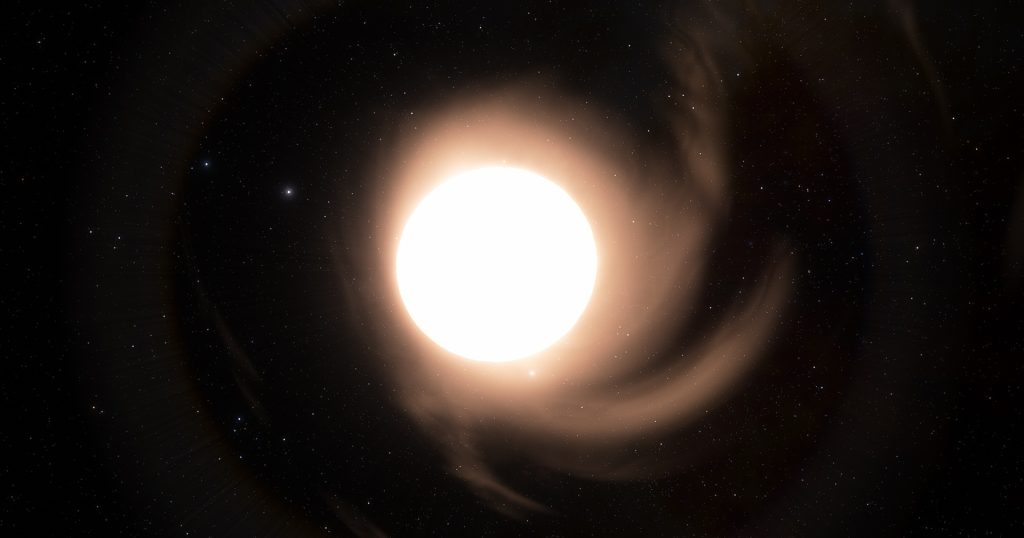
- Rho Cassiopeiae is a yellow hypergiant star, moving through the final stages of its existence, now converting helium into other elements. The start is one of the brightest yellow stars we know about.
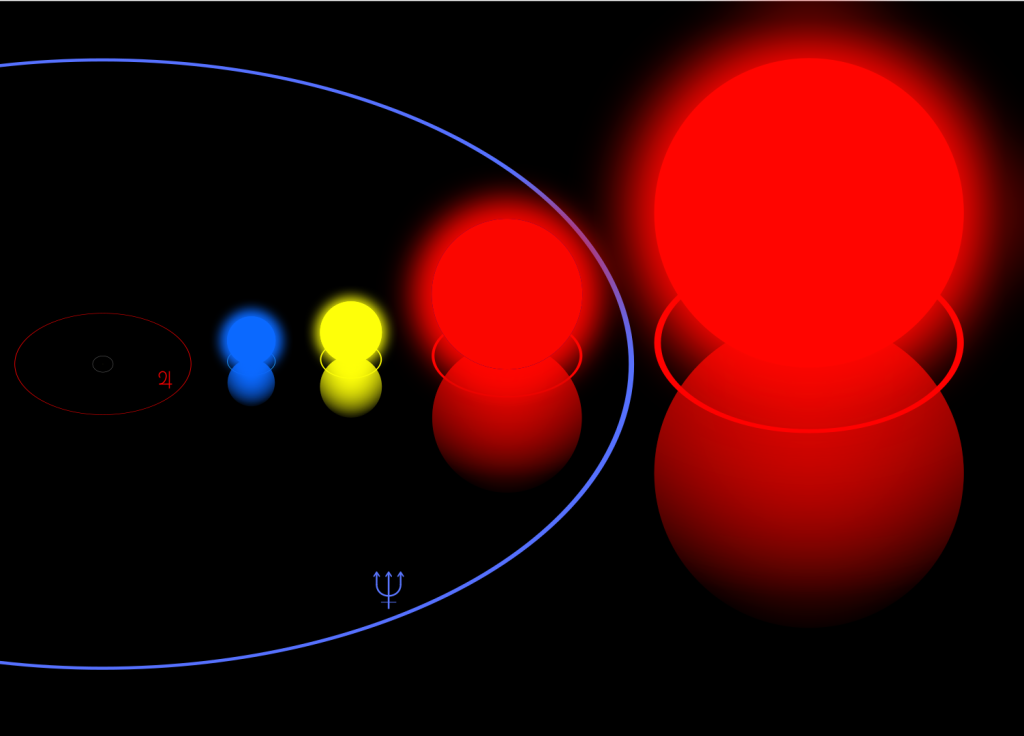
- In the Comparison picture, the the yellow star is Rho Cassiopeiae, the grey circle the Earth’s orbit, the red circle is Jupiter’s orbit, and the blue circle is Neptune’s orbit.
Project
- Draw a comparison of the Sun and Rho Cassiopeiae.
- Overview
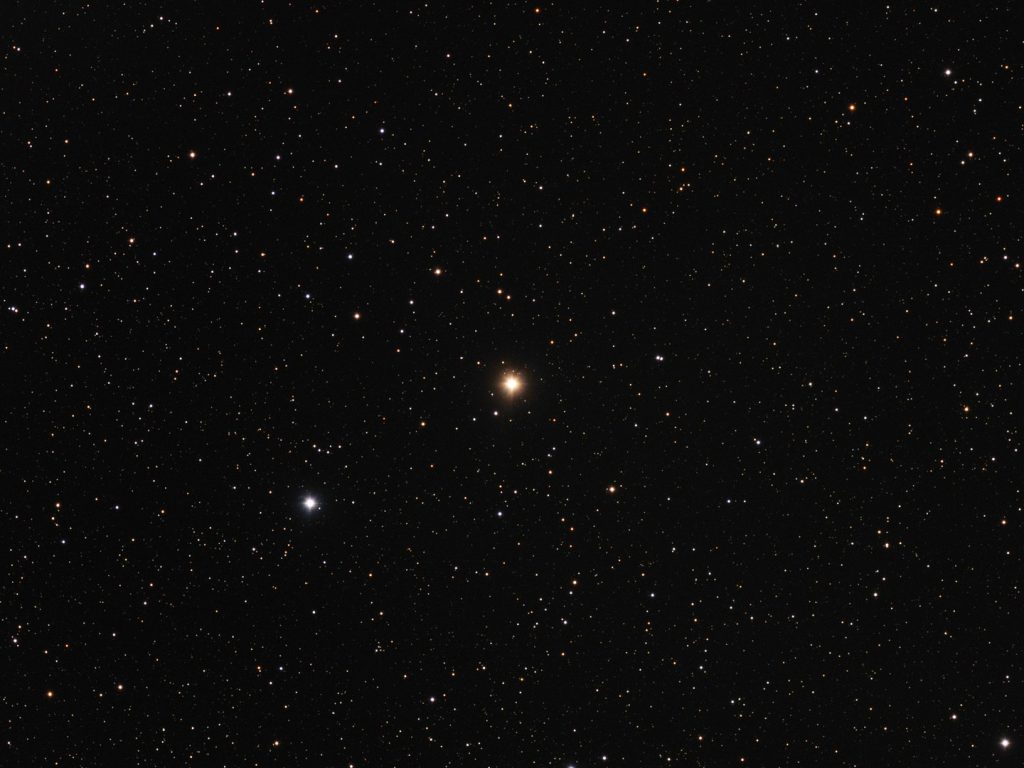
- Actual Image
- Comparison

Location
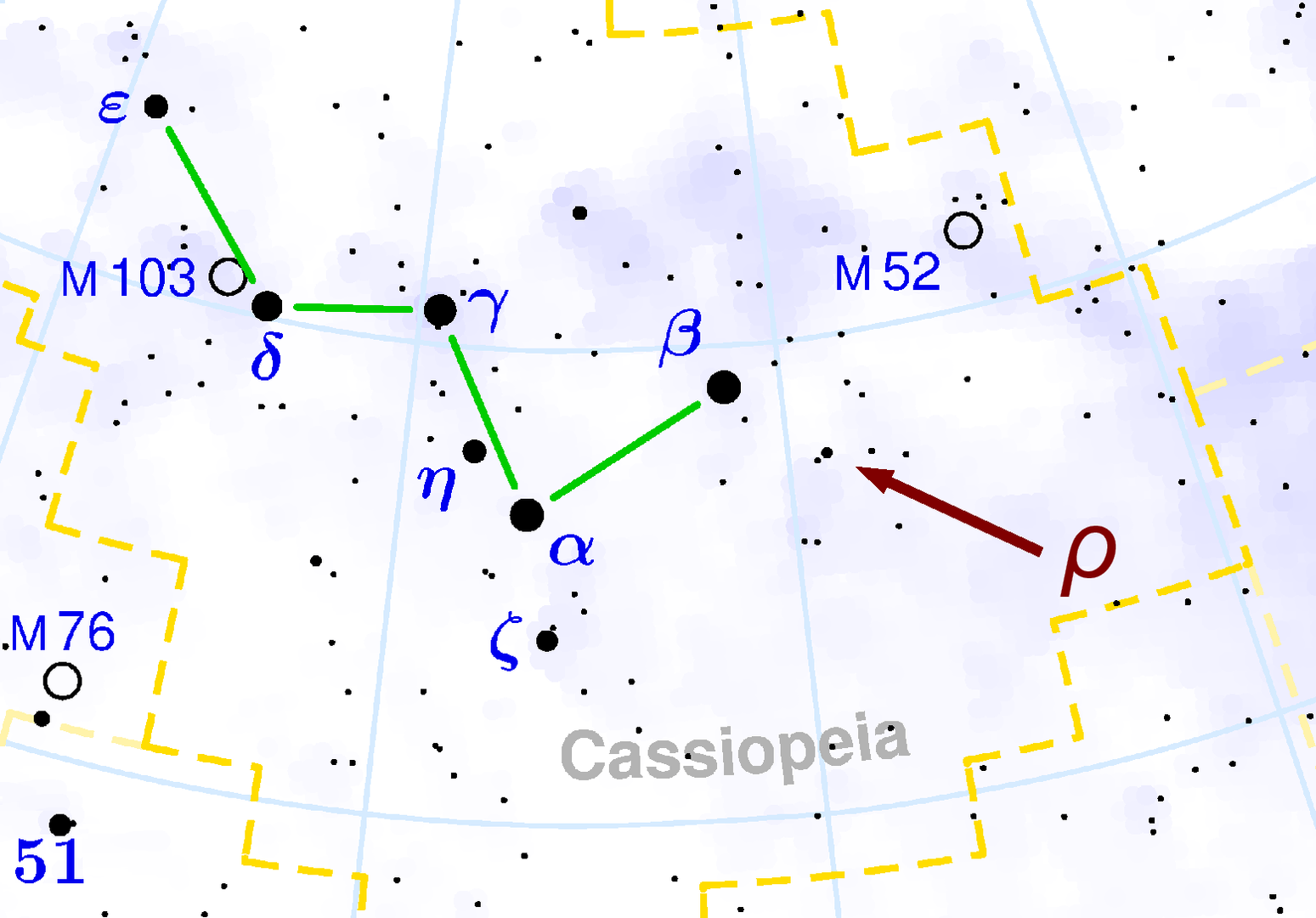

| Located in | Cassiopeia constellation, within the Milky Way |
Fun Facts
- Its diameter has been difficult to establish, with a big variation in possible minimum and maximum sizes.
- It is a semiregular variable, meaning that its brightness changes at times.
- It is one of only a few dozen yellow hypergiants known about in the Milky Way.
- The star has in recent times experienced a “dredge-up” meaning that it has brought material from the core right to the surface, material that hasn’t been gone through complete fusion yet.