

Key Information
Omega Centauri
| Type | Globular Cluster |
| Diameter | 160 light years |
| Distance | 15,800 light years |
| Date of Discovery | 1677 (Edmond Halley, identified it not as a single star) |
Learning Point
- Omega Centauri is a colossal globular cluster, one of the largest and brightest known in our Milky Way galaxy. Located in the constellation Centaurus, this ancient stellar congregation contains millions of stars, many of which are older than the galaxy itself. With its distinctive spherical shape and immense size, Omega Centauri has long fascinated astronomers. Some theories even suggest it might be the remnant core of a dwarf galaxy that was swallowed by our own Milky Way, making it a unique and intriguing object in the cosmos.
Project
- Draw the view from a planet within the Omega Centauri cluster.
- Overview
- Central Stars


Location
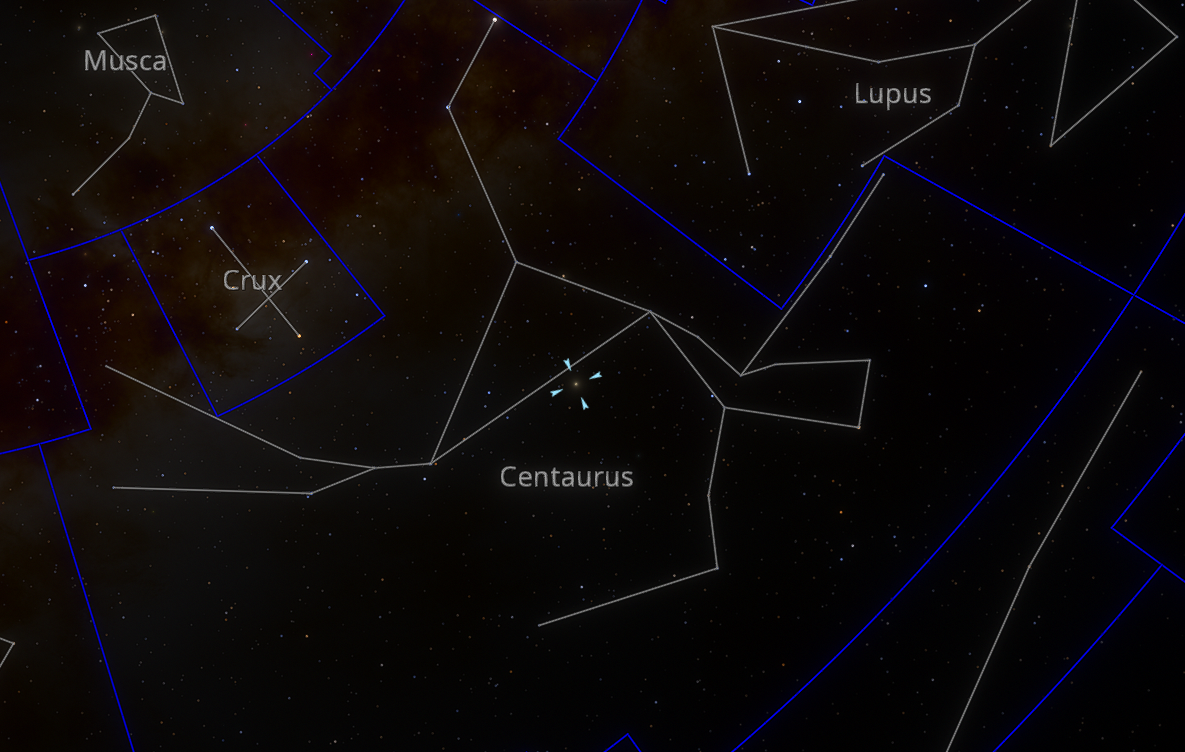
| Located in | Centaurus constellation, Milky Way |
Fun Facts
- Omega Centauri is a massive ball of stars, one of the biggest in our galaxy! It’s like a tiny city of stars.
- The stars in it are super old, some of them are almost as old as the universe itself.
- You can actually see it without a telescope, it looks like a fuzzy star, but it’s really millions of stars together.
- Scientists aren’t sure where Omega Centauri came from. It might be the core of a tiny galaxy that got swallowed by our Milky Way!
Past Lessons
| 190 | August 20, 2024 | (North America) |