

Key Information
Mount Tambora
| Type | Stratovolcano |
| Highest Point | 8,930 ft |
| Discovered | Unknown |
| Age | 43 to 57 thousand years ago |
| Last Eruption | 1967 |
Learning Point
- Mount Tambora is an immense, active volcano in Indonesia infamous for its 1815 eruption, the most powerful ever recorded. This catastrophic blast created a massive caldera and injected so much ash globally that it triggered a two-degree drop in temperature worldwide. This resulted in 1816 being dubbed the “Year Without a Summer” in North America and Europe, causing widespread crop failures and famine.
Project
- Draw a picture of Mount Tambora erupting.
- Overview
- 1815 Eruption Ash Fall



Location

| Location | Sumbawa, Lesser Sunda Islands, Indonesia |
Fun Facts
- The eruption of Mount Tambora in 1815 was the largest and most powerful volcanic explosion ever recorded in human history! It was given a VEI (Volcanic Explosivity Index) rating of 7.
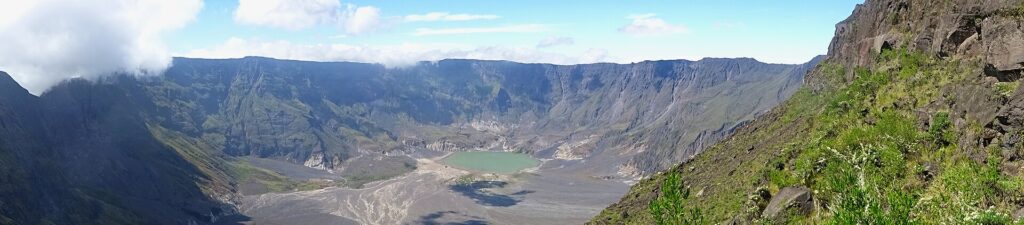
- Before the eruption, Tambora was one of the tallest peaks in Indonesia, standing over 14,000 feet (4,300 meters) high. The massive explosion blew off the top part of the mountain, leaving behind a gigantic, deep, bowl-shaped hole called a caldera .
- The huge cloud of ash and dust Tambora shot into the sky traveled all the way around the world. This ash blocked out the sun, which caused the year 1816 to be known as the “Year Without a Summer” in places like North America and Europe!
- The 1815 eruption completely buried and destroyed a small local culture and its kingdom.
Past Lessons
| 178 | December 8, 2025 | (North America) |