

Key Information
Moon – Craters and Maria
| Type | Moon (of Earth) |
| Diameter | 2,159.1 miles |
| Distance from Earth | 238,854 miles |
| Orbit Time | 27 days 7 hours 43 minutes |
| Length of Day | 27 days 7 hours 43 minutes |
| Time around Sun | 1 Earth year |
| Atmosphere | None |
| Temperature | 284 °F down to −275.8 °F |
| Date of Discovery | Unknown |
Learning Point
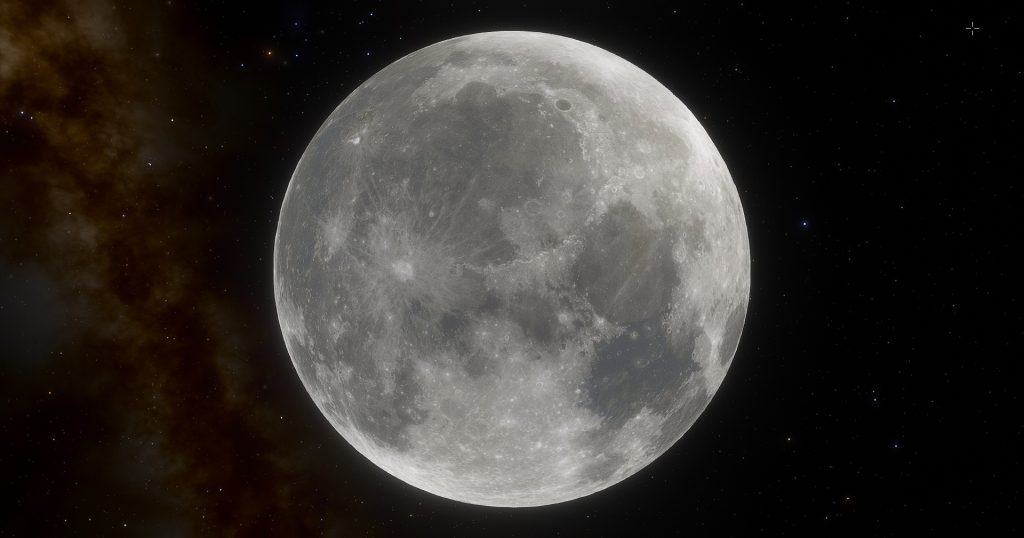
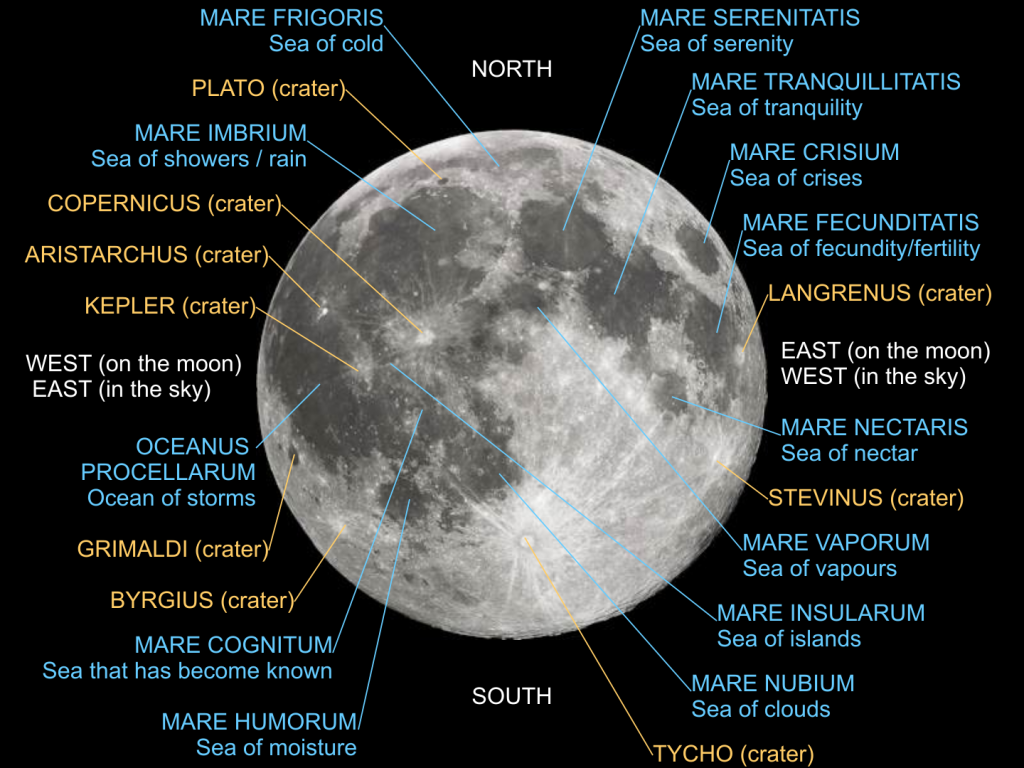
- The Moon is our closest neighbour in the night sky. Much of what we can see are maria and craters on the surface nearest to us, and at times people have seen shapes and patterns in those features. For a long time it was not truly understood what astronomers were looking at.
Project
- Draw the moon with the maria and craters that we can see.
- Overview
- Map
Media


Location

| Located in | Solar System, orbiting Earth |
Fun Facts
- The Moon has no ‘sea level‘ to use to work out heights, so instead they use the radius of the moon to create a level they can use.
- The craters on the nearside of the Moon were named after people from Greece, Rome, as well as the Arabic and European scholars, writers and philosophers.
- No one fully understands why the nearside of the Moon has so many maria and the farside has so few.
- The word maria means ‘seas‘ in Latin, because early astronomers thought they were real seas.
Past Lessons
| 168 | March 12, 2024 | (North America) |