

Key Information
Gaia BH1
| Type | Stellar Black Hole |
| Diameter | 867,169 miles (A – yellow dwarf), 43 miles (B – black hole) |
| Mass | 0.93 M☉ (A), 9.62 M☉ (B) |
| Temperature | 10,070 °F (A), Unknown (B) |
| Distance | 1,560 light years (approx) |
| Date of Discovery | 2022 (Discovery of Black Hole) |
| Other Names | Gaia BH1, Gaia DR3 4373465352415301632 |
Learning Point
- As the closest known black hole (as of 2024), Gaia BH1 is a great example of a black hole that isn’t in the process of consuming its companion star. It was discovered by observing the motion of the Yelllow-dwarf star that we can see, and discovering that it moves in a pattern than can only be caused by a black hole.
Project
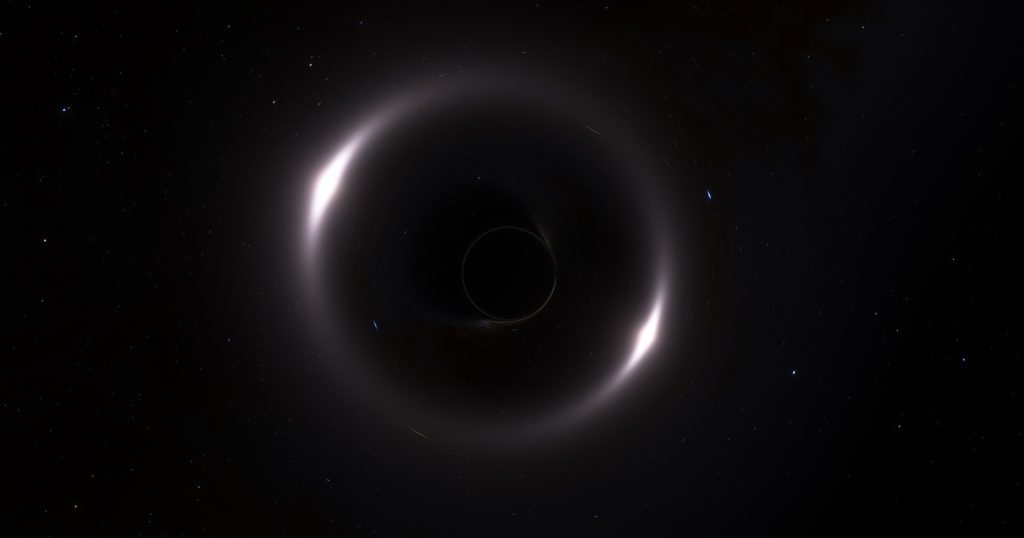
- Draw a picture of Gaia BH1 and it’s G-type (yellow) star companion.
- Overview
Location
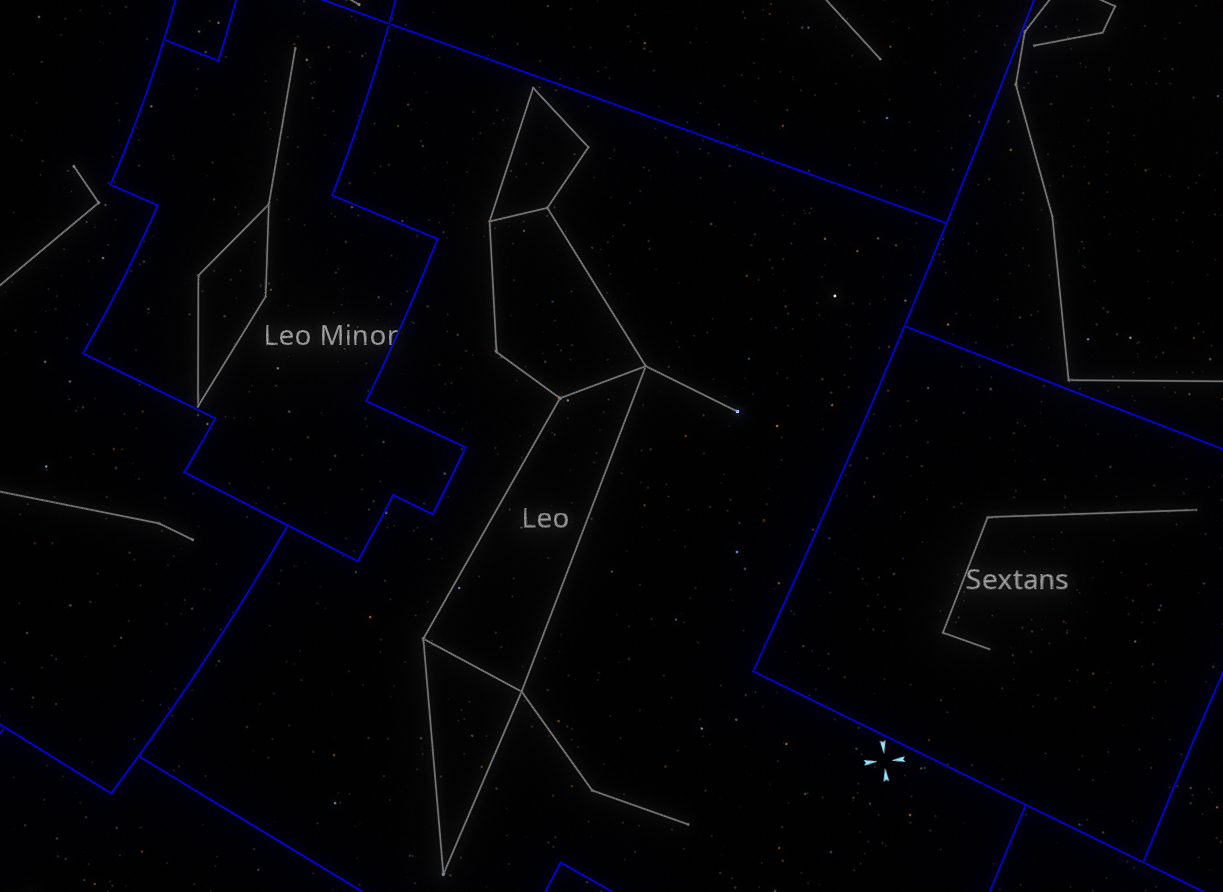
| Located in | Leo constellation, within the Milky Way |
Fun Facts
- They orbit each other every 185.59 days.
- The star is remarkably like our Sun, just very slightly smaller.
- The black hole is far enough from the main star not to be absorbing any material from it.
- Any planets orbiting the two objects would not be able to see the black hole.
Past Lessons
| 170 | March 26, 2024 | (North America) |