

Key Information
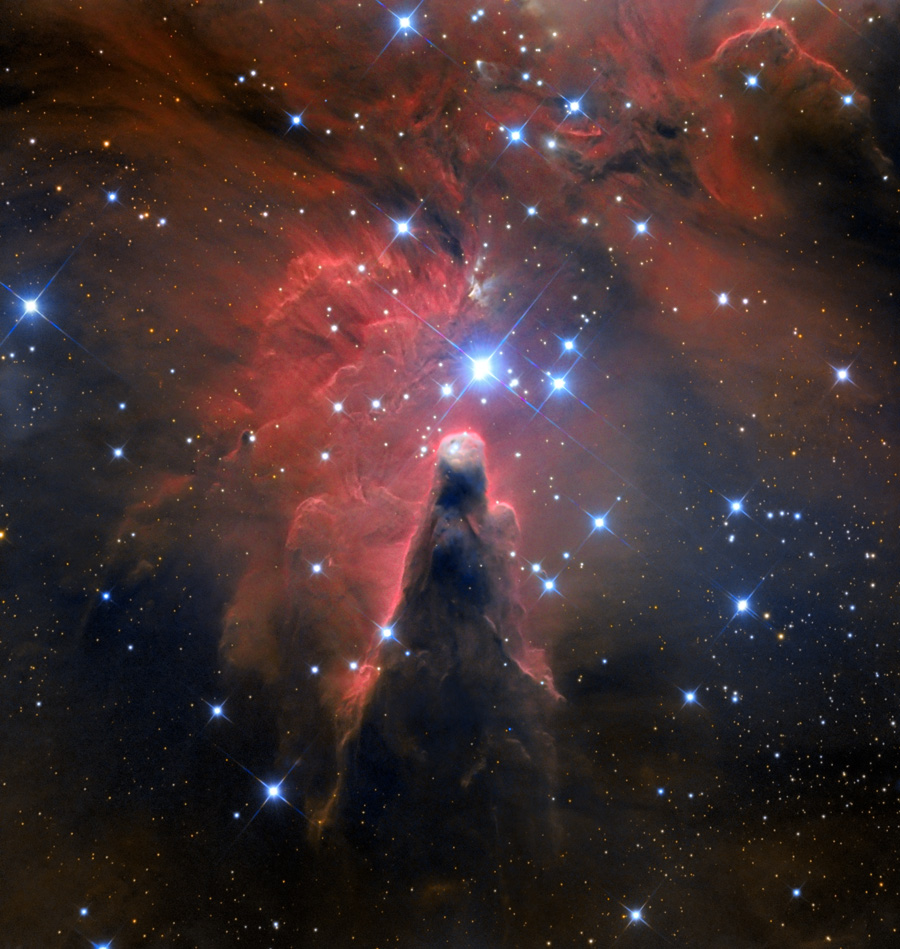
Cone Nebula
| Type | Absorption (Dark) Nebula |
| Diameter | 8 light years |
| Distance | 2,700 light years |
| Date of Discovery | 26 December 1785 |
| Other Names | NGC 2264, Christmas Tree Cluster, Snowflake Cluster, Fox Fur Nebula |
Learning Point
- The Cone Nebula is an absorption nebula (sometimes called a dark nebula), meaning the dust and gas absorbs the light, and reflects very little out into space. Like many such nebulae, it is a cold place, but also it and the surrounding nebulae are the home of new stars, forming from the gas and dust clouds. It is shaped like a cone when viewed from Earth.
Project
- Draw a picture of Cone Nebula.
- Overview
- Real Photo

Location
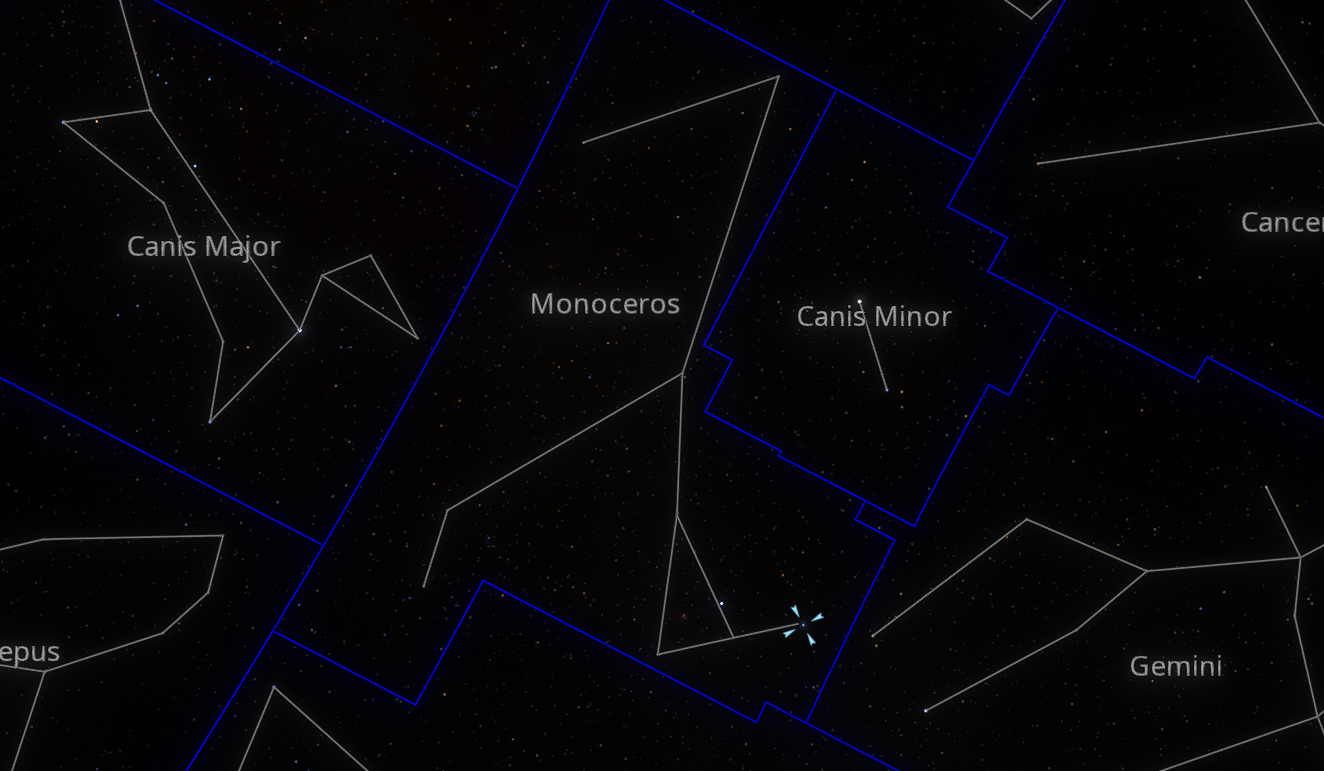
| Located in | Monoceros constellation, within the Milky Way |
Fun Facts
- Nebula clouds like the Cone Nebula are the spawning grounds of stars and planets.
- It was discovered by William Herschel on December 26, 1785.
- It forms part of a larger nebula which include the Christmas Tree Cluster, the Fox Fur Nebula and the Snowflake Cluster.
- The brightest star is S Monocerotis which lights up the surrounding gas.
Past Lessons
| 177 | May 21, 2024 | (North America) |