

Key Information
Pollentia
| Type | Roman City |
| Founded | 123 BCE |
| Founded By | Quintus Caelcilius Metellus Balearicus |
| Abandoned | Around 500 CE or after |
| Rediscovered | About 1600 CE |
Learning Point
- Established in 123 BCE, Pollentia was the strategic Roman powerhouse of the Balearic Islands. Located in modern-day Mallorca, it served as a vital hub for Mediterranean trade and military control. Life centered around a massive Forum filled with temples and high-end shops, while a unique theater carved into solid rock provided entertainment for thousands. Beyond the luxury of its mosaics and public baths, the city provides a glimpse into the “Romanization” of the islands, showing how ancient engineers transformed a rugged landscape into a sophisticated capital that thrived for centuries.
Project
- Draw a picture of Pollentia in Roman times.
- Overview
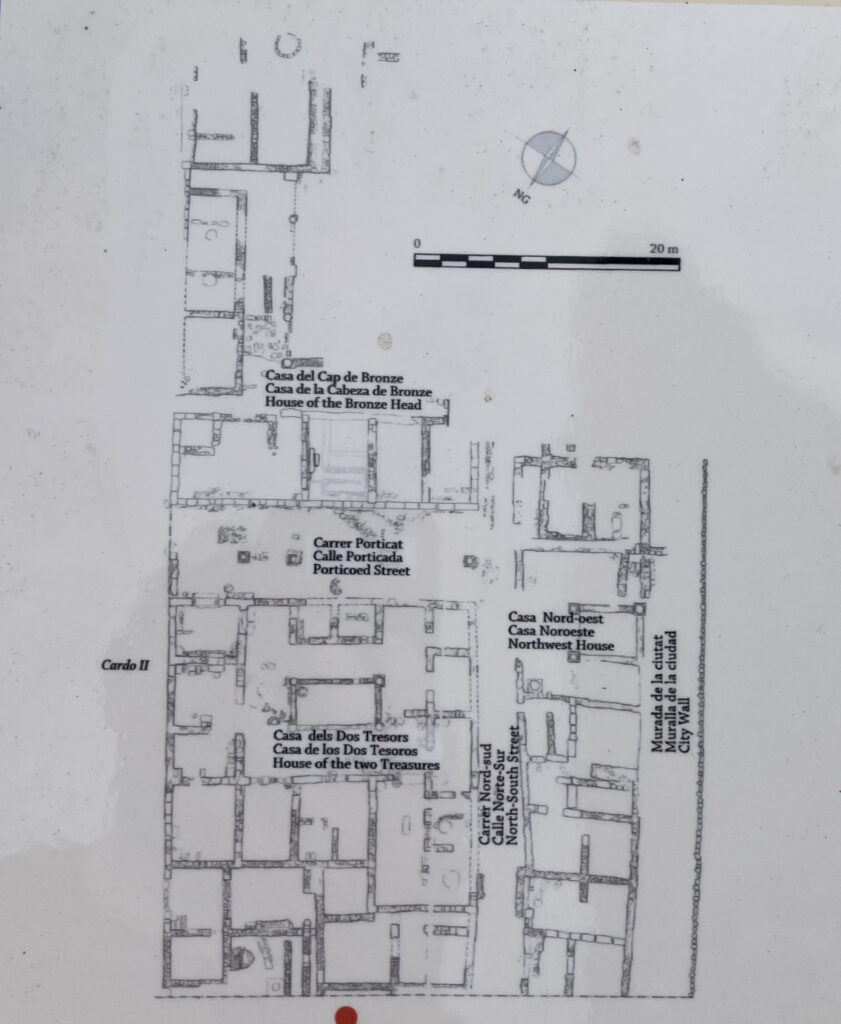
- Plan
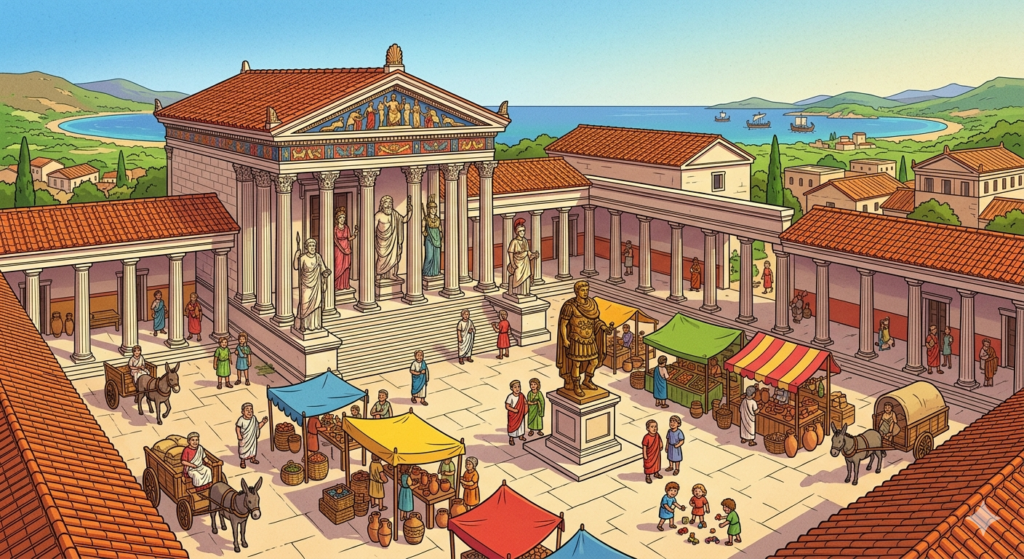
- Roman Forum
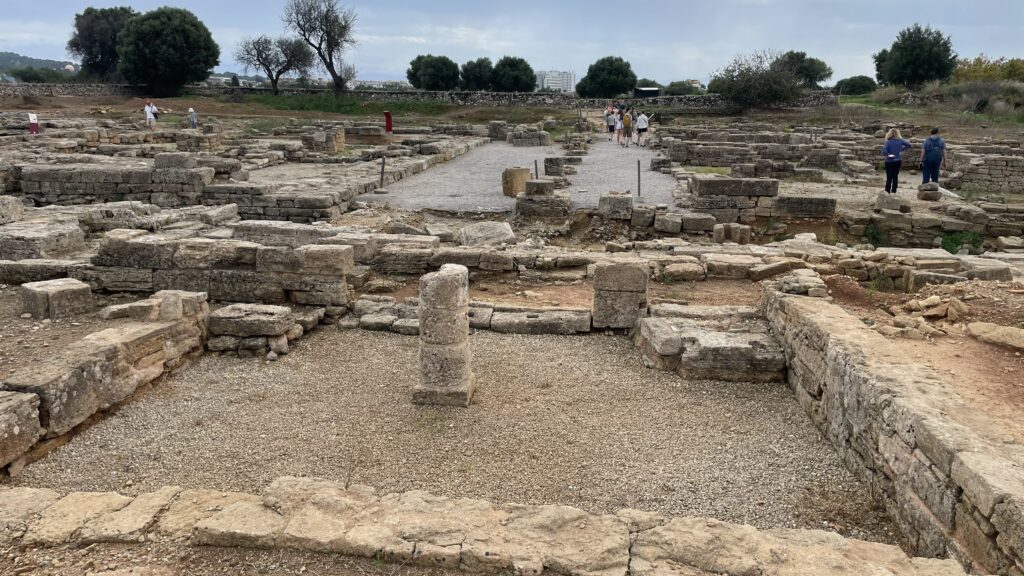
Location
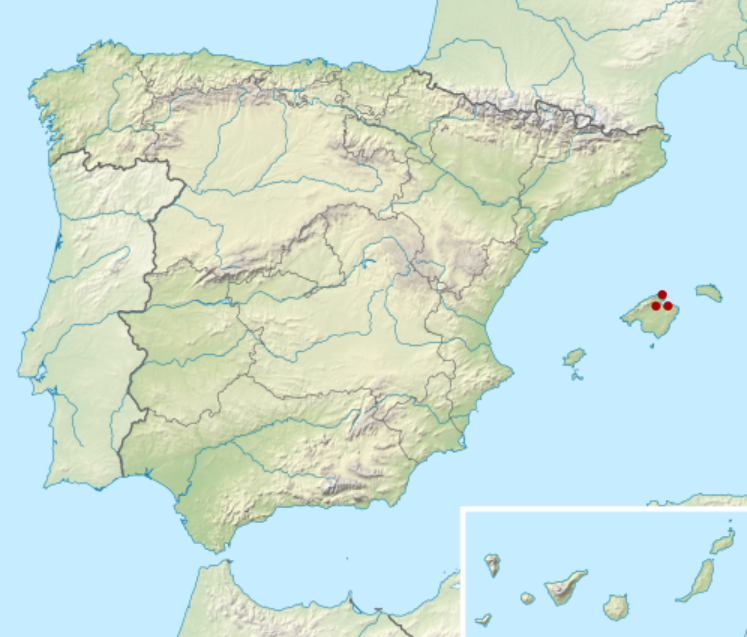
| Location | Alcúdia, Mallorca, Balearic Islands, Spain |
Fun Facts
- The name “Pollentia” comes from the Latin word Polentia, which means “power.” The Romans wanted everyone to know that this city was the strongest and most important place on the island!
- Before the Romans built the city, the local people were famous “slingers.” They used hand-held slings to throw stones so accurately that they could hit a tiny target from far away. The Romans even hired them for their own army!
- Most Roman theaters were built up with heavy bricks, but the one in Pollentia is extra cool—the seats were carved directly into the rocky ground, like a giant stone staircase for watching plays.
- Archaeologists found a home they named the “House of the Two Treasures” because they discovered two secret stashes of coins and jewelry hidden there. It’s like a real-life pirate treasure hunt, but with Romans!
- The Romans were very smart about where they built. They put Pollentia right between two different bays of water so they could watch for ships coming from two different directions at once.
- The city’s Forum (the main square) was lined with “tabernae.” These were little shops where Roman kids could have bought snacks, toys, or even colorful pottery brought in by big ships from across the sea.
Past Lessons
| 204 | April 8, 2026 | (North America) |