

Key Information
Icebergs
| Type | Fresh Water Ice Free Floating in the Ocean |
| Season | All Year Round |
| Effect | Can cause problems for sea traffic, as well as increasing the amount of water in the ocean as they melt |
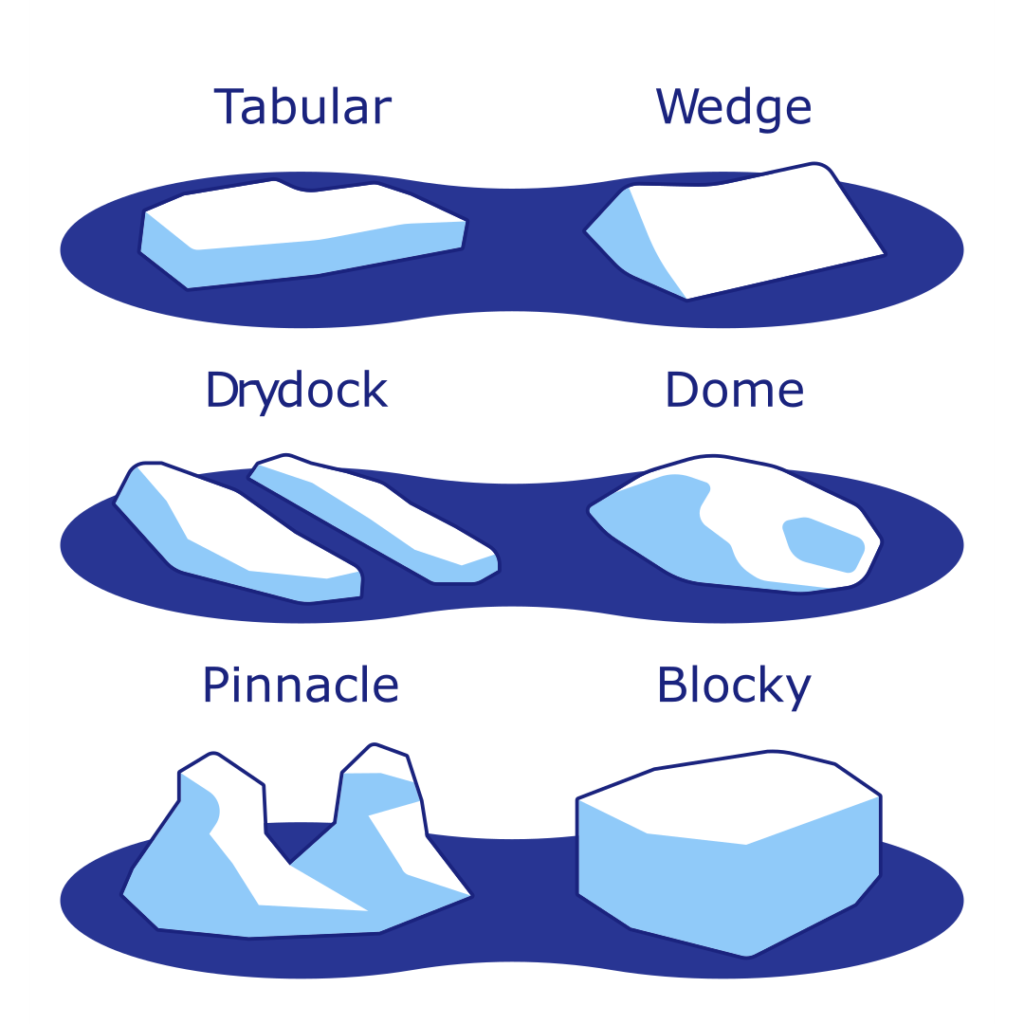
| Forms | Tabular, Wedge, Drydock, Dome, Pinnacle, Blocky |
Learning Point
- Icebergs are big chunks of ice that break off from glaciers or ice shelves in very cold places like near the North and South Poles. These icy giants float in the ocean and can be all sorts of amazing shapes and sizes, sometimes even bigger than houses or even small towns! Because they are made of ice, they slowly melt as they drift into warmer waters, eventually disappearing back into the sea.
Project
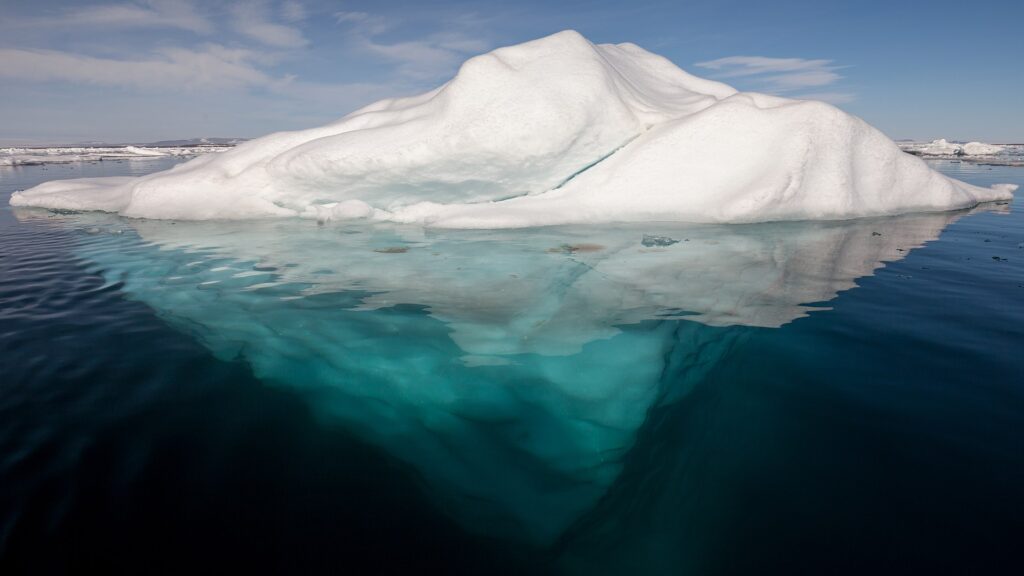
- Draw a diagram of an iceberg showing how much is above the sea and how much is below.
- Overview
- Iceberg Types
Location

| Places | Worldwide in seas and oceans |
Fun Facts
- Most of an iceberg is hidden underwater – you only see about 10% of it above the surface!
- Icebergs are formed when big pieces of ice break off from glaciers or ice sheets. This is called “calving.”
- Icebergs are made of freshwater ice, not salty ocean water.
- Some icebergs can be as big as buildings or even small islands!
Past Lessons
| 156 | April 14, 2025 | (North America) |