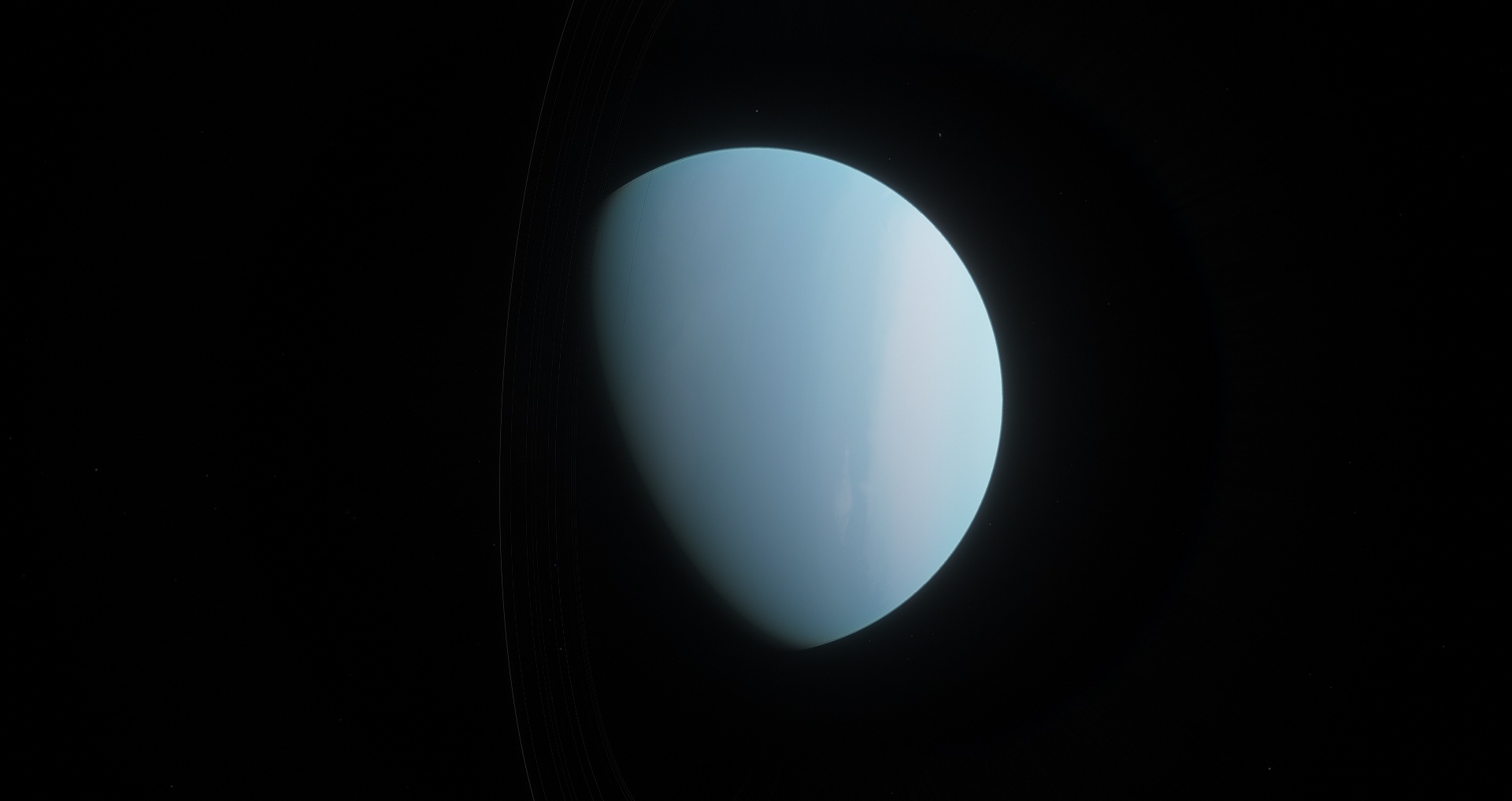
Uranus
- Type
- Planet
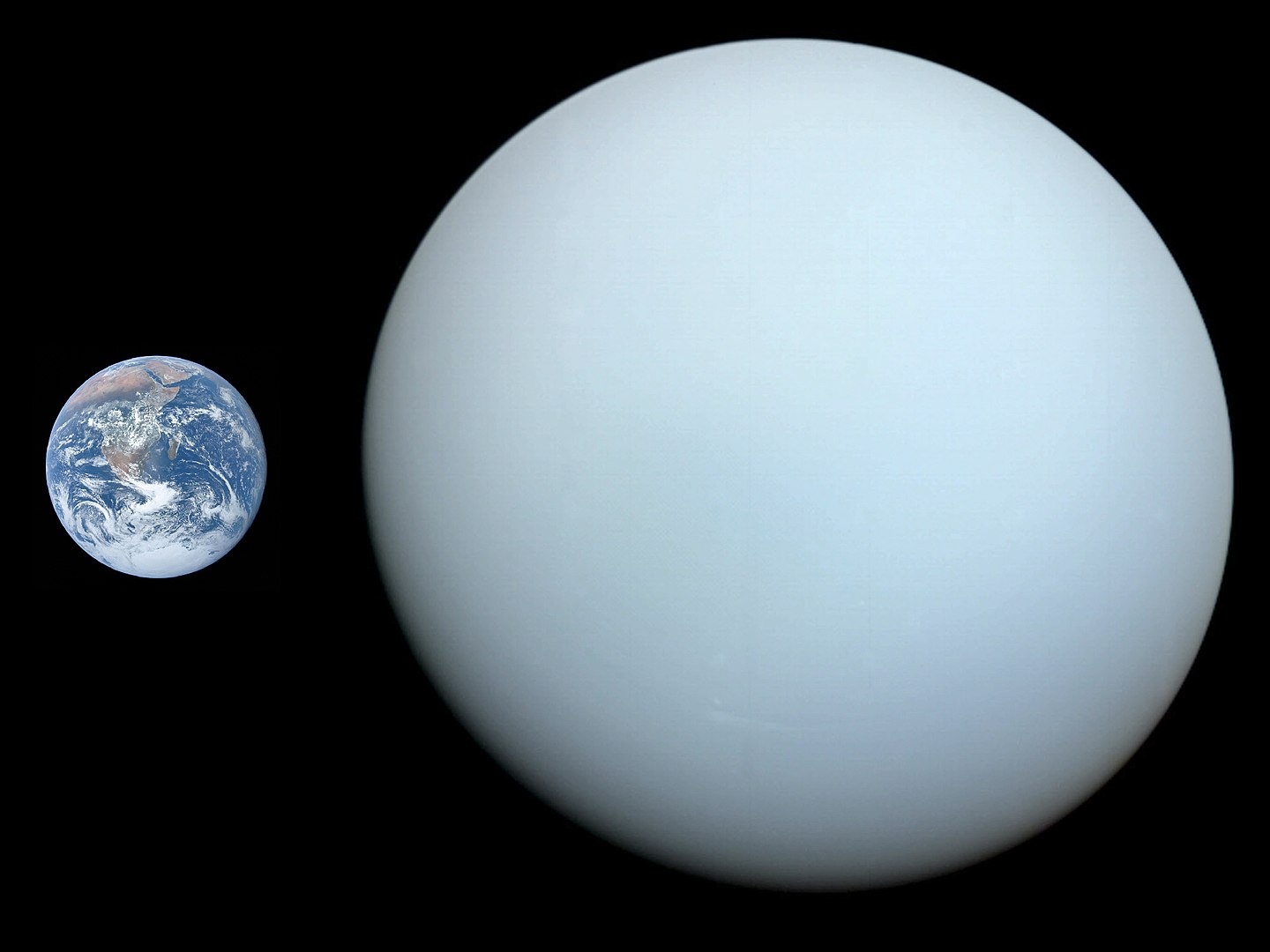
- Diameter
- 31,518 miles
- Distance from Sun
- 1,783,939,065 miles
- Orbit Time
- 84.02 Earth years
- Length of Day
- 17 hours 14 minutes
- Temperature
- −322 °F
- Atmosphere
- Hydrogen, helium, methane
- Date of Discovery
- 13 March 1781 (William Herschel)
- Moons
- 27
- Uranus was the first planet discovered by telescope, and something that hadn't been found by human eyes alone. The planet has an interesting ring system, different to Saturn's and also moves around the Sun in an unusual way.
- What missions have been sent to Uranus so far? What were they looking to do? What future missions are being planned?
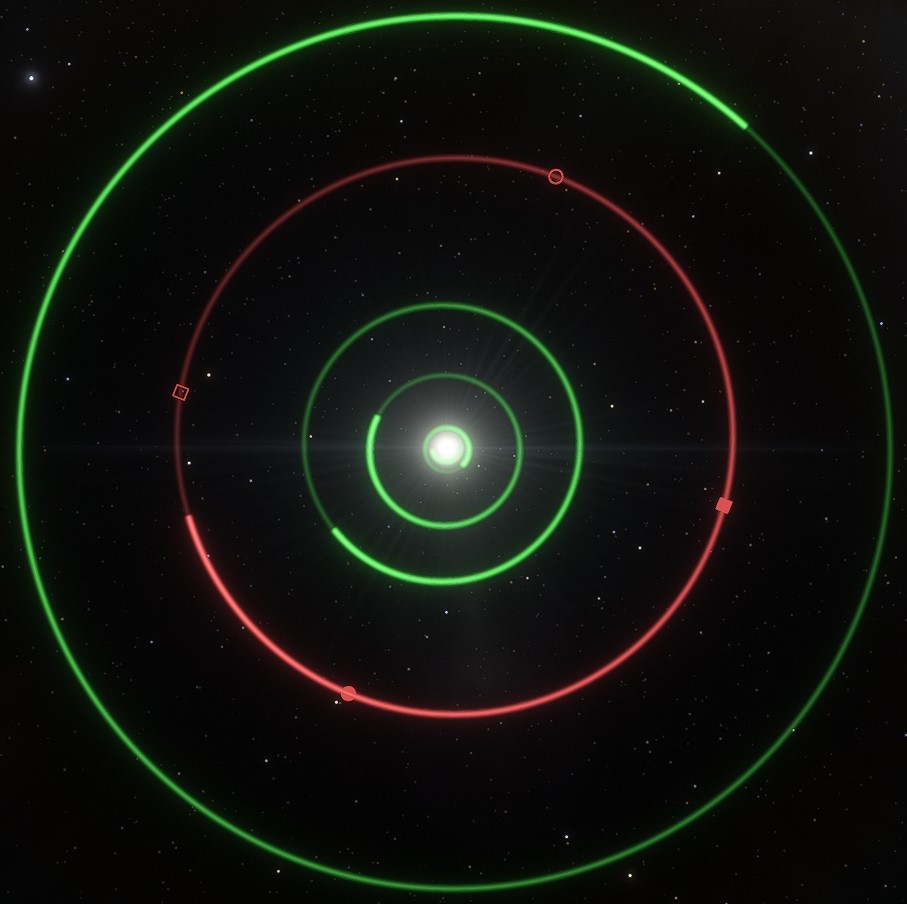
- Located in
- Solar System, orbiting the Sun
- Uranus and Neptune are both made up of a similar set of materials, giving them a similar color, and a similar size.
- Uranus "rolls" around its orbit as it is on its side, with one of the poles facing the sun. No one is sure why this has happened, but might have been caused by an object knocking it over.
- Winds of over 560 miles per hour have been observed in the atmosphere of Uranus.
- Uranus and Neptune are both described as "Ice Giants" as the materials found on the planet are different to Saturn and Jupiter, and are more icy in structure.
- All of Uranus' moons are named after characters in Shakespeare and Alexander Pope's writings.