Triton
- Type
- Moon (of Neptune)
- Diameter
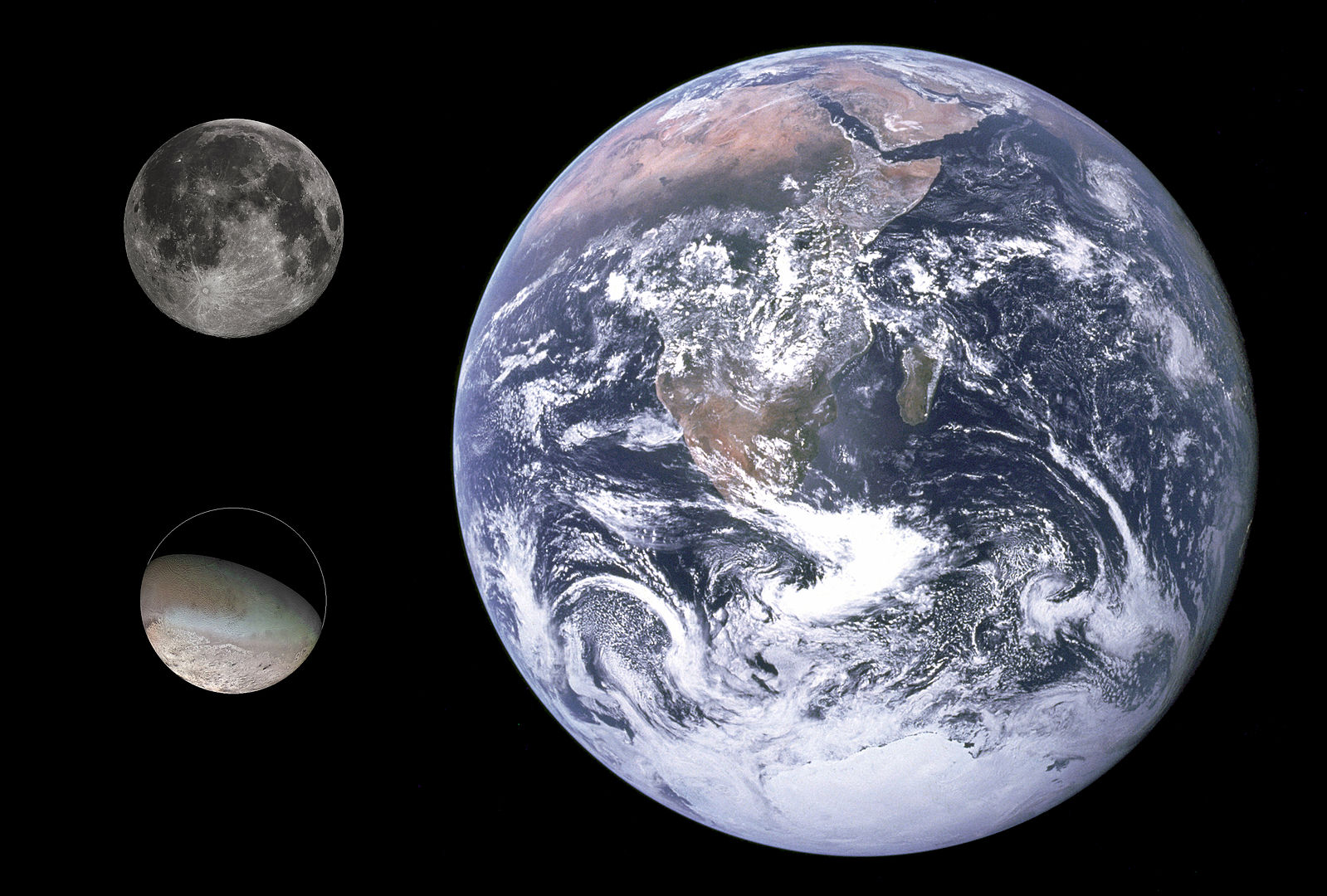
- 1,682 miles
- Distance from Neptune
- 220,437 miles
- Orbit Time
- 5.87 Earth days
- Length of Day
- 5.87 Earth days
- Time around Sun
- 164.8 years
- Atmosphere
- Nitrogen, methane
- Temperature
- -391 °F
- Date of Discovery
- William Lassell, October 10, 1846
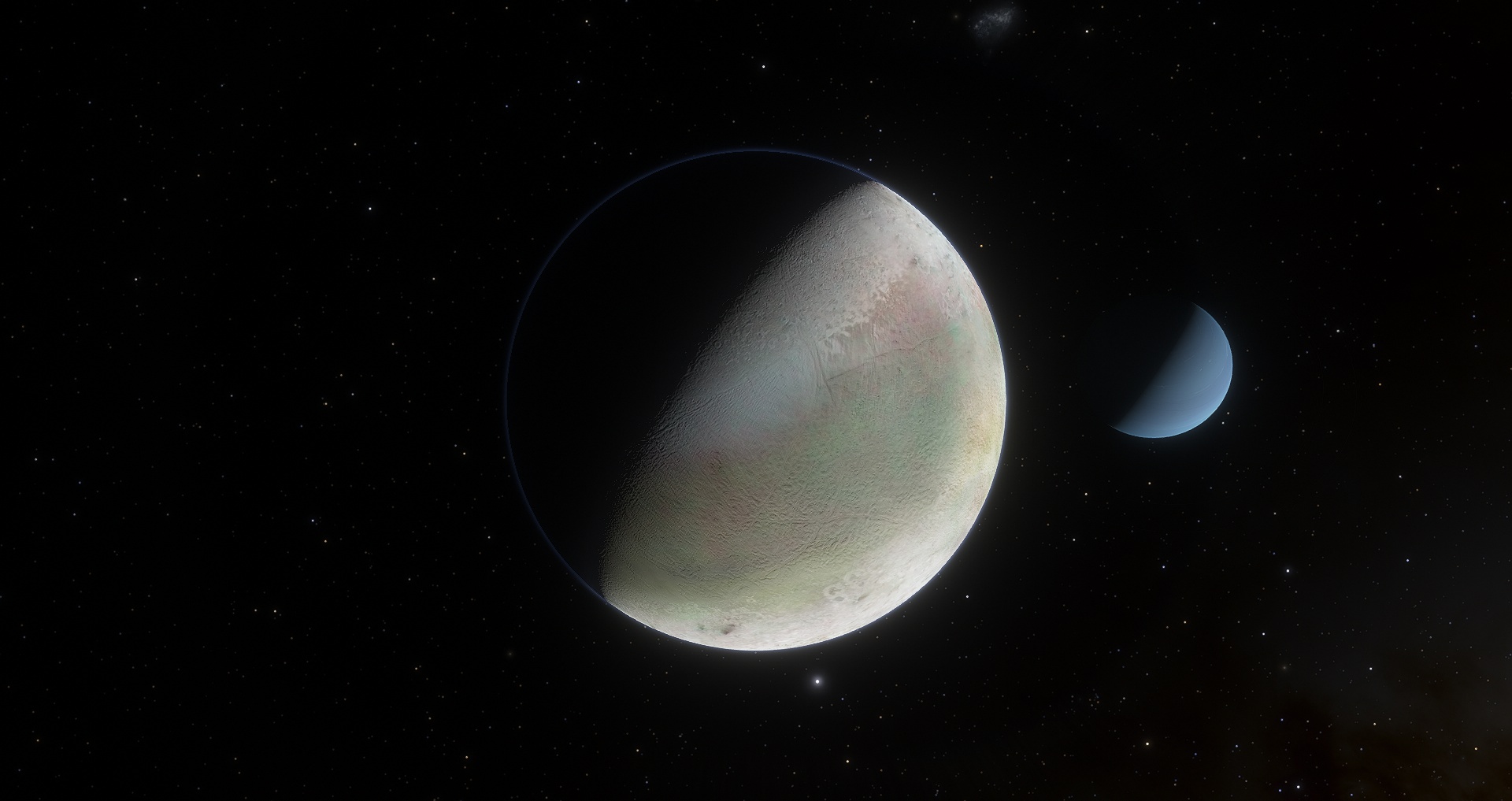
- Triton was discovered soon after the discovery of Neptune. Larger, and very different to most of Neptune's other moons, Triton has long been a moon of great interest because of its unusual features and orbit.
- Identify what Triton is probably composed from.

- Located in
- Solar System, orbiting Neptune
- William Lassell discovered Triton just 17 days after the discovery of Neptune.
- Triton also moves around Neptune in a "retrograde", or "backwards", orbit. This is something astronomers are still trying to understand.
- Triton is not too different from Pluto, raising the suggestion from some scientists that it was captured by Neptune when it strayed too close, but would have come from the same origin as Pluto.
- It is possible that below the surface of Triton is a moonwide ocean, similar to the idea suggested for other icy moons.
- Triton has relatively few craters compared to some of the other moons of Neptune.