Sirius
- Type
- Star System (binary)
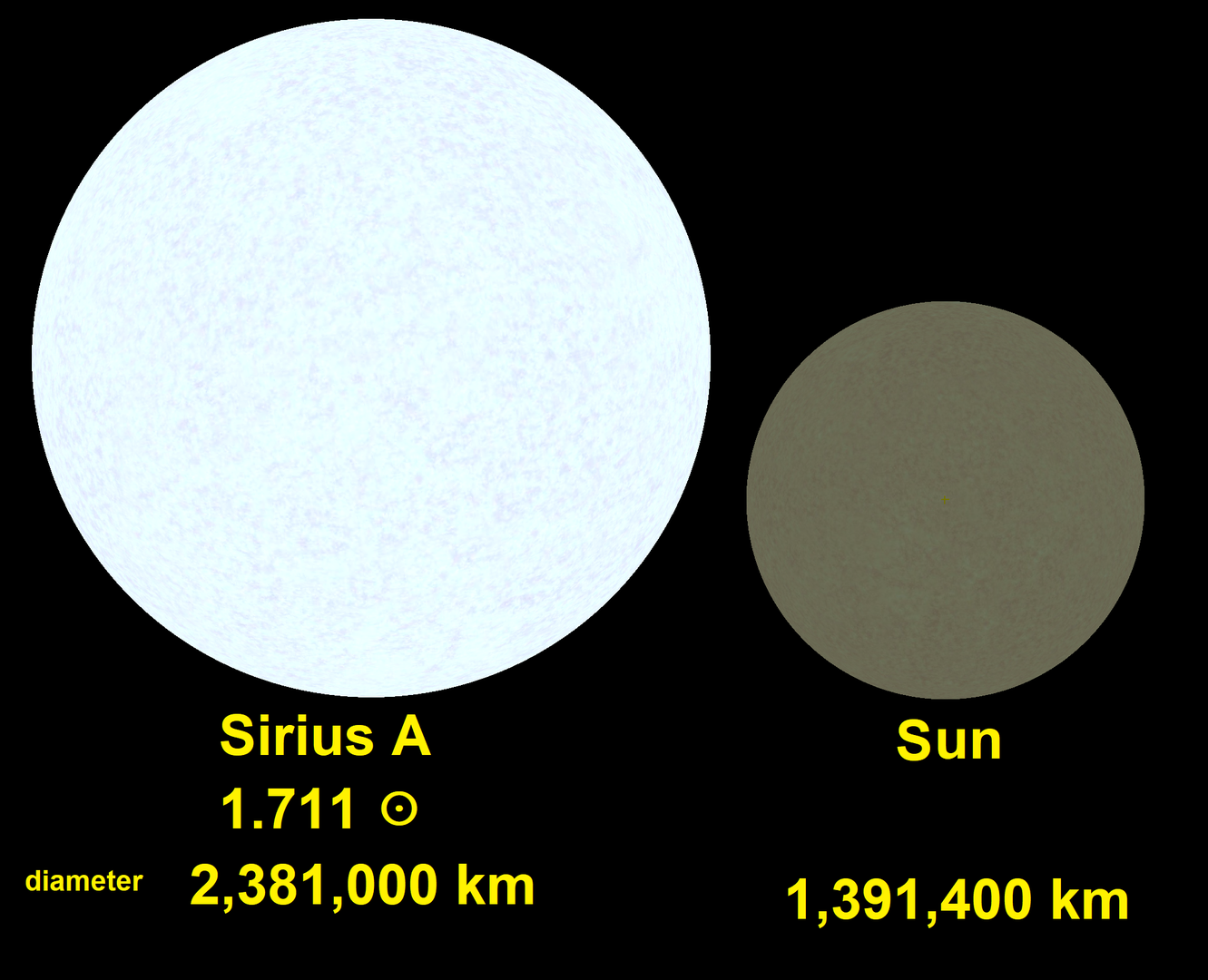
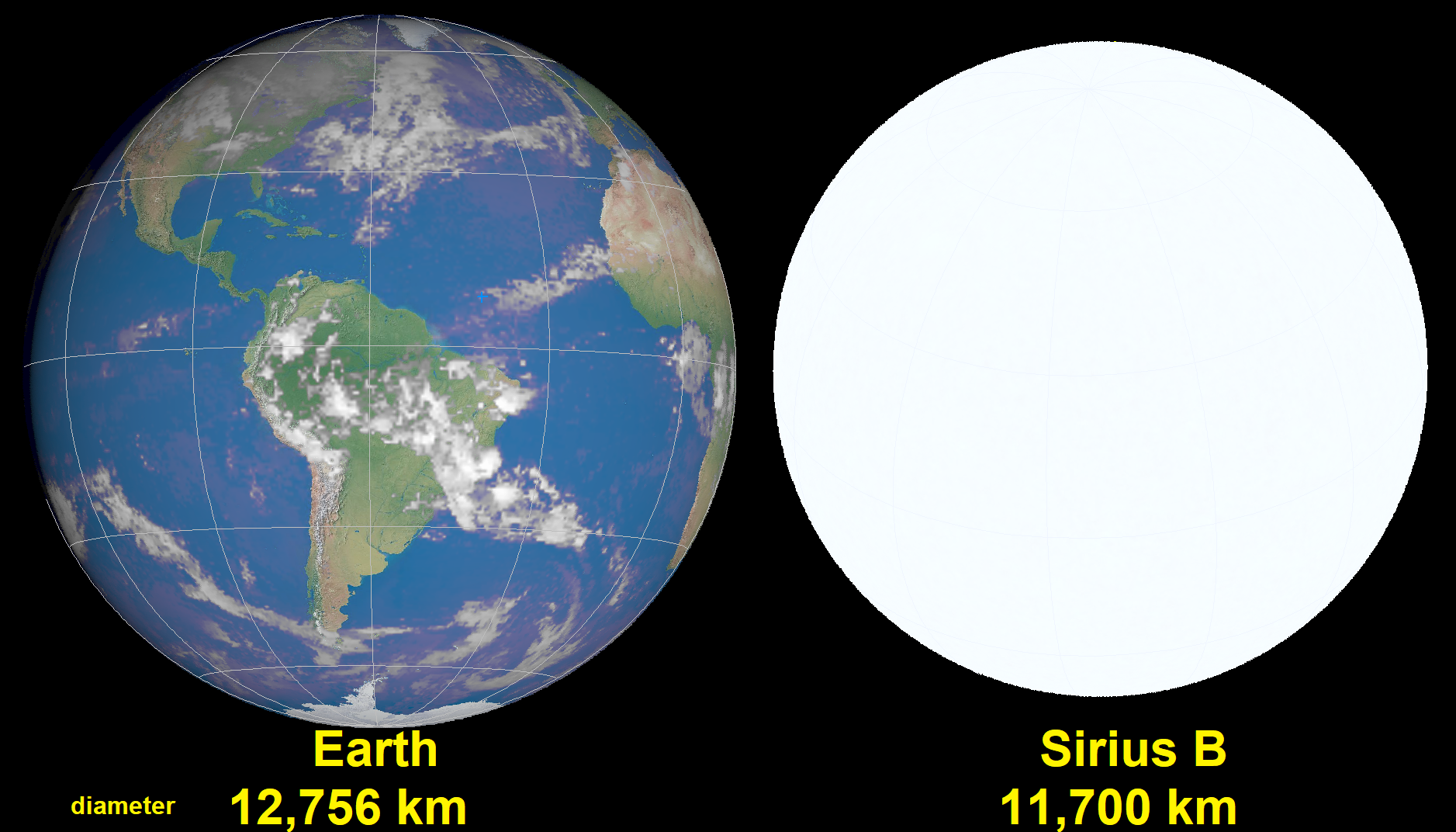
- Diameter
- 1,479,288 miles (A), 7,292 miles (B)
- Distance
- 8.6 light years
- Temperature
- 17400 °F (A), 44,500 °F (B)
- Star Type
- A0mA1 Va - White, main sequence (A), DA2 - White dwarf (B)
- Date of Discovery
- Unknown (A), 31 January 1862 (B)
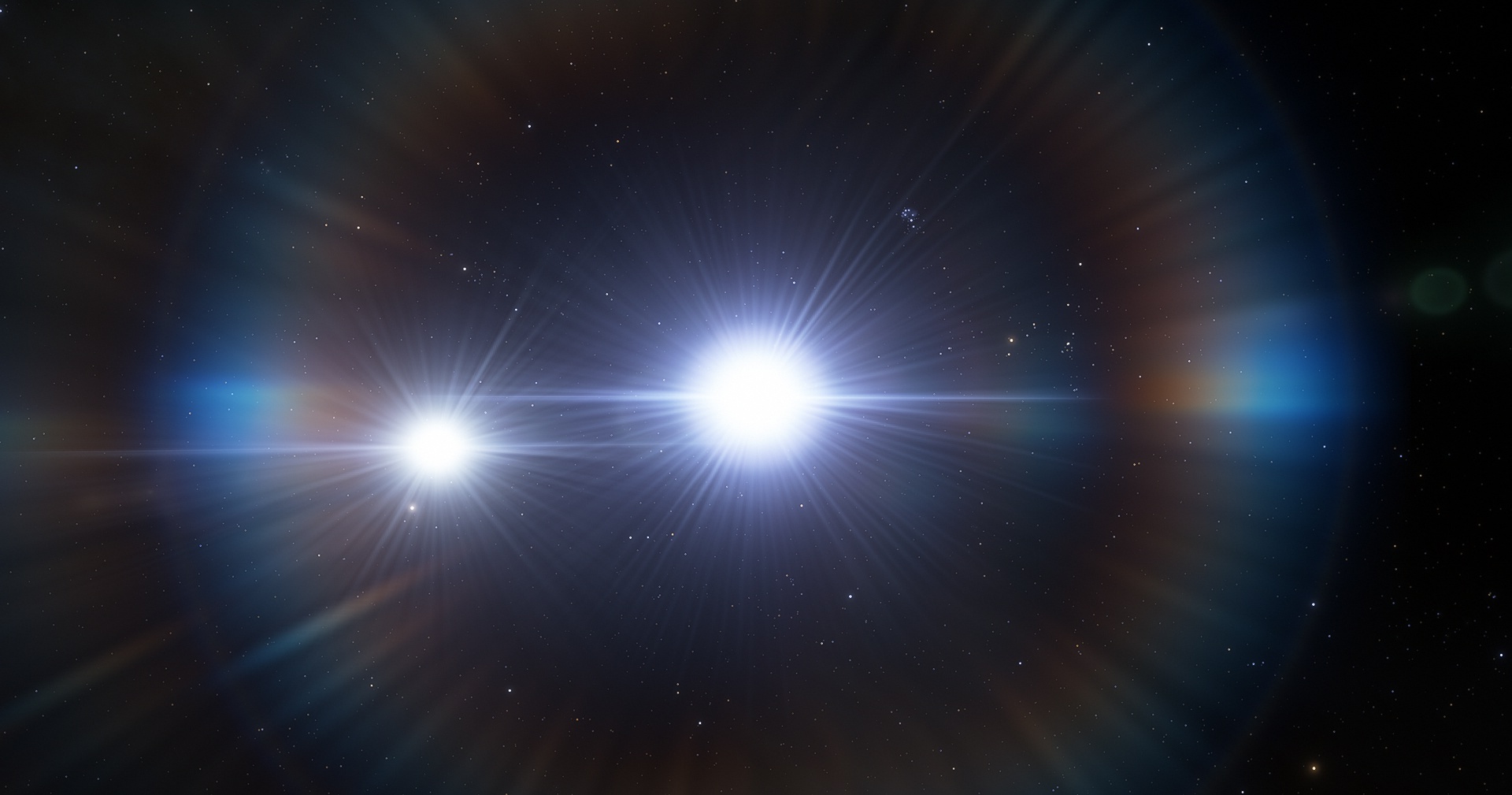
- Sirius is one of the brightest star systems in close proximity to Earth, and the binary system includes a white dwarf, the closest known one to us. It was the second white dwarf star to be discovered, though the concept of white dwarf stars was not established then.
- Find other white dwarf stars that are famous or nearby to us.
- Located in
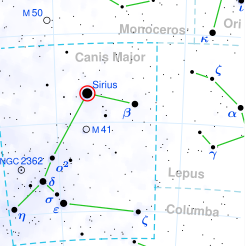
- Canis Major, Milky Way
- Sirius is called the "dog star" because it is the most dominant star in the constellation Canis Major, the Great Dog.
- Sirius B was discovered by Alvan Graham Clark on 31 January 1862, 18 years after the idea was proposed that there was an unseen companion to Sirius by Friedrich Wilhelm Bessel.
- White dwarf stars are generally the remains of stars half the mass of our sun up to 8 times the mass, and are formed when the star loses its outer layers and exposes the core.
- It is thought a white-dwarf star will cool over a longer time than the universe has existed, becoming, yellow, orange, red and finally "black", that is so dark it barely glows. It's then called a "black dwarf".