Phobos and Deimos
- Type
- Moons (of Mars)
- Diameter
- 13.8 miles (Phobos), 7.8 miles (Deimos)
- Distance from Mars
- 5,827 miles (Phobos), 14,580 miles (Deimos)
- Orbit Time
- 7.66 hours (Phobos), 30.35 hours (Deimos)
- Length of Day
- 7.66 hours (Phobos), 30.35 hours (Deimos)
- Time around Sun
- 686.98 Earth days
- Atmosphere
- None
- Temperature
- -40 °F
- Date of Discovery
- Asaph Hall, 18 August 1877 (Phobos), 12 August 1877 (Deimos)
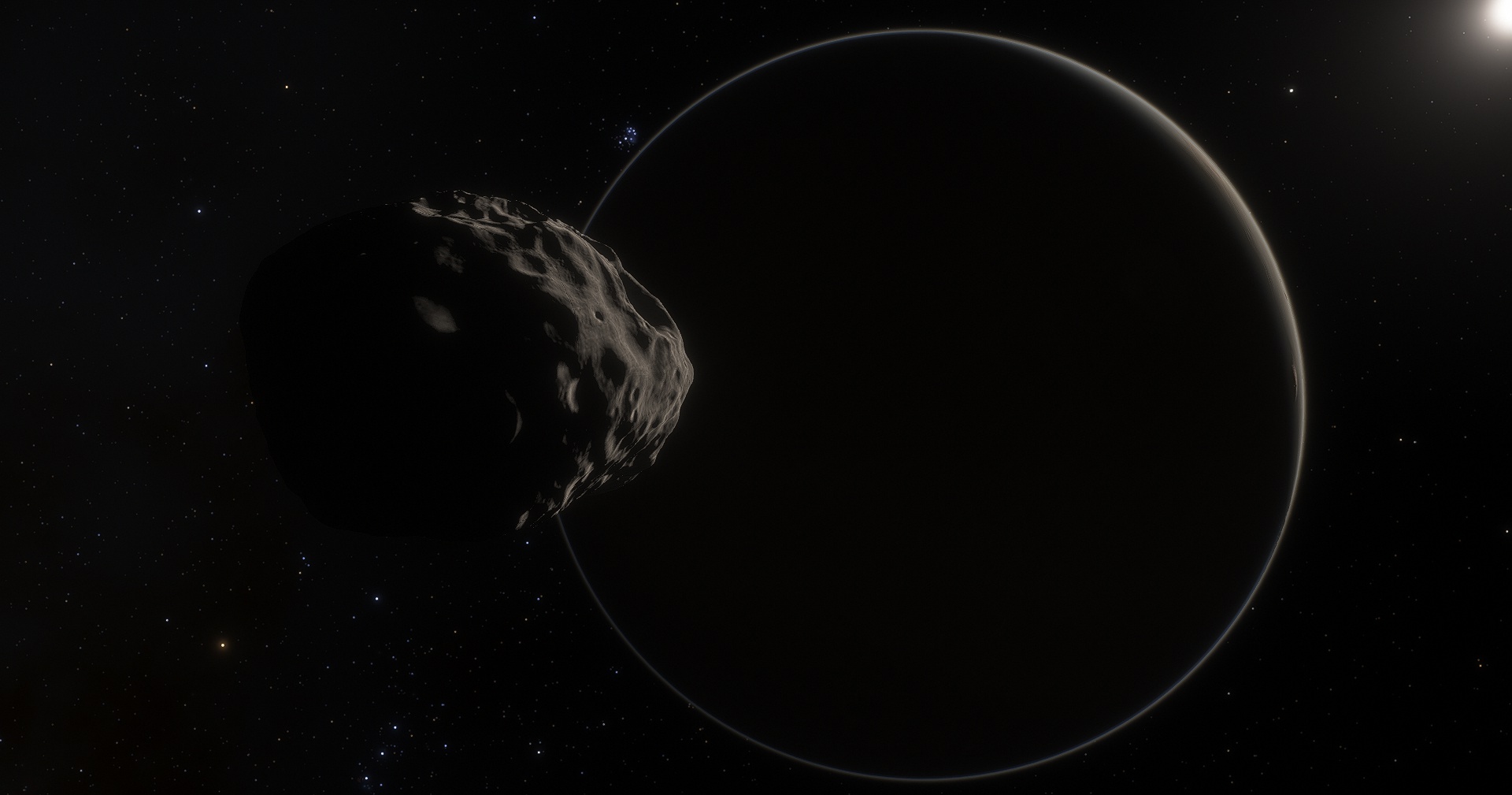
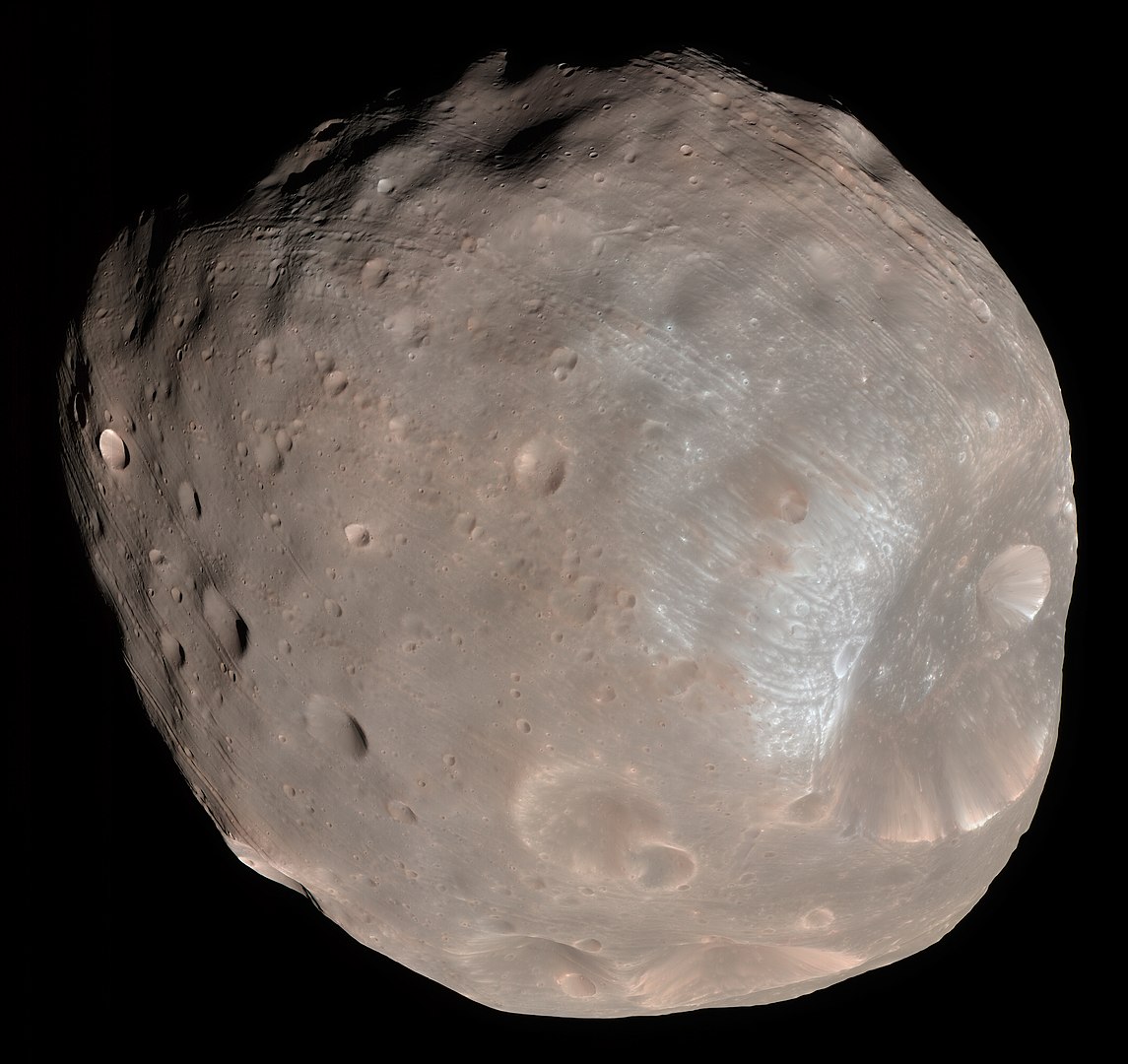
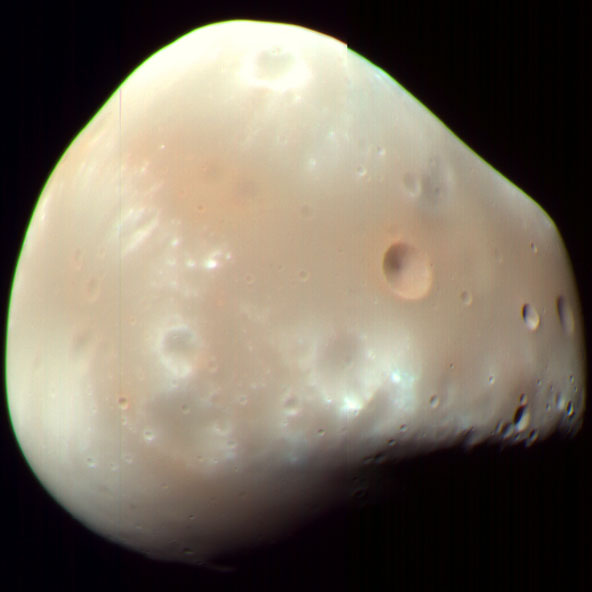
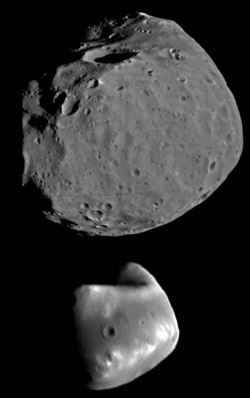
- Phobos and Deimos are the two small moons of Mars. They appear to be asteroids that have been captured by Mars, and are gradually changing their positions in orbit around the planet. They are a lot smaller than our moon, and may be easy to land on for future missions to Mars.
- What are some of the theories as to where Phobos and Deimos come from?
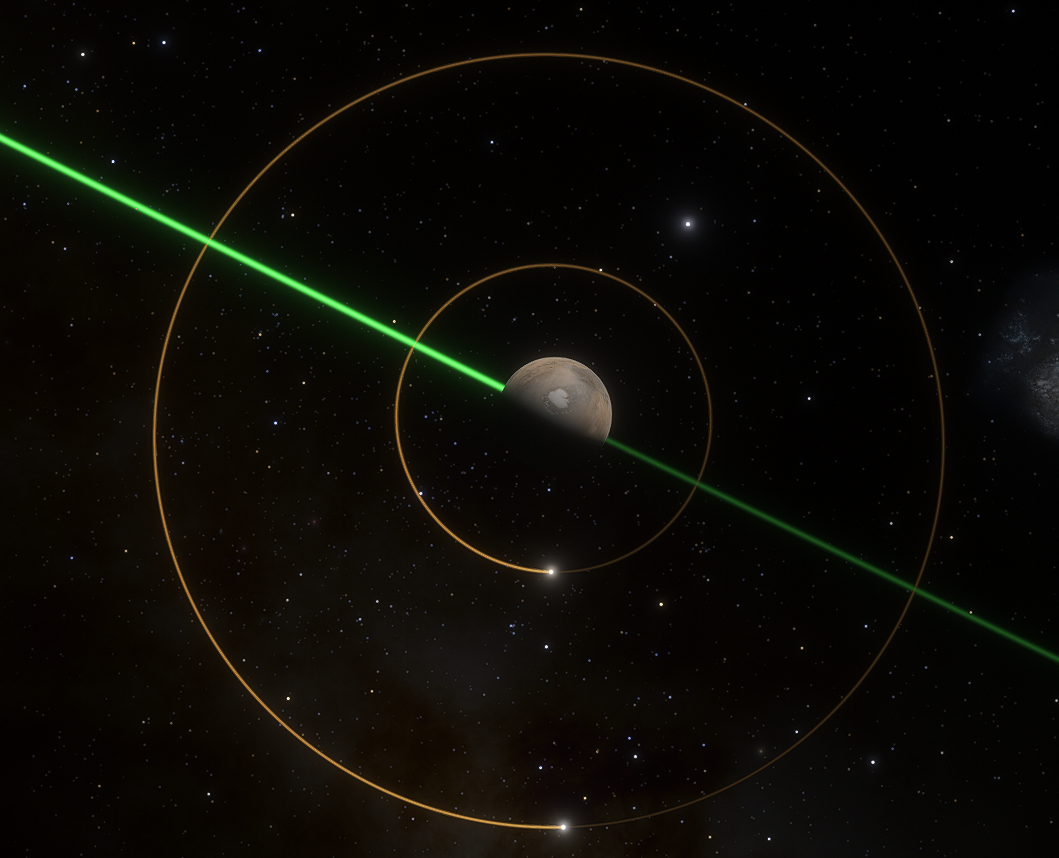
- Located in
- Solar System, orbiting Mars
- Compared to the Earth's Moon, the moons Phobos and Deimos are small and were discovered by Asaph Hall in August of 1877.
- In his work Gulliver's Travels, Jonathan Swift described two moons of Mars, in similar positions and sizes to the two that actually existed!
- If viewed from Mars's surface near its equator, full Phobos looks about one-third as big as a full moon on Earth.
- There are many ideas of how they formed, though none have been proven. One is where the moons of Mars may have started with a huge collision with a protoplanet one third the mass of Mars that formed a ring around Mars. From this ring formed the two moons.
- Two probes under the Soviet Phobos program were successfully launched in 1988, but neither conducted the intended jumping landings on Phobos and Deimos due to failures. Fobos-Grunt probe was intended to be the first sample return mission from Phobos, but a rocket failure left it stranded in Earth orbit in 2011.