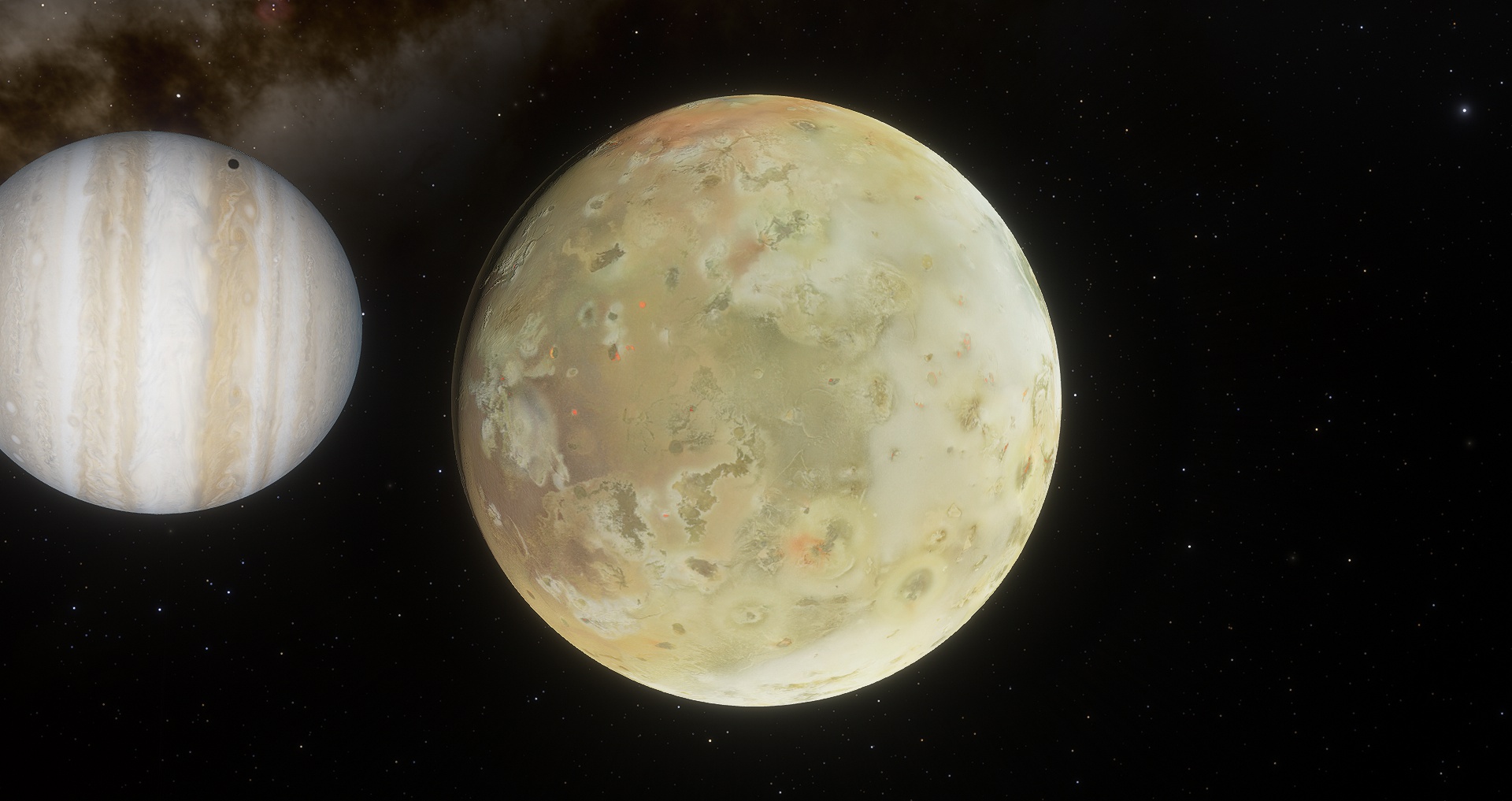
Io
- Type
- Moon (of Jupiter)
- Diameter
- 3,270 miles
- Distance from Jupiter
- 665,000 miles
- Orbit Time
- 42.459 hours
- Length of Day
- 42.459 hours
- Time around Sun
- 11.863 Earth years
- Atmosphere
- 90% sulfur dioxide
- Temperature
- -202 °F
- Date of Discovery
- Galileo Galilei, January 7, 1610
- The tugging and pulling of Io by the gravity of Ganymede, Europa and Jupiter means that it is stretched out of shape slightly, resulting in the cracking on its surface, as well as causing lots of volcanoes to form.
- What missions have been sent to Io so far? What were they looking to do? What future missions are being planned?
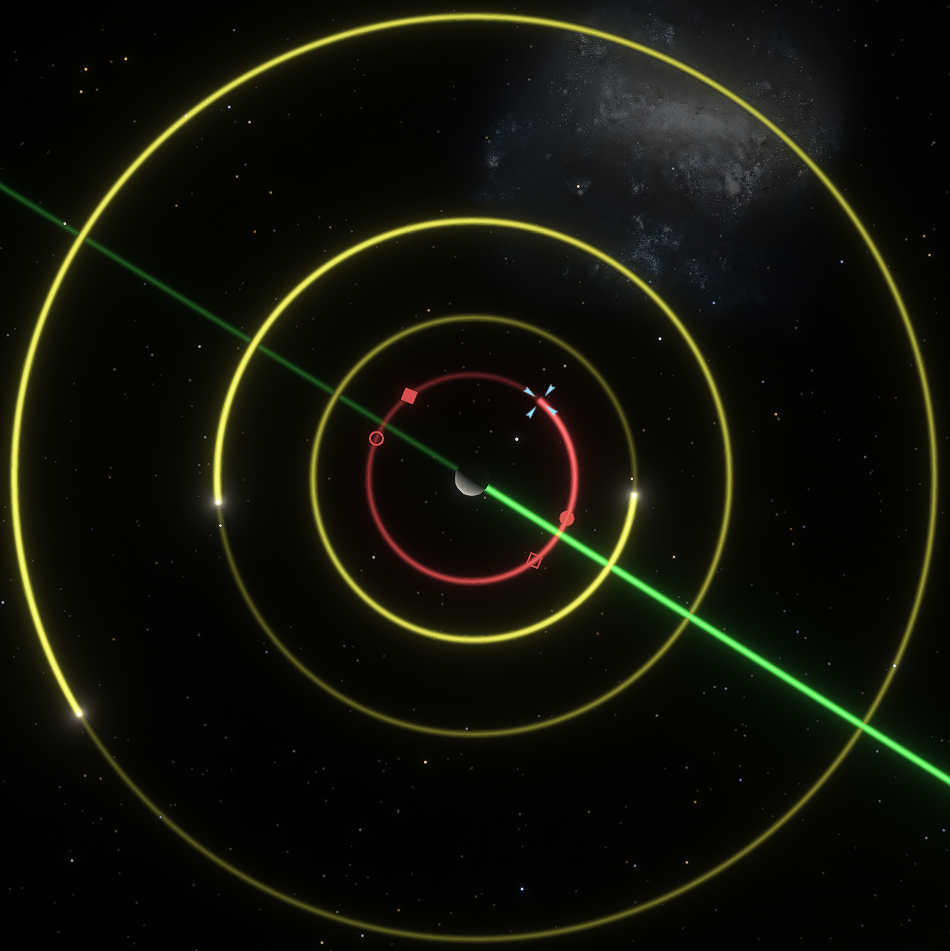
- Located in
- Solar System, orbiting Jupiter
- Io is tidally locked which means it always shows the same side of the moon to Jupiter as it orbits it, so its orbit is as long as its day.
- Io is the most volcanically active body in our Solar system.
- The four largest moons of Jupiter - Ganymede, Io, Europa and Callisto - are called the Galilean moons after Galileo Galilei which were all discovered on January 7, 1610.
- Volcanic plumes can be seen rising 190 miles above the surface.
- We have observed more than 150 active volcanoes on Io, and think there could be as many as 400.