Ganymede
- Type
- Moon (of Jupiter)
- Diameter
- 3,270 miles
- Distance from Jupiter
- 665,000 miles
- Orbit Time
- 7.155 Earth days
- Length of Day
- 7.155 Earth days
- Time around Sun
- 11.863 Earth years
- Atmosphere
- Thin, Oxygen
- Temperature
- -280 °F
- Date of Discovery
- Galileo Galilei, January 7, 1610
- Ganymede has many different types of ice underneath its surface, including Ice III (Ice 3) and Ice VI (Ice 6) which are denser forms of ice than we have on Earth (Ice I).
- Create a list of the main moons of Jupiter.
- Located in
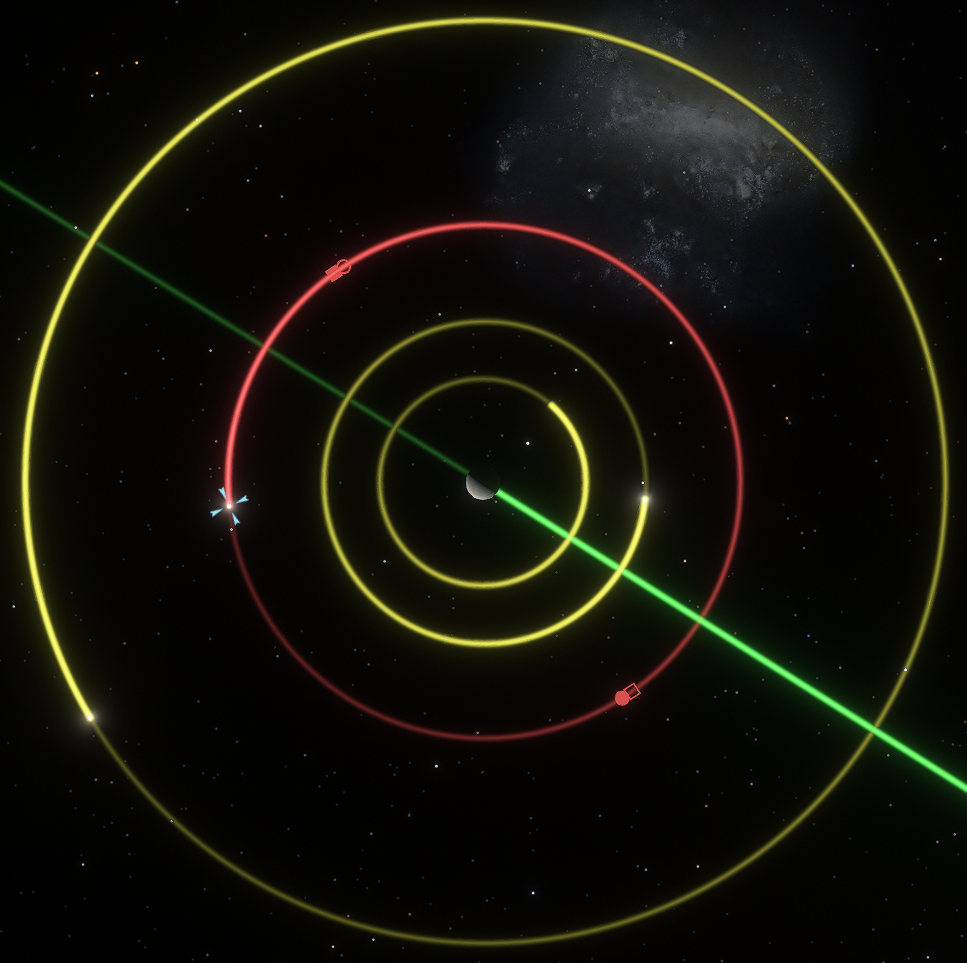
- Solar System, orbiting Jupiter
- Ganymede's ocean is estimated to be 60 miles thick – 10 times deeper than Earth's ocean – and is thought to be buried under a 95 mile thick crust of mostly ice.
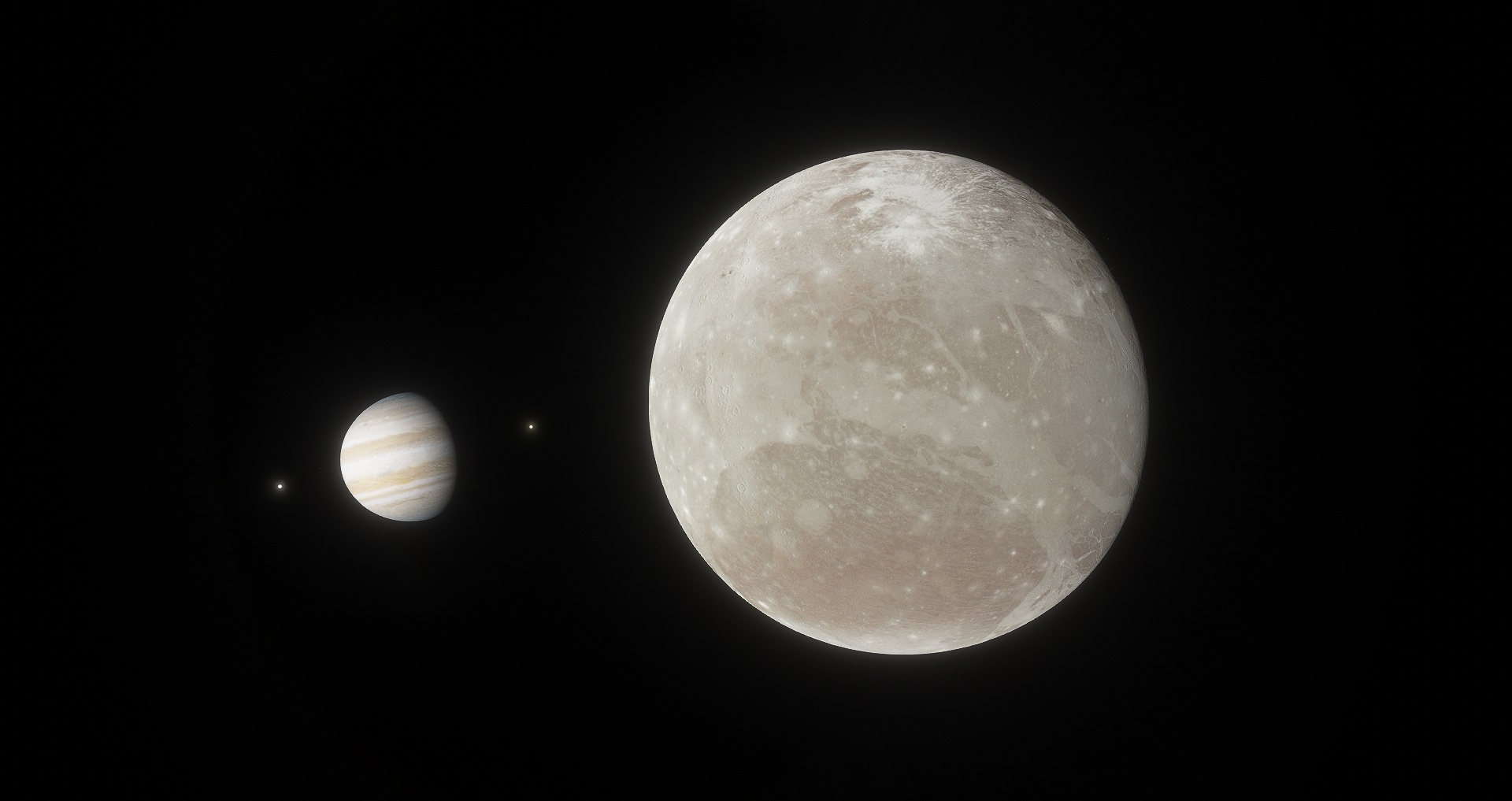
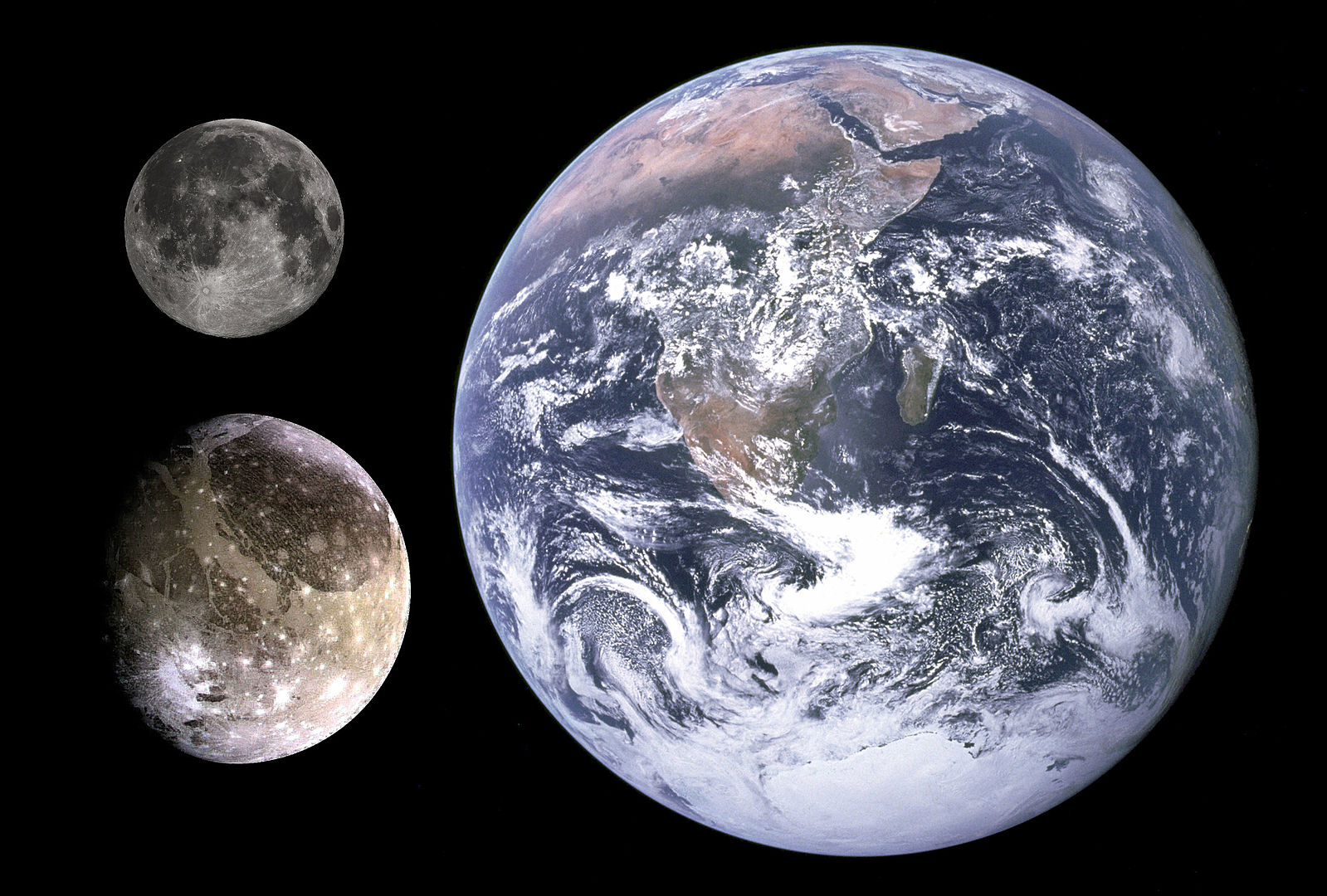
- Ganymede is the largest moon in our solar system, and is larger than the planet Mercury and the dwarf planet Pluto.
- The four largest moons of Jupiter - Ganymede, Io, Europa and Callisto - are called the Galilean moons after Galileo Galilei which were all discovered on January 7, 1610.