40 Eridani
- Type
- Star System (Trinary)
- Diameter
- 702,034 miles (A), 12,104 miles (B), 268,018 miles (C)
- Distance from Sun
- 16.34 light years
- Mass
- 0.78 M☉ (A), 0.57 M☉ (B), 0.20 M☉ (C)
- Star Type
- K0.5V - Orange Mainstream (A), DA4 - White Dwarf (B), M4.5eV - Red Dwarf
- Temperature
- 8,670 °F (A), 29,240 °F (B), 5,120 °F (C)
- Date of Discovery
- Unknown
- Other Names
- Omicron² Eridani,, Keid (A), HD 26965 (A), HIP 19849 (A), HR 1325 (A)
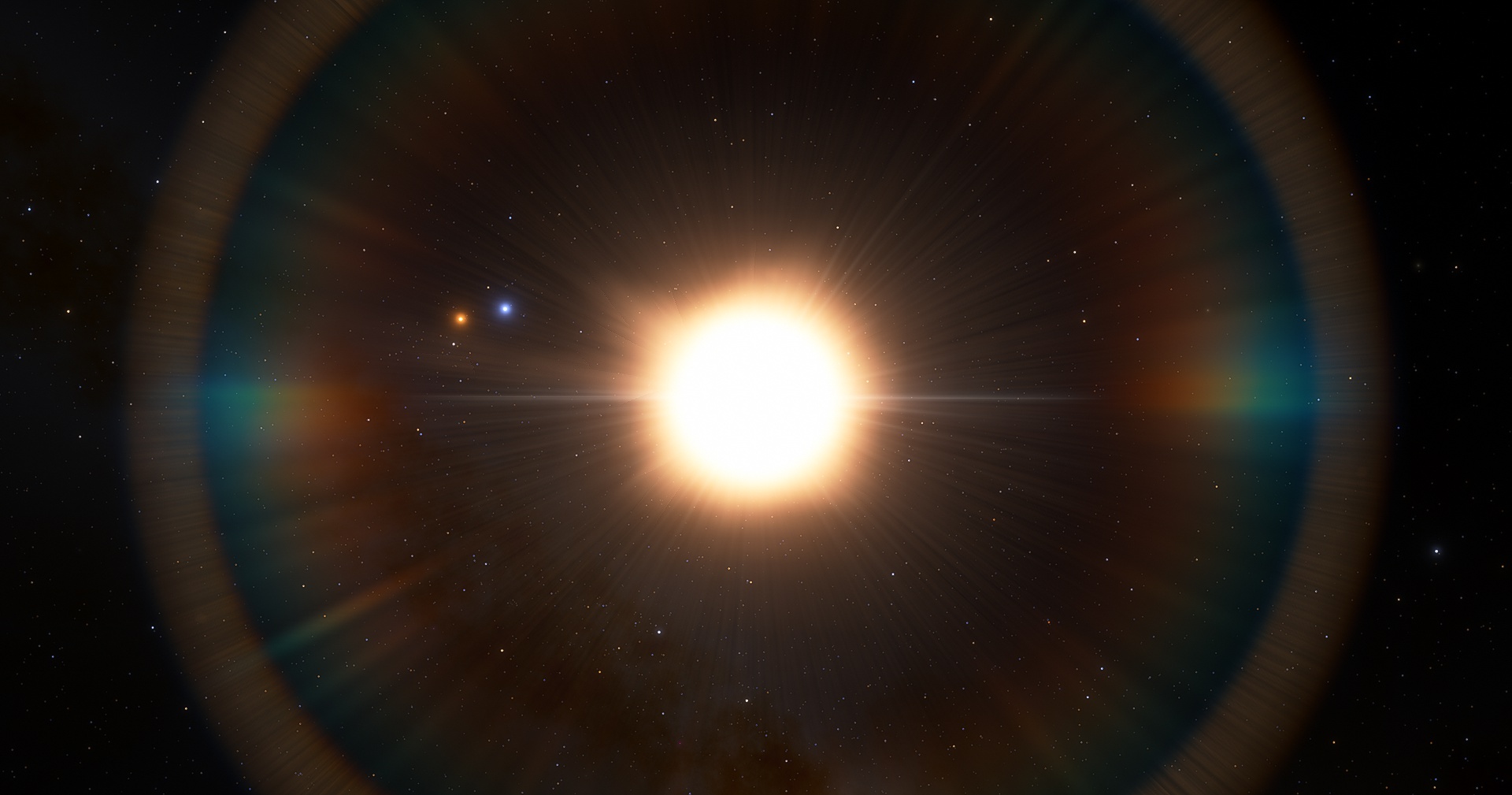
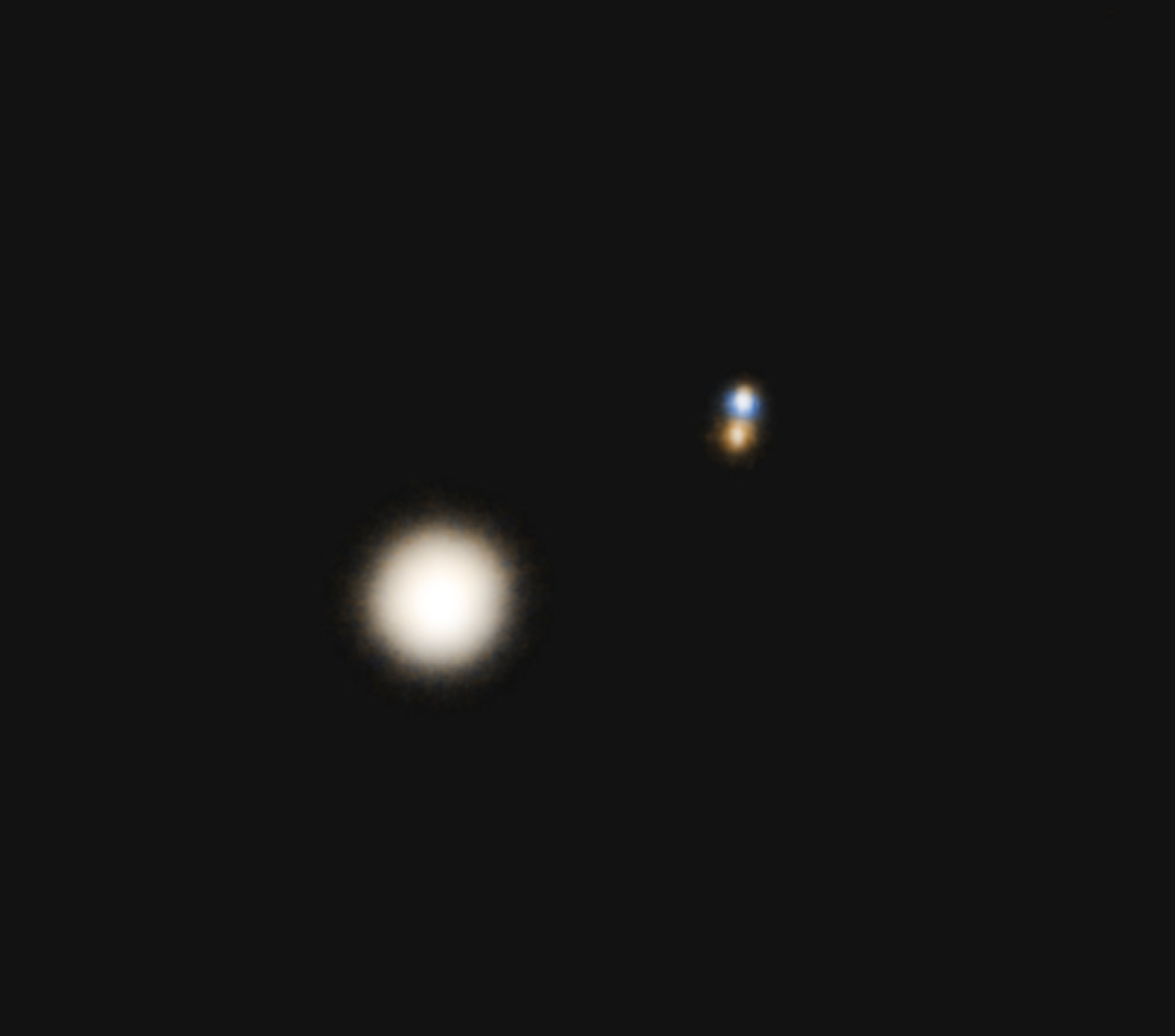
- 40 Eridani is a triple star system quite close to our Solar System, containing the first white dwarf that was ever discovered, and one of the easiest to see in the night sky. The system may well be able to support planets within the habital zone of the main star.
- Draw a diagram of the 40 Eridani system. Discuss what might make a triple/trinary star system unworkable.
- Located in
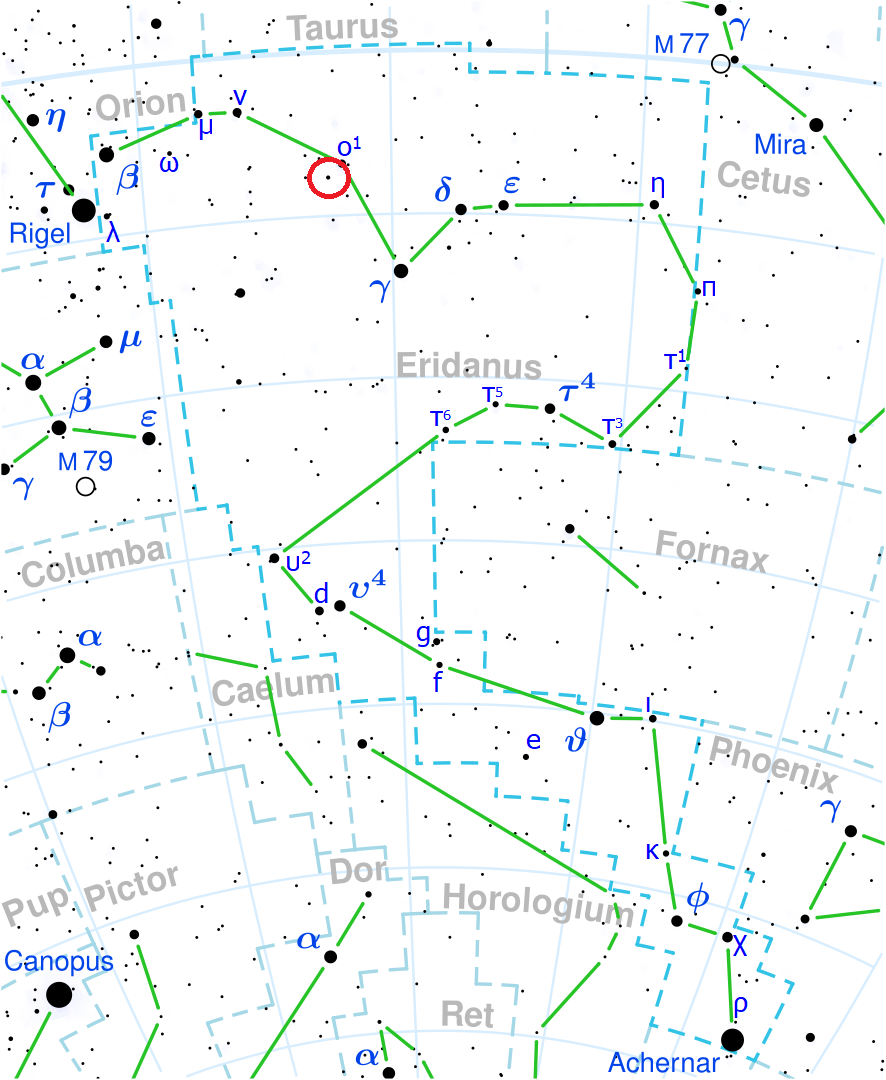
- Eridanus
- Triple star systems are most commonly contructed of a pair of stars orbiting or bring orbited by a single star.
- When the second star (B) collapsed into a white dwarf, it would likely have destabilised or damaged any orbiting planets around it.
- If a planet was in the habitable zone of the main star, it would orbit in around 200 days, and the star would be 20% in the sky of the planet compared to our Sun.
- Before the second star (B) collapsed, it would have been the main star in the system, but its collapse resulted in it losing a lot of its mass.